Centre’s experts failed to define Aravallis before SC warning
ENVIRONMENT – BIODIVERSITY
27 DECEMBER 2025
- Aravallis are an ancient range of weathered hills rambling across four States, from the outskirts of Delhi passing through Haryana, Rajasthan and Gujarat, with the bulk of it in Rajasthan.
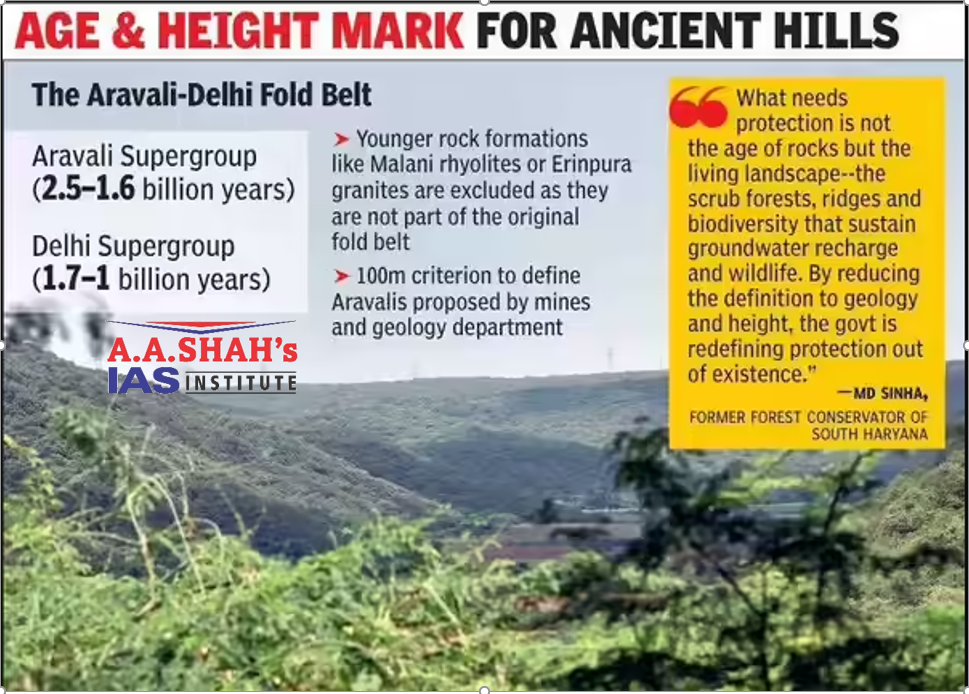
- The 670 km Aravalli Range in south-west direction, is the oldest fold-mountain belt in India, dating back to the Paleoproterozoic era.
- The highest peak is Guru Shikhar in Mount Abu, Rajasthan at 1,722 m (5,650 ft).
- Despite three expert committees labouring over defining the Aravallis for over a year, armed with satellite imagery and expertise from multiple institutions, the Centre could not decide on uniform technical criteria to define the range.
- It was only after the Supreme Court warned of initiating contempt proceedings against officials of the Environment Ministry that a new sub-committee was formed in August 2025, which then gave up trying to define the Aravallis and focused instead on evolving a definition that would “balance” ecological consideration and the Centre’s 2019 National Mineral Policy that encourages mining of critical minerals for the “nation’s economic growth”, according to a 2,000-page affidavit by the Ministry, submitted to the Supreme Court.
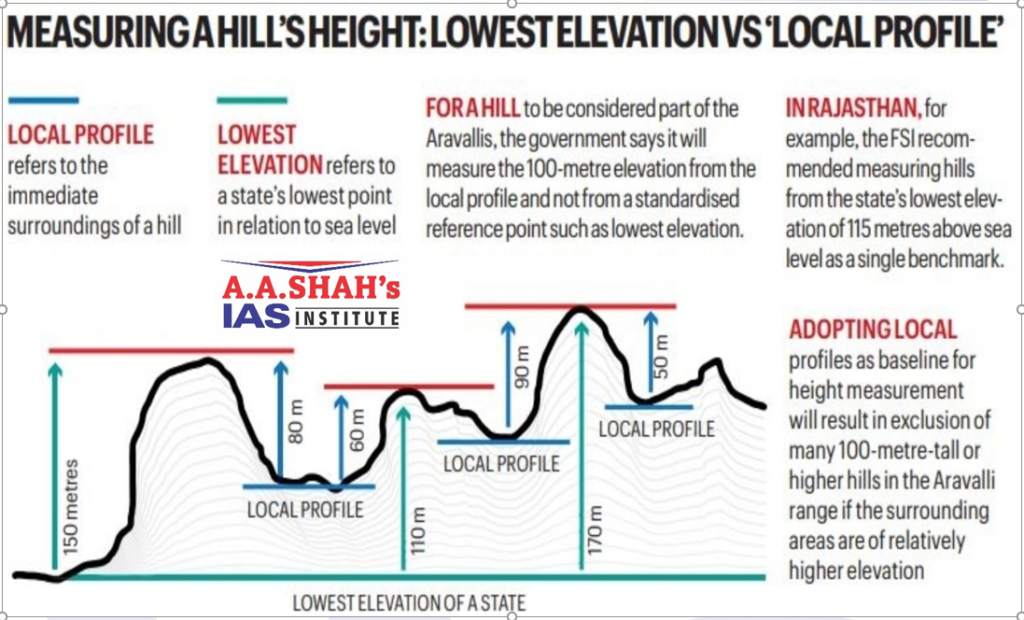
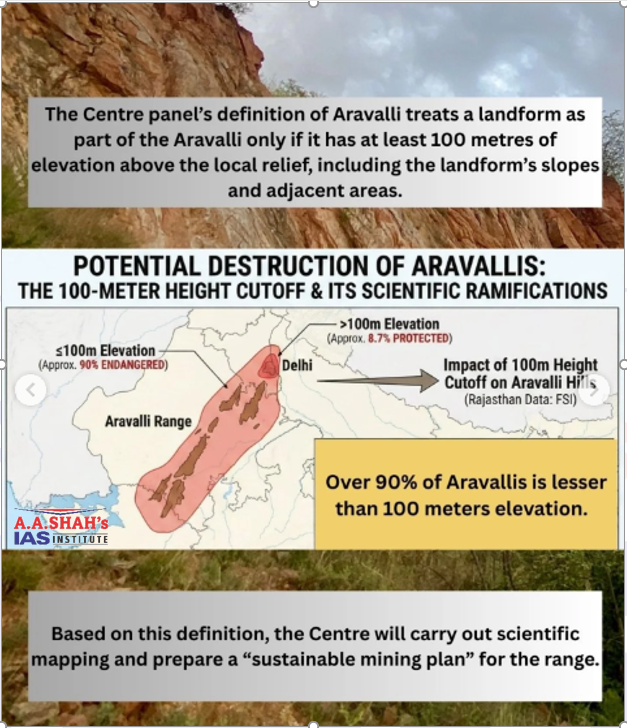
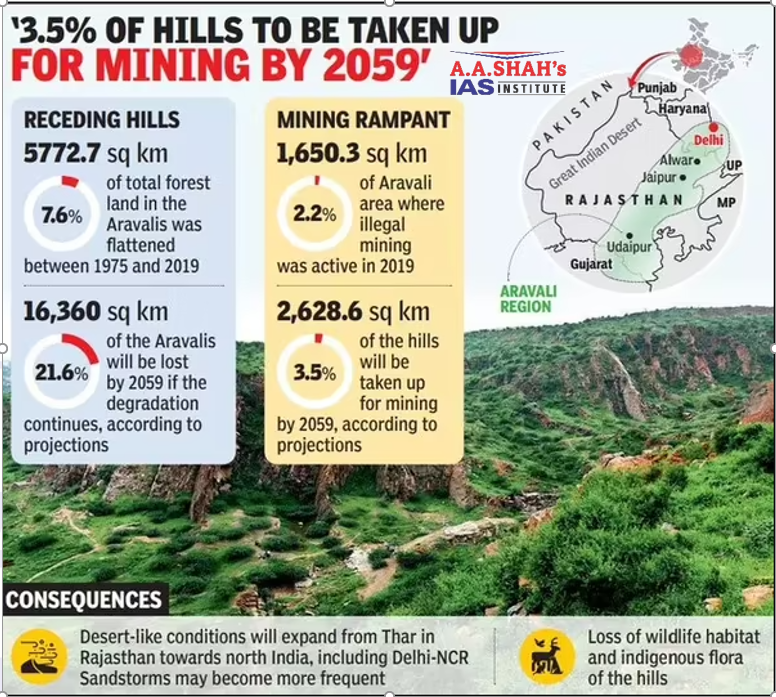
- The final definition only protects hills higher than 100 metres from mining.
- This has sparked an environmental and political row
- Under fire from environmental activists, Environment Minister Bhupender Yadav has stressed that no new mining licences would be awarded until a detailed Management Plan for Sustainable Mining (MPSM) covering the entire Aravalli range is prepared by the Indian Council of Forestry Research and Education.
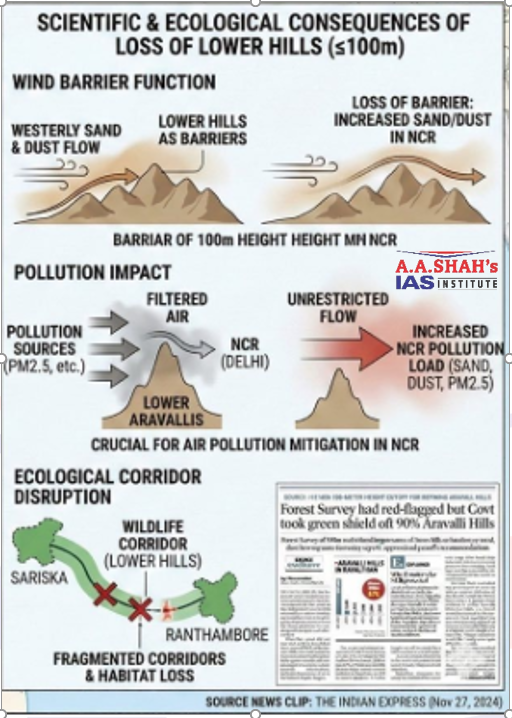
- Senior Congress leader Sachin Pilot warned that the Centre’s redefinition of the Aravalli hills could strip nearly 90% of the range of protection, posing grave ecological risks, including the expansion of the Thar Desert up to Delhi.
- The Aravallis, the Congress leader stressed, act as a natural shield against air pollution, preserve groundwater, and sustain biodiversity.