Bacteria quorum sensing, a means of communication
S&T – HEALTH
13 FEBRUARY 2026
- Renowned molecular biologist Bonnie Bassler, Professor at Princeton University, delivered a lecture titled “A chemical language that enables communication between diverse organisms”, in Bengaluru.
- She described bacteria as “magical microbes” that not only cause disease but also sustain life.
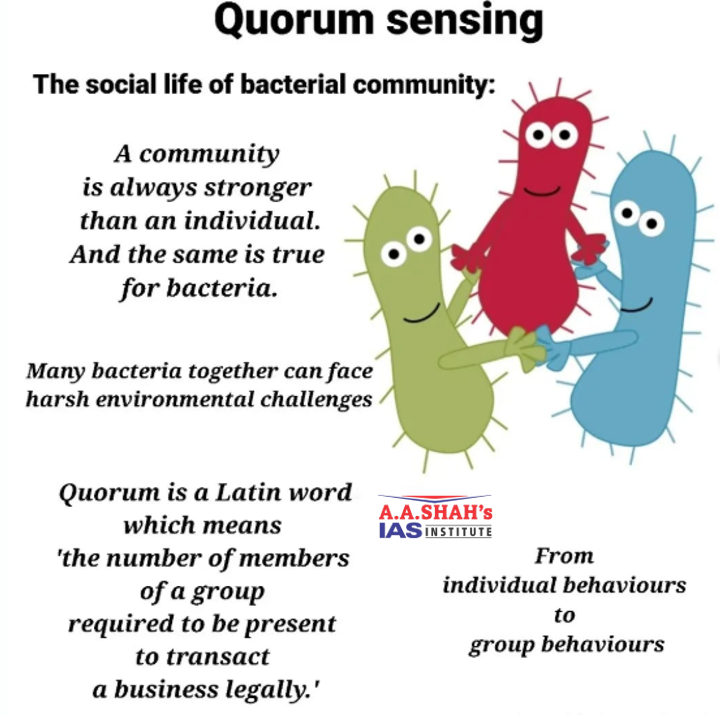
- She highlighted how bacteria communicate through a process called quorum sensing.
Quorum Sensing
- Bacteria can “talk” to each other using chemical signals.
- They are multilingual, meaning they can communicate across species.
- When enough bacteria gather, they coordinate behavior collectively.
- This communication system controls virulence (disease-causing ability), helps bacteria act as a group and shapes evolutionary biology.
The Mechanism of Quorum Sensing
- The process operates as a “bacterial roll call” and generally involves the following steps:
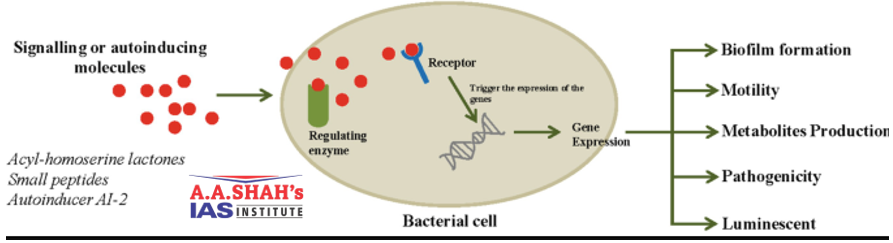
- Production: Individual bacteria constantly produce and release small signaling molecules (autoinducers).
- Accumulation: As the bacterial population density increases, the concentration of these molecules in the surrounding environment builds up.
- Detection: When the concentration reaches a critical threshold, the autoinducers bind to specific receptors on or in the bacteria.
- Response: This binding triggers a change in gene expression, leading to the synchronization of group behaviors.
Anti–quorum sensing therapies
- Instead of killing bacteria with antibiotics, Prof. Bassler suggested developing anti–quorum sensing therapies
- These therapies aim to:
- Block bacterial communication
- Prevent bacteria from turning virulent
- Reduce antibiotic resistance risks
- She cited Vibrio cholerae, the bacterium that causes cholera, as an example of a harmful organism whose communication system could be targeted.
Mutualism of Squid and Vibrio fischeri
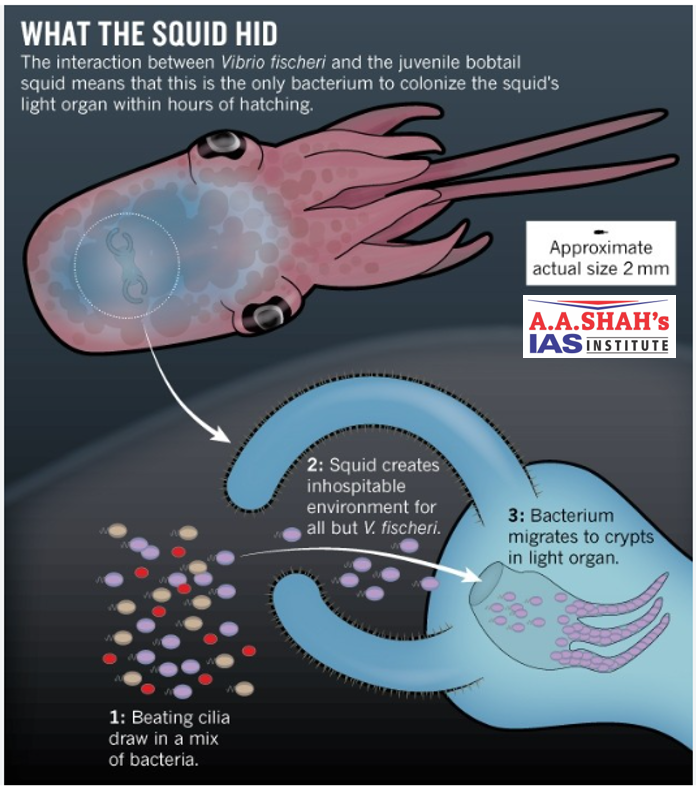
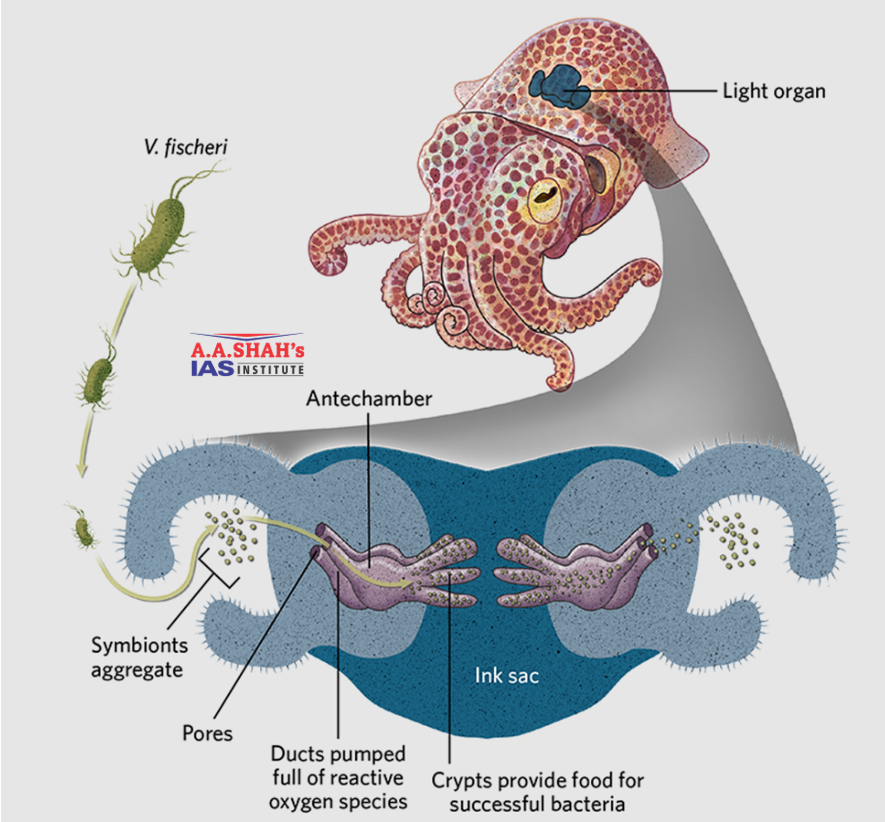
- She contrasted cholera bacteria with its “cousin” vibrio fischeri – a bioluminescent bacterium that lives in symbiosis in the photophore (light prodcing organ) of the Hawaiian bobtail squids.
- The squid hunts in moonlit waters.
- As predators track its shadow, vibrio fischeri glows beneath the squid and removes the shadow — making the squid invisible.
- This is a stunning example of mutualism and bacterial cooperation.