27 lakh workers removed from MGNREGS database after e-KYC
SOCIAL – SCHEMES
17 NOVEMBER 2025
- Nearly 27 lakh workers’ names were removed from the database of Mahatma Gandhi National Rural Employment Guarantee Scheme (MGNREGS), the Centre’s rural jobs scheme, between October 10 and November 14, far exceeding the 10.5 lakh additions during the same period.
- The spike in deletions coincides with the Centre’s push to conduct e-KYC — an electronic know your customer process — for all workers, to weed out ineligible beneficiaries.
- Prevent ‘misuse’
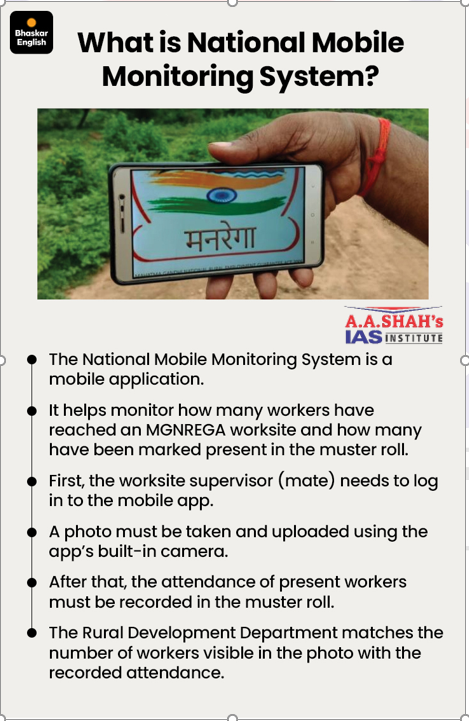
- The e-KYC process requires the mates, or MGNREGS supervisors, to click pictures of each of the workers and upload them on the MGNREGS’s digital attendance application, the National Mobile Monitoring System (NMMS), to match these photographs with their Aadhaar data.
- One of the reasons the government introduced e-KYC as an additional layer of verification was the discovery that the NMMS platform was being “misused”.
- On July 8, the Ministry issued a 13-page note to State governments on the issue.
- Under NMMS, geo-tagged photographs of the workers are to be uploaded twice a day.
- It was found that “irrelevant or unrelated photographs” were being uploaded.
- The Ministry had also made the Aadhaar Based Payment System (ABPS) mandatory from the beginning of 2023.
- Using a worker’s unique 12-digit Aadhaar number as her financial address, this system requires a worker’s name and other demographic details to match exactly on her Aadhaar, job card, and bank account.
- This was also introduced to eliminate “ghost and duplicate job cards” but led to the exclusion of many genuine workers as well.
- “Each time a new Aadhaar-linked technology is introduced — whether it was ABPS earlier or e-KYC now — it is brought in to strengthen verification, but ends up creating new hurdles for genuine workers and triggering large-scale exclusions. This surge in deletions shows that new technologies should not be introduced indiscriminately, without assessing their impact on workers,” said Chakradhar Buddha, senior researcher at Lib Tech, a team of activists and academics that conducts research on government schemes and policies in India.
MGNREGA (Mahatma Gandhi National Rural Employment Guarantee Act), 2005
- MGNREGA is a social security and labour welfare law enacted in 2005.
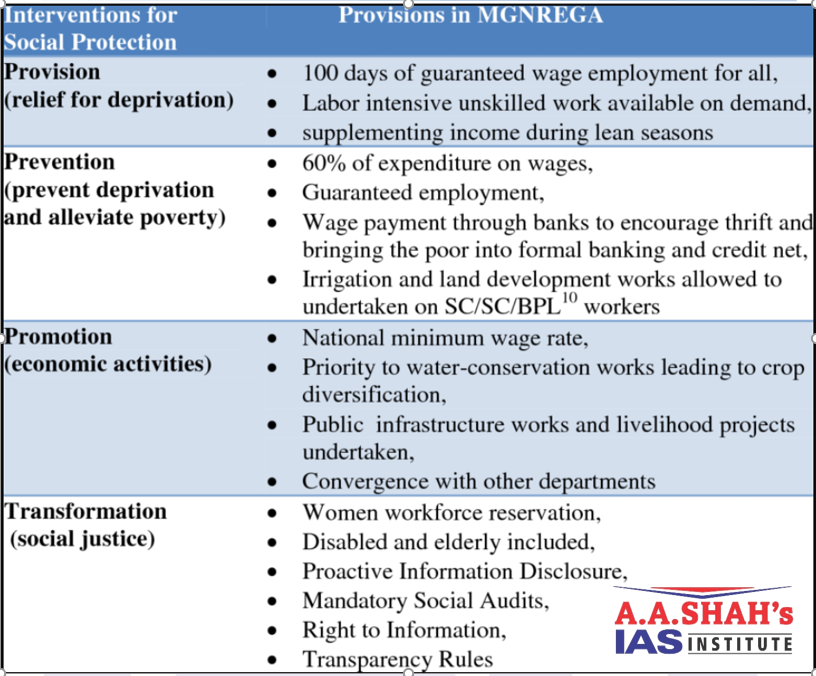
- It aims to provide livelihood security to rural households by guaranteeing 100 days of wage employment in a financial year to adult members willing to do unskilled manual work.
- The Central Government bears major costs (wages, material, administration).
Key Features
1. Legal Guarantee of Employment
- First law in the world to guarantee wage employment as a legal right.
- Every rural household can demand work; the state must provide it within 15 days otherwise compensation is due.
2. Decentralised implementation
- Gram Panchayats play the primary role in planning and execution.
- Social audits by Gram Sabhas ensure transparency.
3. Unemployment Allowance
- If a worker demands work and the Gram Panchayat or State Government fails to provide employment within 15 days, the worker becomes eligible for unemployment allowance.
- This allowance is paid by the State Government, not by the Centre.
4. Focus on rural asset creation
- MGNREGA funds can be used for:
- Water conservation
- Drought proofing
- Irrigation canals
- Rural road connectivity
- Land development
- Afforestation
5. Inclusive and gender-balanced
- At least one-third of beneficiaries must be women.
- Equal wages for men and women.
Objectives
- Provide employment security.
- Reduce rural distress migration.
- Strengthen livelihood resources.
- Promote sustainable rural development.
- Empower Gram Sabhas and enhance participatory democracy.
Funding Pattern
- State Governments share some costs (unemployment allowance, part of material).