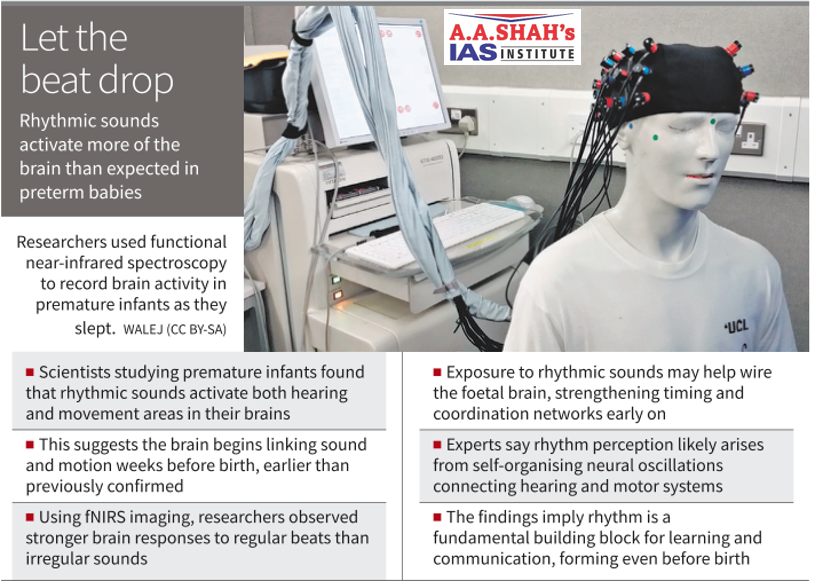
Scientists detect brain response to rhythm in preterm babies
S&T – HEALTH
2 NOVEMBER 2025
- Scientists have long wondered when the sense of rhythm first takes shape in the developing brain.
- According to a new study in iScience, when preterm infants hear rhythmic sounds, their brains light up not only in areas that process hearing but also in regions involved in movement, hinting that the connection between sound and motion begins earlier than anyone had confirmed before.
- Even without the beats, a foetus in a womb is already immersed in rhythm: from the steady pulse of the mother’s heartbeat to the cadence of her voice.
- The study’s authors reasoned that this exposure may be helping wire the foetus’s auditory system and build the brain’s sense of timing.
- The presence of elaborated neural capacities for processing rhythm so early in life highlights its importance as a building block for learning from regularities in the world.
- In that sense, rhythm may be the brain’s first music — an internal pattern that helps the mind make sense of the world before life has even begun.