Vantara : A private zoo
ENVIRONMENT – BIODIVERSITY
10 NOVEMBER 2025
Vantara
- Vantara is a massive wildlife rescue, rehabilitation and conservation centre located in Jamnagar district, Gujarat, India.
- It is an initiative of the Reliance Foundation (philanthropic arm of Reliance Industries) and led by Anant Ambani.
- The facility spans approximately 3,000–3,500 acres and reportedly houses over 150,000 animals across 2,000+ species (according to their own claims).
Criticism:
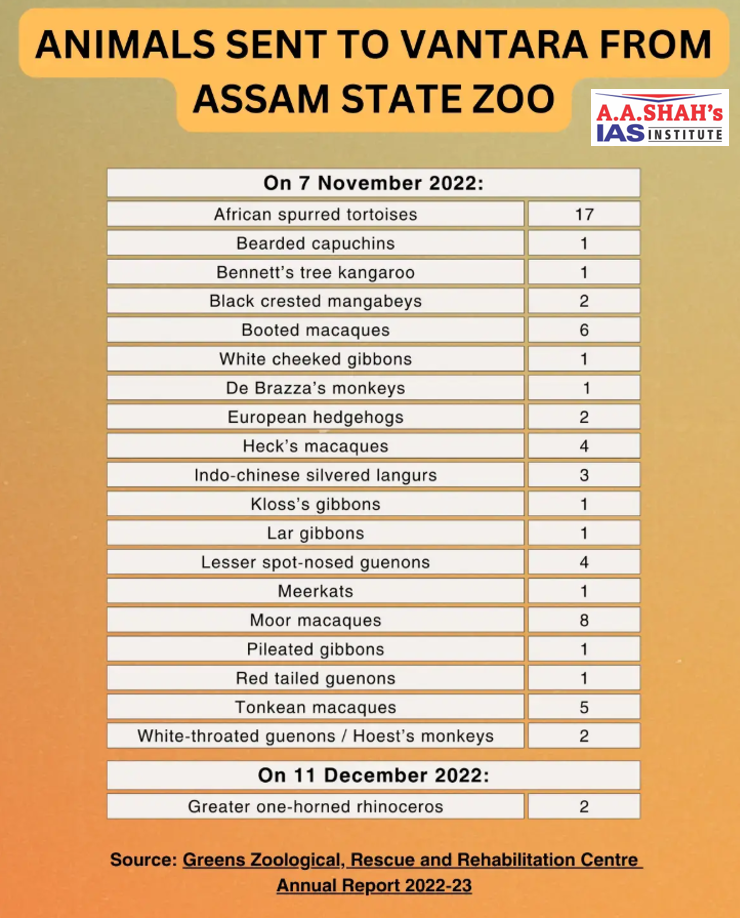
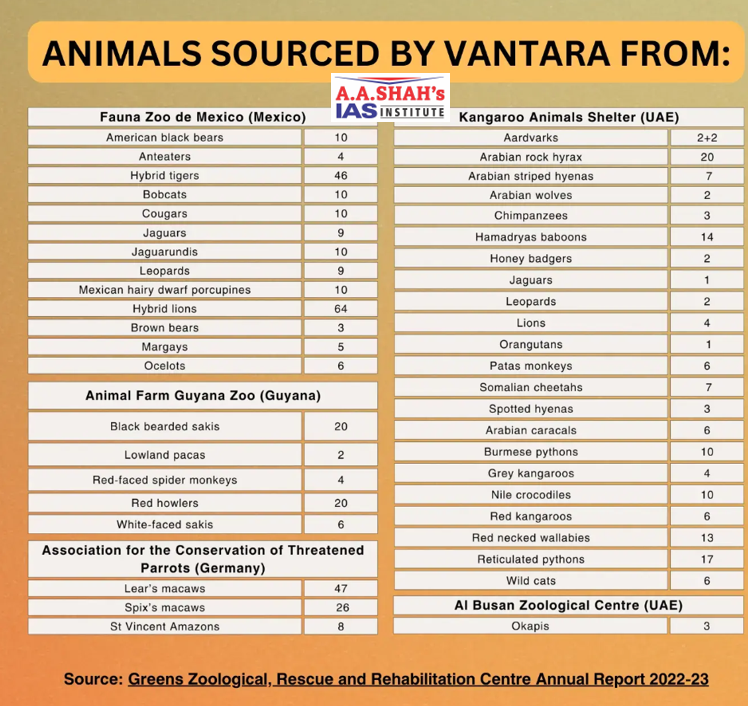
- Allegations of unethical sourcing of animals and links to the global wildlife trade.
- Concerns that housing large numbers of rare species in a former refinery / industrial region may not replicate their natural habitat.
- Questions about transparency, public access, and whether the project is partly a “vanity” initiative rather than purely conservation-driven.
SC’s SIT clears Vantara
- A Supreme Court-appointed Special Investigation Team (SIT) reportedly cleared Vantara of wrongdoing (in animal acquisition) in September 2025.
- The SIT said that Vantara had the right permits; had followed norms in acquiring wild animals from abroad; it and had facilities for the upkeep of over 30,000 animals and that any criticism or aspersion of its activities on these grounds were wholly “unjustified”.
- The Court chose not to make the report public and only appended a summary in its order with the operative observations.
CITES Committee visit
- The CITES committee (Convention on International Trade in Endangered Species of Wild Fauna and Flora) — the world’s most influential agreement regulating cross-border wildlife trade — visited the Vantara facility in Jamnagar, Gujarat.
1. Appreciation of Infrastructure
- CITES praised Vantara’s world-class infrastructure, animal care, and veterinary expertise.
- This shows the facility itself was not the problem — it met global standards for animal welfare.
2. Concerns Over Permit Accuracy
- The report raised issues with documentation and permit codes used in importing animals.
- Example: The Czech Republic stated it sold animals to Vantara’s procurement arm, while India claimed it was not a sale, only reimbursements for costs (like insurance or transport).
- This distinction matters, because under Indian law, zoos cannot commercially buy animals — only exchange or receive them for conservation purposes.
3. India’s Wildlife Management Oversight
- CITES’s concern was not with Vantara, but with India’s regulatory authorities — suggesting that the Management Authority under CITES in India should:
- Verify that import/export codes correctly represent the transaction.
- Engage more closely with exporting countries to confirm animal origins and legality.
- Strengthen traceability to ensure no wildlife trafficking or misreporting.
4. Recommendation to Pause Permits
- CITES recommended India temporarily pause issuing new permits for importing endangered animals for zoos until the system is reviewed and made more transparent.
- This is a compliance recommendation, not a sanction — but it reflects concern about procedural integrity.