How is the global precision medicine market shaping up?
S&T – HEALTH
17 NOVEMBER 2025
- Several medical treatments, particularly for genetic ailments, rely on symptomatic management instead of correcting the causative issue.
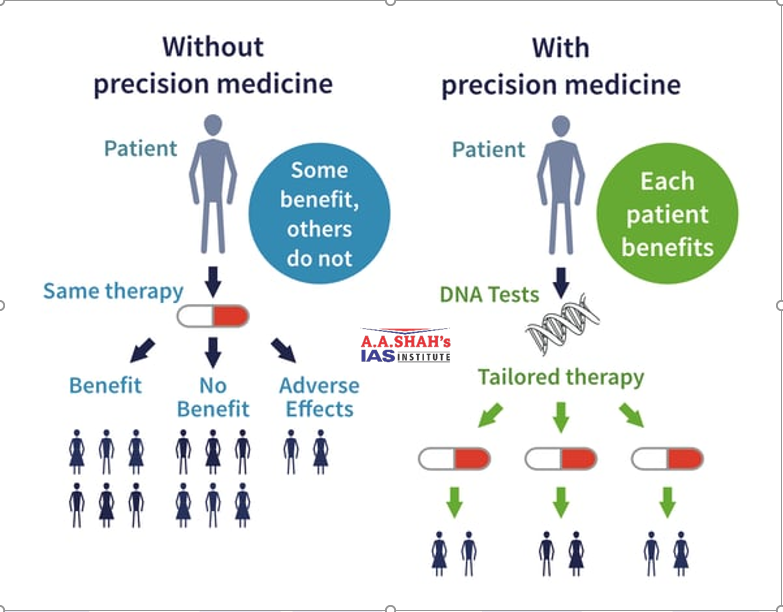
- Precision biotherapeutics refers to medical interventions that are designed and optimised based on a patient’s unique genetic, molecular, or cellular profile.
- It brings together genetic science, molecular biology, and data analytics to design therapies that identify and rectify the cause of illness.
- The field draws on multiple cutting-edge technologies such as genomic and proteomic analysis — decoding a person’s genetic and protein signatures to identify mutations or dysfunctions causing the disease; gene editing therapies — directly modifying genes to correct underlying problems (for example, CRISPR-based treatments for blood disorders); mRNA and nucleic acid therapeutics —using RNA molecules to instruct cells to produce specific proteins or suppress harmful ones; monoclonal antibodies and biologics — laboratory-engineered molecules that bind to precise disease targets, such as cancer cells or viral protein; and AI-driven drug discovery which involves leveraging big data and machine learning to predict how molecules interact within the body.
Why does India need it?
- Non-communicable diseases such as diabetes, cardiovascular illness, and cancers account for nearly 65% of deaths in the country.
- At the same time, the genetic diversity of India’s population makes it one of the most complex testing grounds for new therapies.
- Sometimes, pharmaceuticals made and tested in foreign countries might not work effectively in the Indian context.
- By leveraging India’s growing genomic research base, such as the IndiGen programme and GenomeIndia, treatments could be customised for local genetic profiles.
- The Department of Biotechnology has identified precision biotherapeutics as one of the six focus areas under the Biotechnology for Economy, Environment, and Employment policy.
- Yet ethical and privacy concerns around genetic data remain unresolved. Without strict data protection and consent frameworks, genomic information could be misused.