Separate Section for disabled persons made in DPDP Rules
POLITY – BILL/ACT
19 NOVEMBER 2025
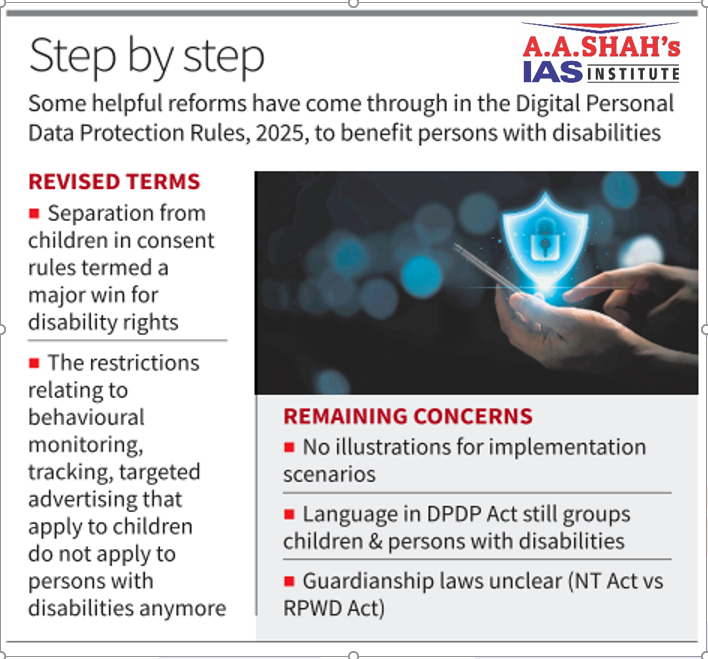
- Following pushback from disability rights activists, the Electronics and Information Technology Ministry has made changes to the Digital Personal Data Protection Rules, 2025, to separate persons with disabilities from a rule that, in a draft, clubbed them with children over consent from a guardian.
- While activists hailed this change, they said concerns over the provisions remain.
- The language of the DPDP Act, 2023, continues to group children and persons with disabilities together.
- The DPDP Act, 2023, and the rules significantly restrict what minors can do online, such as setting up a social media account, without a parent’s consent.
- “The restrictions relating to behavioural monitoring, tracking, targeted advertising that apply to children do not apply to persons with disabilities any more.”
- The part of the rules that deals with consent for children’s data includes multiple illustrations of different scenarios under which consent should be obtained, along with a Schedule that exempts and clarifies these requirements.
- The notified rules do not contain illustrations on implementation to cover a range of instances where disabled persons may or may not be able to use the Internet freely.
- The draft rules did not clarify which law of guardianship for persons with disabilities — either the National Trust for Welfare of Persons with Autism, Cerebral Palsy, Mental Retardation, and Multiple Disabilities Act, 1999, or the Right of Persons with Disabilities Act, 2016 — would be considered for implementation.
- Under the NT Act, the need for guardianship is partly determined by a person’s “decision-making capacity”, a term that the 1999 law does not clearly define.
- This, activists say, is not in consonance with the United Nations Convention on the Rights of Persons with Disabilities, while guardianship under the RPWD Act aligns with it.