Vulture population in India on a decline
ENVIRONMENT – BIODIVERSITY
15 JANUARY 2026
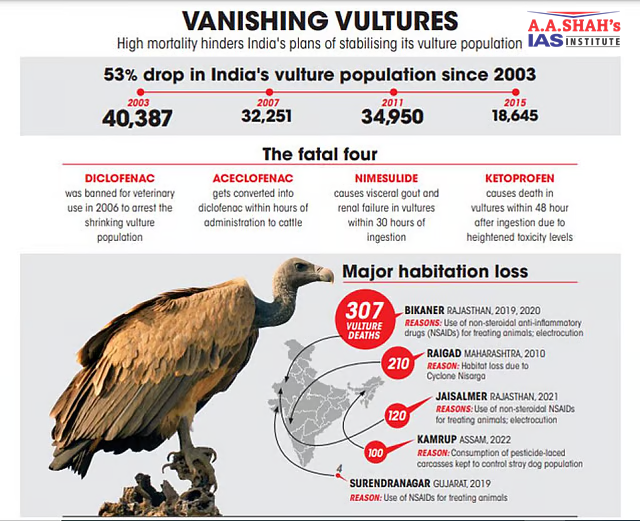
- India once had tens of millions of vultures; major species like the white-rumped vulture declined by over 95–99% from the 1990s onwards.
- A recent nationwide nest survey found vultures now occupy only ~28% of historically recorded nesting sites, even though some new sites were found.
- Several species — especially the slender-billed vulture — have lost all historical breeding sites and survive in only a few pockets.
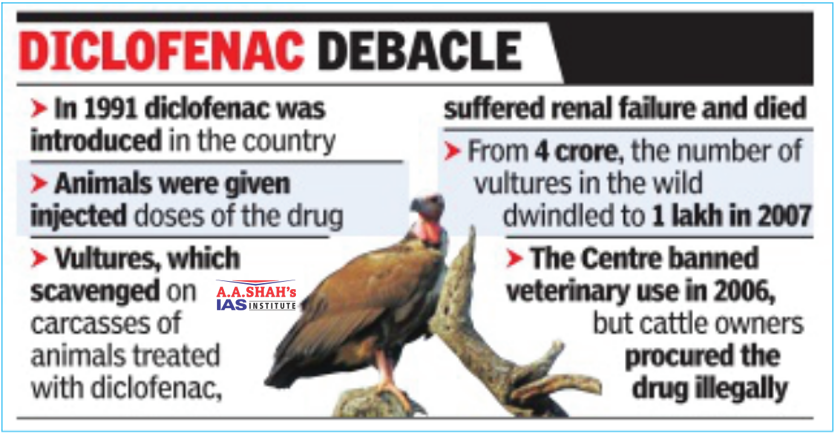
- The use of toxic veterinary non-steroidal and anti-inflammatory drugs (NSAIDs), like diclofenac, used to treat cattle, has been a major cause of vulture mortality.
Vulture Species in India
- India is home to 9 vulture species, including both resident and migratory types:
- White-rumped Vulture (Gyps bengalensis) — Critically Endangered
- Long-billed (Indian) Vulture (Gyps indicus) — Critically Endangered
- Slender-billed Vulture (Gyps tenuirostris) — Critically Endangered
- Red-headed Vulture (Sarcogyps calvus) — Critically Endangered
- Egyptian Vulture (Neophron percnopterus) — Endangered
- Himalayan Griffon Vulture (Gyps himalayensis) — status varies (migratory)
- Bearded Vulture (Gypaetus barbatus) — less threatened
- Cinereous Vulture — migratory/less common
- Eurasian Griffon — migratory/less common
- The status categories follow IUCN Red List classifications.
- Also, many species are legally protected under Schedule I of the Wildlife Protection Act
Significance of Vultures in Parsi religion
- For the Parsi (Zoroastrian) community, vultures have deep religious significance.
- Parsis follow the practice of sky burial, where the dead are placed in Towers of Silence (Dakhmas).
- Vultures consume the bodies, which is believed to keep the sacred elements—earth, fire, and water—pure.
- This practice reflects respect for nature and the natural cycle of life and death.
Ecological Importance of Vultures
- Natural Scavengers – Vultures feed on dead animals and clean the environment quickly.
- Disease Control – They prevent the spread of diseases like rabies, anthrax, and cholera.
- Control of Feral Animals – By consuming carcasses, they reduce food for stray dogs and rats.
- Nutrient Recycling – Vultures help return nutrients from carcasses back to the soil.
- Environmental Cleanliness – They keep ecosystems clean and hygienic.
- Indicator Species – Healthy vulture populations indicate a balanced ecosystem.
Reasons for decline in Vulture Population:
- Poisoning from Veterinary Drugs
Impact of diclofenac and other harmful medicines on vulture populations. - Food Scarcity and Unsafe Carcasses
Decline in natural food sources and contamination of animal carcasses. - Habitat Disturbance
Human activities, tourism pressure, and infrastructure development inside protected areas. - Intentional and Accidental Poisoning
Poison baits used to kill predators affecting vultures indirectly. - Weak Law Enforcement
Gaps in implementation of wildlife protection laws.
Measures for Vulture Conservation in India
- Ban on Diclofenac (2006) – India banned veterinary diclofenac, the main cause of vulture population collapse.
- Promotion of Vulture-Safe Drugs – Safe alternatives like meloxicam are approved and promoted for livestock use.
- Vulture Conservation Breeding Centres – Centres set up at Pinjore (Haryana), Bhopal, Guwahati, Hyderabad, and Rani (Assam) to breed endangered vultures.
- National Action Plan for Vulture Conservation (2020–2025) – Aimed at eliminating toxic drugs and conserving habitats.
- Vulture Safe Zones (VSZs) – Identified regions where harmful drugs are restricted and safe food is ensured.
- Legal Protection – Vultures are protected under Schedule I of the Wildlife Protection Act, 1972.
- Population Monitoring – Nationwide vulture surveys and nest monitoring programs conducted.
- Awareness Programs – Outreach to veterinarians, pharmacists, and livestock owners on vulture safety.
| PRELIMS PYQ 1. Vultures which used to be very common in Indian countryside some years ago are rarely seen nowadays. This is attributed to (UPSC 2012) (a) the destruction of their nesting sites by new invasive species (b) a drug used by cattle owners for treating their diseased cattle (c) scarcity of food available to them (d) a widespread, persistent and fatal disease among them. Ans: (b) |