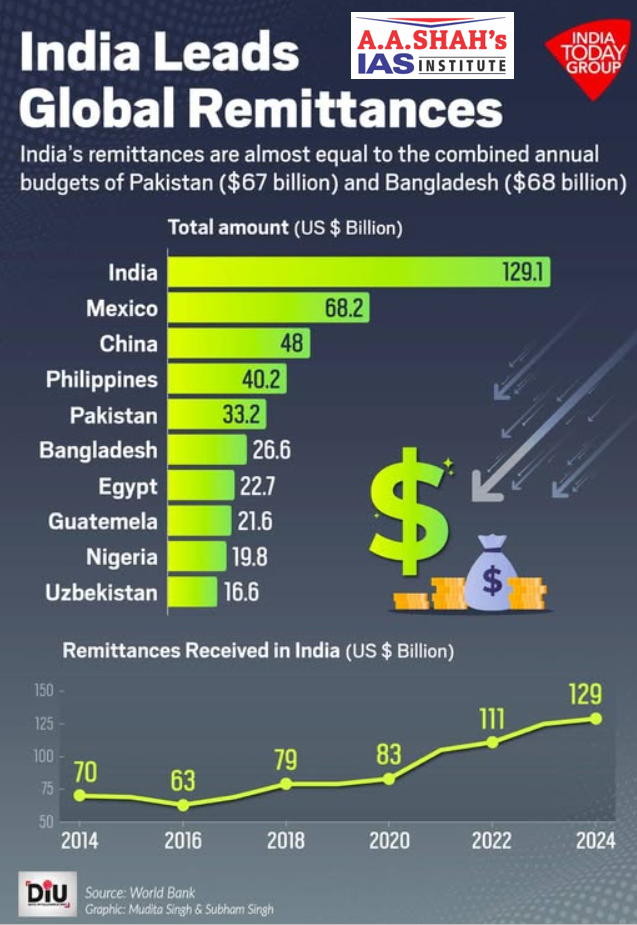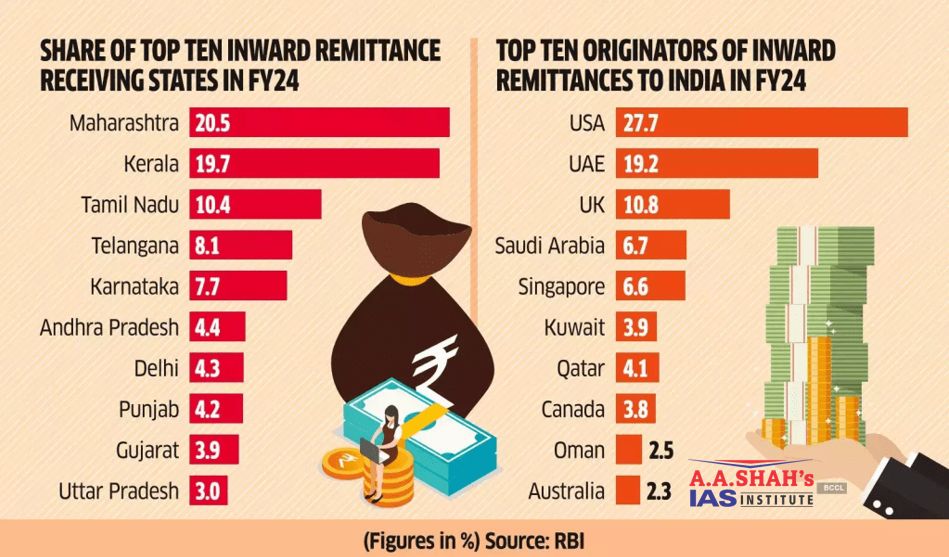
India’s exposure to remittances from West Asia is around $40 billion annually
ECONOMY – INDICATORS
29 MARCH 2026
- Economic indicators are beginning to show signs of slowing growth in response to the constraints created by the war in West Asia, the Ministry of Finance has said in a new report.
- The Monthly Economic Review for March 2026, released by the Department of Economic Affairs (DEA), noted that the evolving conflict has “introduced a complex and multi-layered set of risks” for India, which is a major energy importer with strong trade, investment, and remittance linkages with West Asia.
- “Additionally, potential moderation in remittance inflows — given that a significant share originates from the Gulf — poses a downside risk,” the report said.
- It added that data from the Ministry of External Affairs showed that an estimated 9.2 million Indians live and work in West Asia, with the Reserve Bank of India estimating that at least 35% of India’s annual remittances originate from the region.
- “This implies that India’s exposure to remittances from the region is around $40 billion annually,” the report said.
- If conflict worsens, job losses or instability may result in remittances falling.
Remittances
- They refer to money sent by people working abroad to their families in their home country.
- They are an important source of foreign income for the country.
- In India’s case, a large share of remittances comes from Indians working in West Asia (Gulf countries).
- A decline in remittances can negatively affect household income, consumption, and the overall economy.