Fragile ceasefire takes hold between U.S., Iran
INTERNATIONAL – ASIA
9 APRIL 2026
- The two-week ceasefire announced by the U.S. and Iran hung in the balance with each side offering divergent accounts of its terms and Israel launching one of its heaviest air strikes on Lebanon since the war began, drawing swift accusations from Tehran of truce violation.
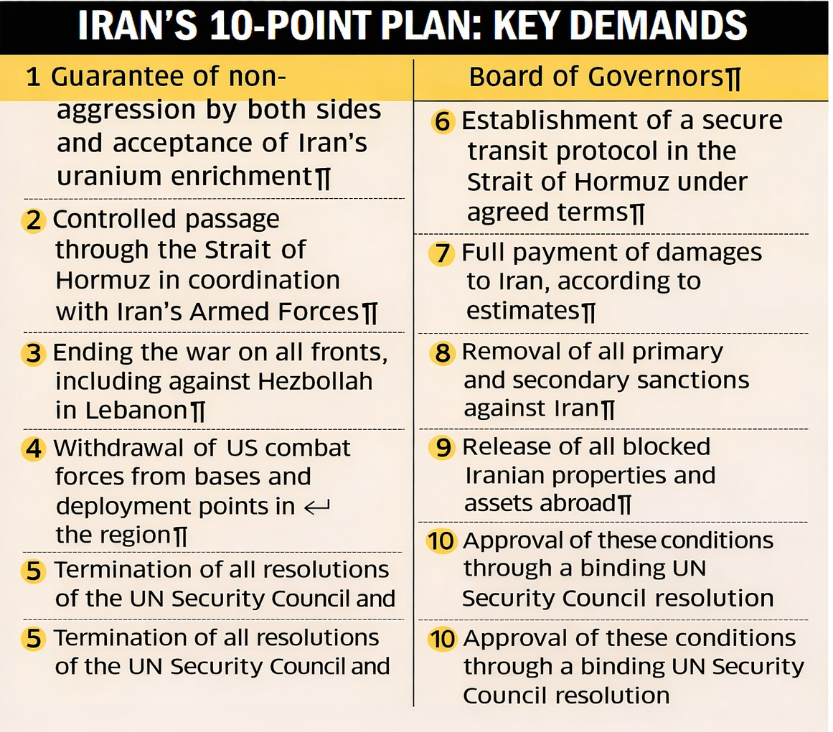
- U.S. President Donald Trump said he has “suspended the bombing of Iran” for two weeks and will begin talks with Tehran based on its 10-point proposal, provided Iran reopens the Strait of Hormuz.
- Iran said it will halt strikes if U.S.-Israeli attacks stop and promised safe passage through the strait in coordination with its forces during the truce.
- Pakistan, which mediated between the two sides, said all parties and their allies have agreed to an immediate ceasefire on all fronts, including Lebanon.
- Pakistan will host direct talks on April 10.
- However, Israel Prime Minister Benjamin Netanyahu, who welcomed the U.S.-Israel ceasefire, said Lebanon was not part of the deal.
- Israel then stepped up air strikes on more than 100 targets in Lebanon, killing at least 112 people.
- The U.S. had earlier sent a 15-point ceasefire proposal to Iran through Pakistan, which Tehran rejected. Instead, it submitted a 10-point proposal demanding the lifting of all sanctions and continued control over the Strait of Hormuz, according to Iran’s state media.
- The proposal, as per the Council, includes: no new aggression against Iran; continued Iranian control over the Strait of Hormuz; acceptance of uranium enrichment; removal of all sanctions; payment of compensation; withdrawal of U.S. forces from the region and cessation of war on all fronts, including Lebanon.
- Later in the day, the White House said the 10-point proposal Iran has submitted to the U.S. was different from the plan released by Iran’s state media.
- Mr. Trump also said that Lebanon was not part of the ceasefire and wrote in a social media post that Iran would not be enriching uranium.