Great Nicobar draft plan projects tourism as primary growth driver
ENVIRONMENT – BIODIVERSITY
11 APRIL 2026
- The draft master plan for developing the Great Nicobar Island (GNI) under the Centre’s ₹92,000-crore mega-infrastructure project has proposed to focus on tourism as the “primary economic driver” of growth, noting that it also intends to get the “population to settle here”, through permanent and temporary jobs expected to be created.
Phases of development
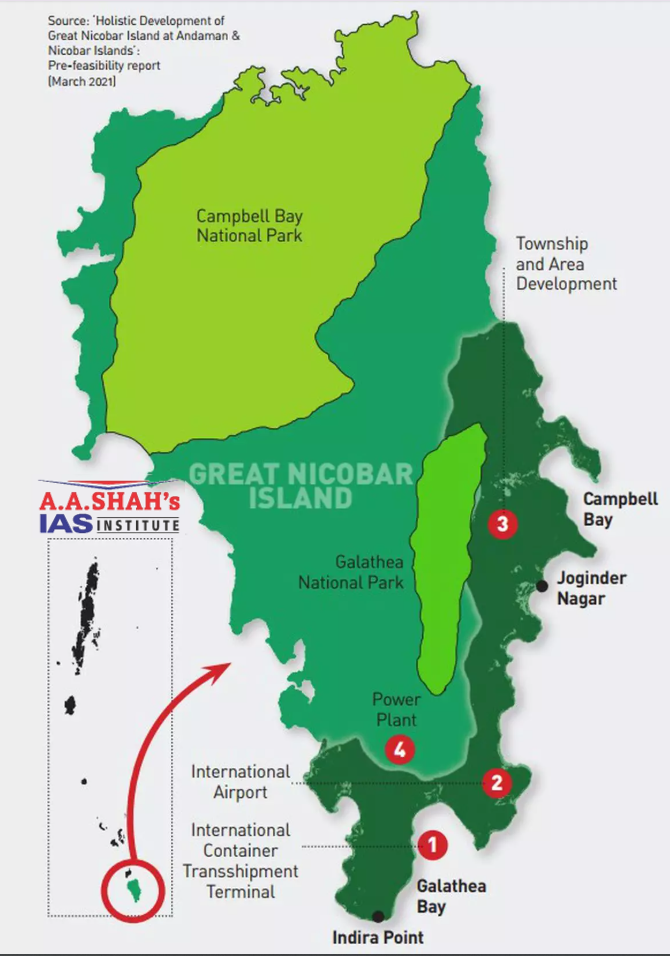
- The development will start with “anchor projects” such as the International Container Transhipment Port (ICTP), the Great Nicobar International Airport, and the GNI gas and solar power plants from 2025 to 2029.
- They will include physical infrastructure like roads, water reservoirs, water treatment plants, and freight terminals.
- Phase 1 (2030-2035) is expected to see growth in tourism activity and upgraded infrastructure.
- Phase 2 (2036-2041) envisages a “phase of consolidation and enhanced growth of tourist traffic” and the opening of opportunities for other potential economic drivers.
- Phase 3 (2042-2047), the last phase has been earmarked for “future development”.
Township clusters in the notified plan
- Under “future development”, the draft plan notified hints at possible development of the Pemmaya buffer area on the western flank of Galathea Bay, where “tribal settlements” may be permitted.
- However, this appears at variance with a separate draft relocation plan to shift local Nicobarese tribes further north to Pulobhabi
- The notified plan proposes a township divided into several clusters:
- an administrative and institutional cluster near Campbell Bay,
- a multi-modal logistic cluster (to include airport, port, freight and passenger terminals, defence area, and green development) near Galathea Bay,
- tourism, entertainment, and processing clusters along the eastern coast of the island from Galathea Bay in the south to Campbell Bay in the north.
Tourism models suggested in draft plan
- Envisioning the development of the island as a “seaside destination to relax and enjoy in a pristine, unspoilt and protected environment”, the draft master plan suggests several tourism models—
- wellness tourism (rejuvenation and lifestyle management retreats),
- beach tourism (around seven potential beaches identified),
- nature and biodiversity tourism,
- adventure tourism with “curated adventures”,
- business tourism (for retreats, conferences, conventions),
- gaming tourism, and hubs for family entertainment which may have theme parks, water parks and amusement parks. One of the draft maps also indicates the possibility of a casino within the tourism and entertainment cluster.
Land acquisition
- The project is expected to span 166.10 sq. km, as notified in December 2025.
- About 121.86 sq km of land is expected to come from diverted forest areas.
- Of this, about 40.8% has been set aside as “urbanisable”, with the rest allocated to “special projects”, which include the airport, container port, freight and passenger terminals, defence area, and a green development area where no tree-felling will be allowed.
Projected population growth in Great Nicobar Island
- The plan has been drafted for a projected population of 3.36 lakh by 2055.
- By that time, the plan is expected to achieve an annual inflow of more than a million tourists.
- Of the projected 3.36 lakh, the local Nicobarese population is expected to grow to about 11,500 from the current 7,500.
Nicobarese Population withdrew consent
- The Great Nicobar Island (GNI) Project, which received Stage-I clearance in 2022, includes an international container transshipment port, an airport, power plants, and a township.
- However, soon after the clearance, the local Nicobarese population withdrew its consent, alleging that their forest rights had not been settled.
- The Calcutta High Court is currently hearing a challenge to the project’s clearances.