SC to examine plea against apnoea test for brain death
POLITY – JUDICIARY
The Supreme Court has found prima facie a “ring of truth” in a doctor’s plea that the apnoea test, alleged to be widely used in Kerala, is not a conclusive assessment of brain death.
The apnoea test may by itself induce brain death as it required stopping or reducing cerebral blood flow.
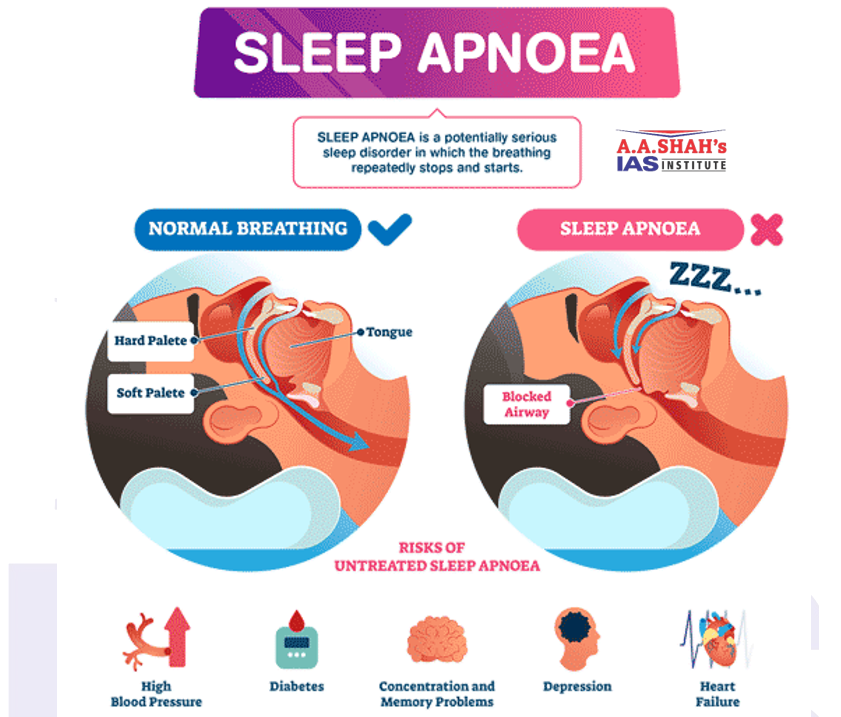
The apnoea test (or sleep study/polysomnogram) is the diagnostic procedure used to measure these interruptions, monitoring airflow, blood oxygen levels, and heart rate to determine the severity and type of the disorder.
The apnoea test is a mandatory clinical procedure used to determine brain death by proving the permanent loss of the brainstem’s respiratory drive. It involves challenging the body with high levels of carbon dioxide (CO2) to see if it triggers spontaneous breathing.
The court included in its order the petitioner’s contention that the best possible procedure to conclusively assess the parameters of brainstem death would be to subject the patient to appropriate ancillary or supplemental tests, including electroencephalography (EEG), four-vessel cerebral angiography, radionuclide (radioisotope) angiography, or CT angiography.
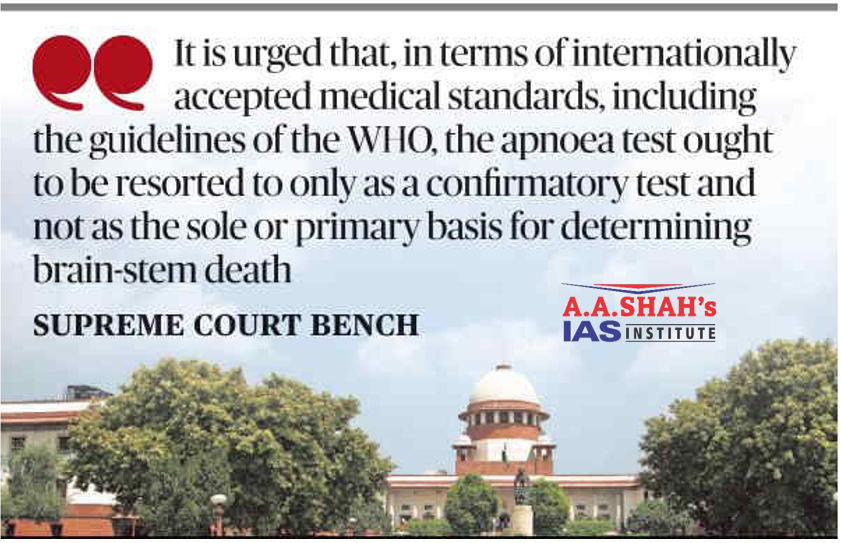
“It is urged that, in terms of internationally accepted medical standards, including the guidelines of the World Health Organization, the apnoea test ought to be resorted to only as a confirmatory test and not as the sole or primary basis for determining brain-stem death,” the Bench.