Why is India pushing for coal gasification?
ECONOMY – ENERGY
31 MAY 2026
- In a roadshow promoting surface coal gasification, Union Coal and Mines Minister G. Kishan Reddy said the technology, which can also yield a range of downstream products, has the potential to substitute imports worth up to ₹3 lakh crore.
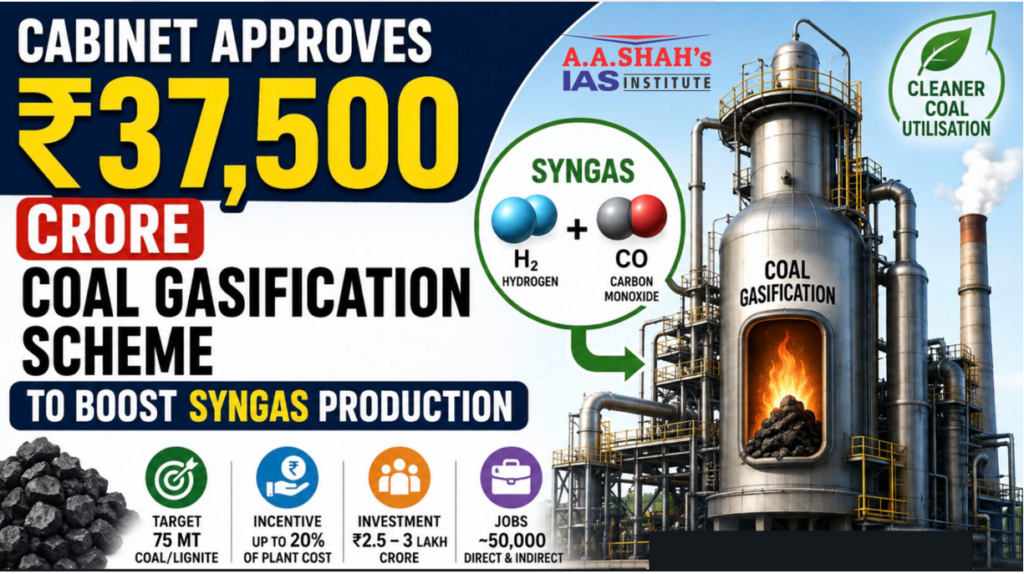
- To encourage coal gasification, the Union Cabinet approved a ₹37,500-crore incentive package.
What is coal gasification?
- Coal gasification entails the conversion of coal into synthetic gas, or syngas, which can be further used to produce downstream products such as urea, methanol, ammonium nitrate, synthetic natural gas (SNG), hydrogen, ether, and dimethyl, among others.
- According to government data, India possesses approximately 401 billion tonnes of coal and about 47 billion tonnes of lignite.
- The rationale behind coal gasification is greater utilisation of these resources besides putting in place a sustainable mining method to produce the downstream products.
- This, the government believes, will reduce import dependence.
- According to the Union Coal Ministry, India imports one-fifth of its urea requirement, almost its entire ammonia requirement, and approximately 80-90% of its methanol requirement.
- The Ministry has set itself a target of gasifying 100 million tonnes of coal by 2030.
- With the recently announced scheme in place, the government aims to support the gasification of about 75 million tonnes of coal and/or lignite to reach its 2030 target.
Where does India stand with coal gasification at present?
- Before the ₹37,500-crore package was announced this year, the government had approved an ₹8,500 crore package in January 2024.
- Of this, ₹6,233 crore has been disbursed to eight projects owned by private sector and public-sector undertakings.
- These include projects being executed through separate joint ventures of Coal India with Bharat Heavy Electricals and Gas Authority of India Ltd, and as well as Coal India’s own project in Western Coalfields.
- Private-sector participants include companies such as Jindal Steel and Greta Energy and Metal.
Where does India stand with respect to the technology for coal gasification?
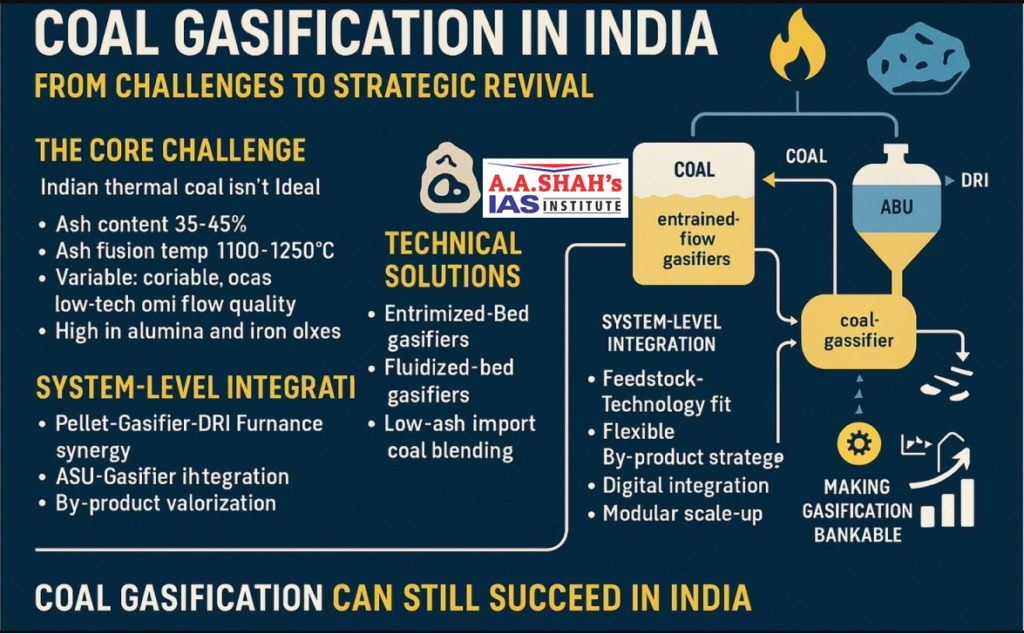
- Large-scale commercial deployment of gasification in India hinges on navigating issues such as the high ash content of coal, variability in its gross calorific value, and the presence of complex mineral matter, all of which can impede the gasification process.
- This is why fluidised-bed gasification is considered particularly suitable for Indian coal. The technology utilises a gas stream that lifts the coal out of ash, thereafter gasifying it with heat.
- The high-ash content of Indian coal also differentiates the gasification technology that could be employed in India from that in other countries such as China, which is the world leader in gasification, Australia, or the U.S.
- Another aspect relates to the adequate presence of indigenous technology. By their very nature, coal gasification projects are highly capital-intensive and involve long gestation periods.
- At its maturing stages, coal gasification may still require technological imports. It for this reason that industry has also sought the government’s consideration of exemptions from provisions of the Department for Promotion of Industry and Internal Trade for acquiring necessary technologies, especially from China. Officials said that the Ministry would support participants in securing clearances for technology imports, though the regulatory requirement will continue.