American economists win Nobel for linking household trends to policies
AWARDS – NOBEL
13 OCTOBER 2026
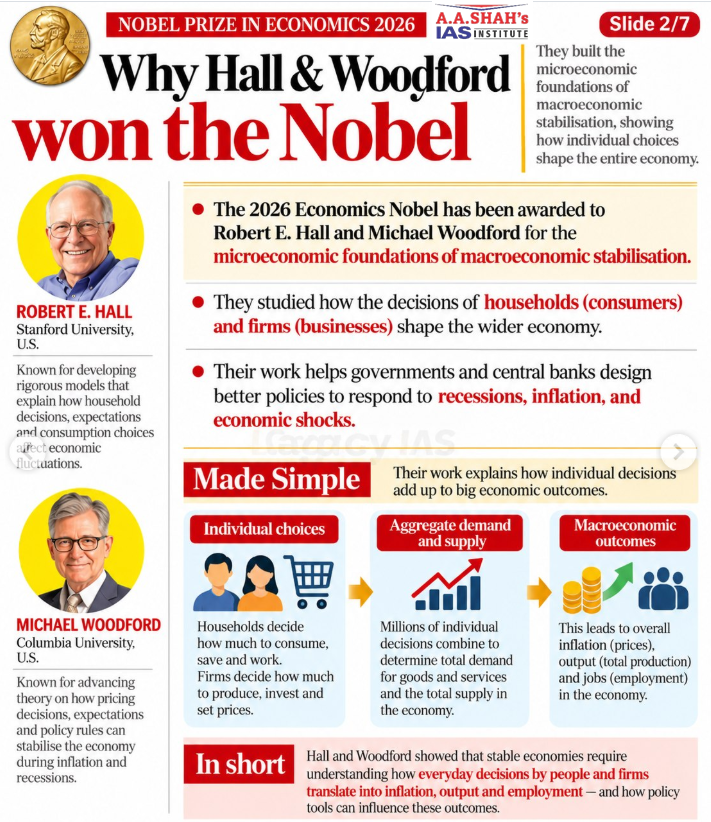
- American economists Robert E. Hall and Michael Woodford were announced recipients of the 2026 economics Nobel for providing an empirical formula to help government frame policies that are aimed at stabilising the economy while incorporating household demand behaviour and supply behaviour of companies.
- Professor Hall, 83, is currently the Robert and Carole McNeil Joint Hoover Senior Fellow and Professor of Economics at Stanford University while Mr. Woodford, 71, is the John Bates Clark Professor of Political Economy at Columbia University.
- The official citation of the economics Nobel, formally the Sveriges Riksbank Prize in Economic Sciences in Memory of Alfred Nobel, said the duo was awarded for establishing the “microeconomic foundations of macroeconomic stabilisation”.
- “This year’s laureates in the economic sciences have developed new macroeconomic models that have significantly improved our ability to implement effective stabilisation policy,” the Royal Swedish Academy of Sciences said.
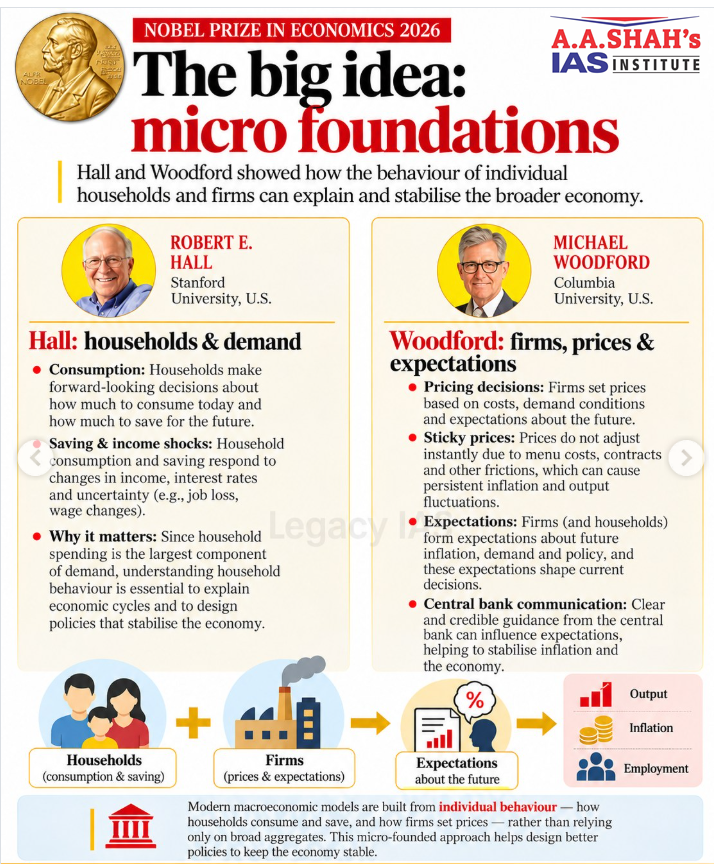
- In a paper published in 1978, Professor Hall brought empirical backing to the idea that, while a household’s current disposable income does impact its current spending, its expectations about the future path of disposable income matters almost just as much.
- Professor Woodford, on the other hand, focused on supply, particularly on firms and how they set prices, and combined both his work and Professor Hall’s into a composite framework.
- This combination helped with understanding business cycles, what causes them, how they play out, and the impact of these on government policy.
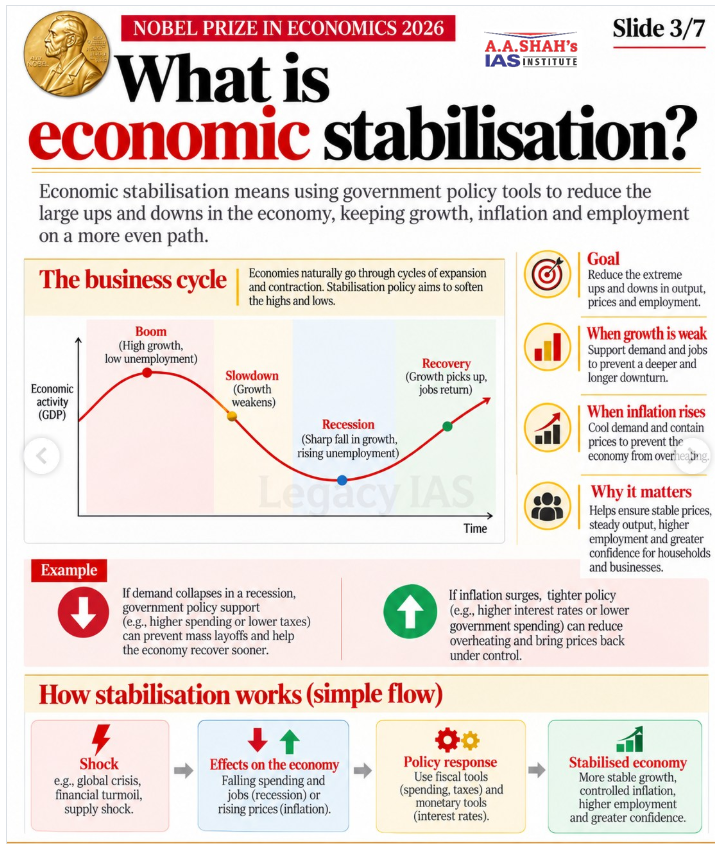
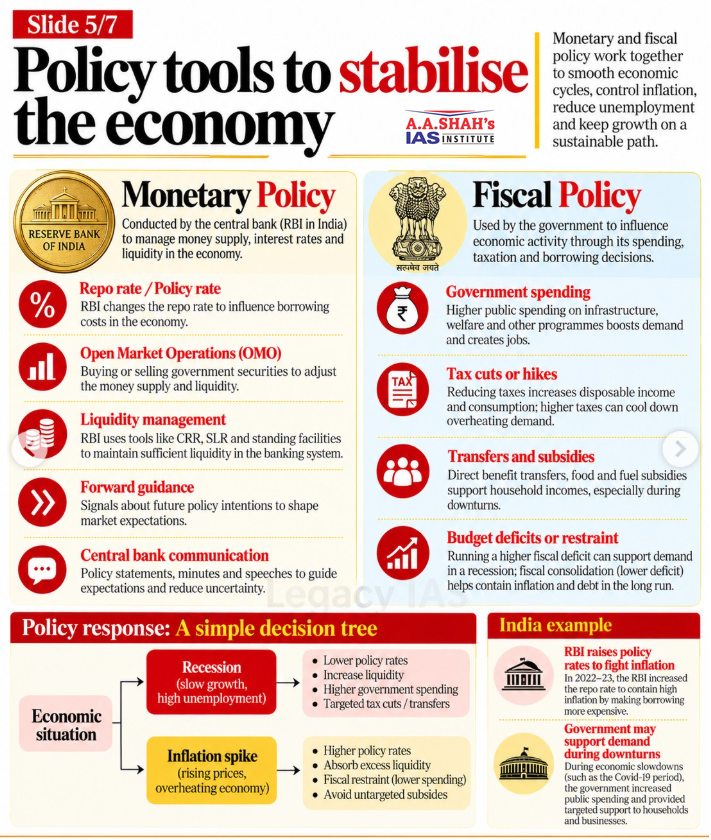
- “On the basis of these models, well-timed fiscal and monetary policy measures can reduce the economy’s peaks and troughs,” the statement by the Royal Swedish Academy said.
- The research done by Professor Hall and Professor Woodford also provides an empirical basis, as Professor Woodford himself explained, for the idea that the effectiveness of economic policy is also determined by how well the government communicates the need for implementing those policies.
- He explained that his work has stressed the need for consumers to understand the future course of policy, which is “crucial” to the effects of policy.