Biodiversity Beyond National Jurisdiction (BBNJ) agreement
ENVIRONMENT – BIODIVERSITY
4 NOVEMBER 2025
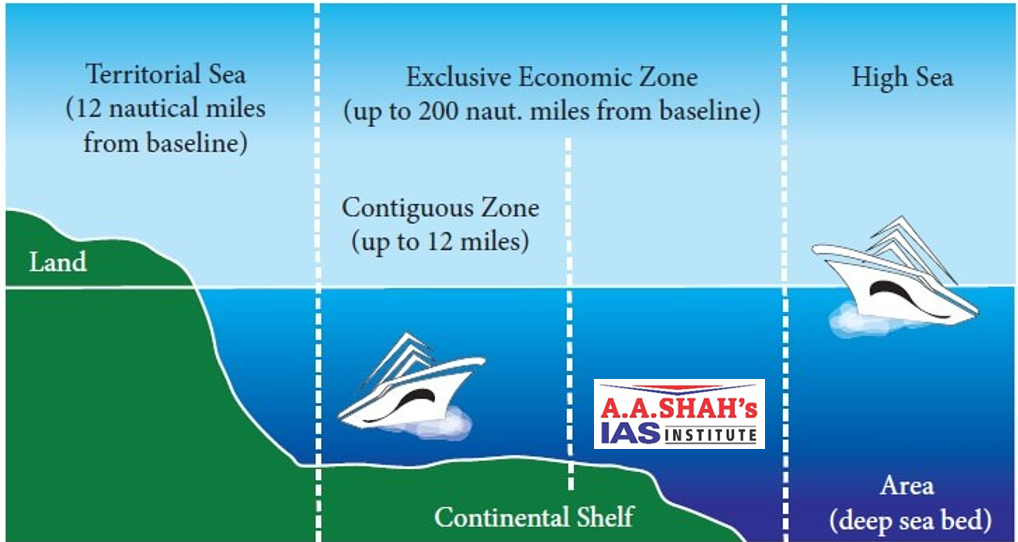
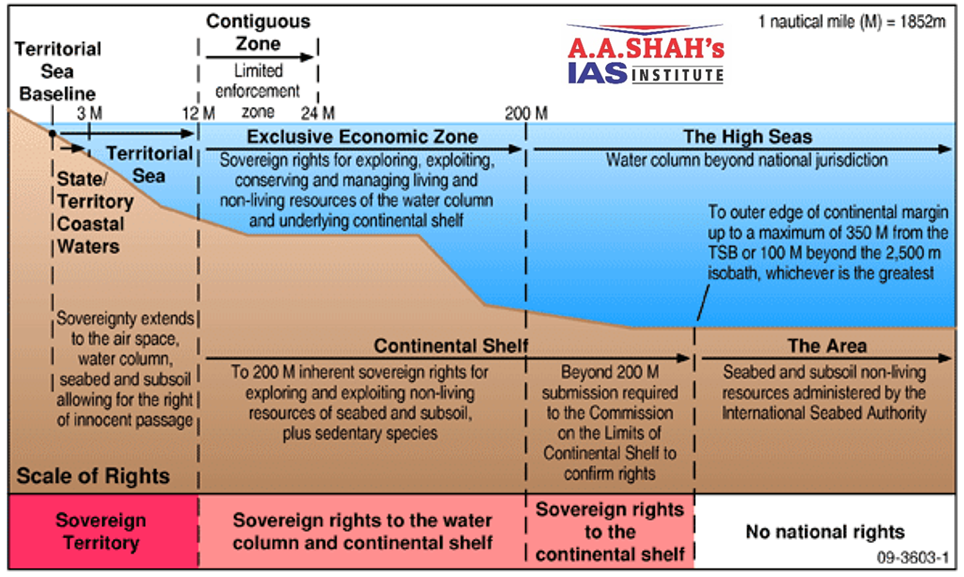
- Over two-thirds of the world’s oceans lie beyond national jurisdiction — that is, outside the 200-nautical-mile Exclusive Economic Zones (EEZs) of any country.
- These areas, called the “high seas”, are global commons — belonging to no one nation.
- However, they face increasing threats from overfishing, pollution, deep-sea mining, and climate change.
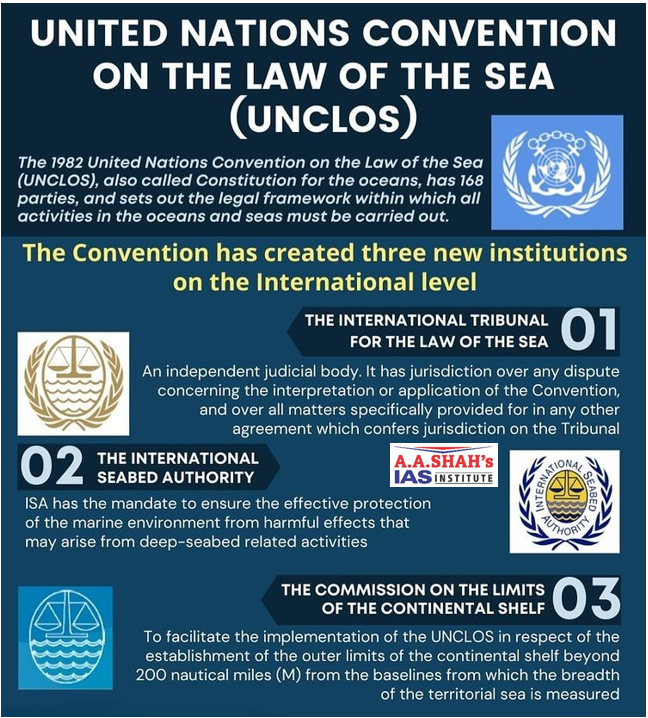
- Hence, the need for the BBNJ Agreement under the United Nations Convention on the Law of the Sea (UNCLOS).
- It is a legally binding international treaty adopted in June 2023 under the framework of UNCLOS (1982).
- Its main aim is to conserve and sustainably use marine biological diversity in areas beyond national jurisdiction.
- The treaty must be ratified by at least 60 countries to enter into force which was completed in September 2025.
- It will now be enforced in January 2026.
- India has signed the BBNJ Agreement in 2024 but has not yet ratified it.
- Signing shows intent, while ratification legally binds a country to the treaty, with the process differing across nations.
Key Features and Provisions
(a) Marine Genetic Resources (MGRs) and Benefit Sharing
- MGRs (like deep-sea microbes or genetic material from marine organisms) can have biotechnological and pharmaceutical value.
- The treaty ensures equitable sharing of benefits (scientific, economic, and technological) from their use — especially for developing countries.
(b) Marine Protected Areas (MPAs)
- Allows the creation of high-seas Marine Protected Areas to safeguard fragile ecosystems and species.
- Aims to help achieve the “30×30” target — protecting 30% of global oceans by 2030.
(c) Environmental Impact Assessments (EIAs)
- Requires countries to conduct EIAs before activities (like deep-sea mining or large-scale fishing) that could harm marine ecosystems.
(d) Capacity Building and Technology Transfer
- Supports developing nations with funding, technology, and scientific expertise to participate in ocean research and conservation.
(e) Institutional Mechanisms
- Establishes a Conference of the Parties (COP) to review implementation, along with a secretariat and scientific advisory body.