Health Ministry set to roll out free HPV vaccination plan targeting girls aged 14
SOCIAL – HEALTH
25 FEBRUARY 2026
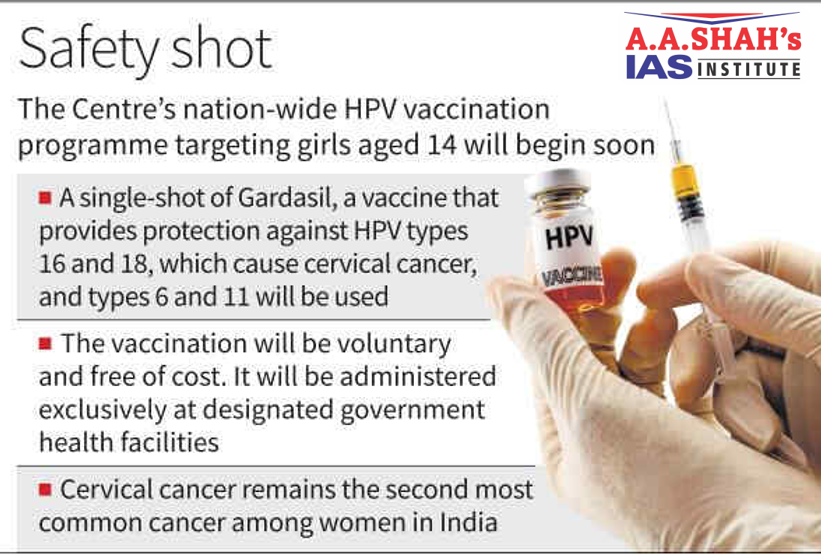
- The Union Health Ministry is set to launch a nation-wide Human Papillomavirus (HPV) vaccination programme targeting girls aged 14.
- The vaccination will be voluntary and free of cost, ensuring equitable access across socio-economic groups.
- India will use Gardasil, a quadrivalent HPV vaccine, for protection from HPV types 16 and 18, which cause cervical cancer, and types 6 and 11.
- The vaccine is non-live, does not cause HPV infection, and has a good safety record, supported by more than 500 million doses administered globally since its introduction in 2006.
- “Global and Indian scientific evidence confirms that a single dose provides robust and durable protection when administered to girls in the recommended age group,” a senior Health Ministry official said.
- “The nation-wide programme will target girls aged 14 years, an age at which the HPV vaccine offers maximum preventive benefit, well before potential exposure to the virus,” they said.
- To ensure uninterrupted availability and quality, India has secured HPV vaccine supplies through a transparent, globally supported procurement mechanism.
- “Under India’s partnership with Gavi, the Vaccine Alliance, Gardasil vaccines, which are approved by India’s drug regulator and widely used internationally, have been made available for the national programme.
- HPV vaccination under the national programme will be conducted exclusively at designated government health facilities, including the Ayushman Arogya Mandirs (Primary Health Centres), Community Health Centres, Sub-District and District Hospitals, and Government Medical Colleges.
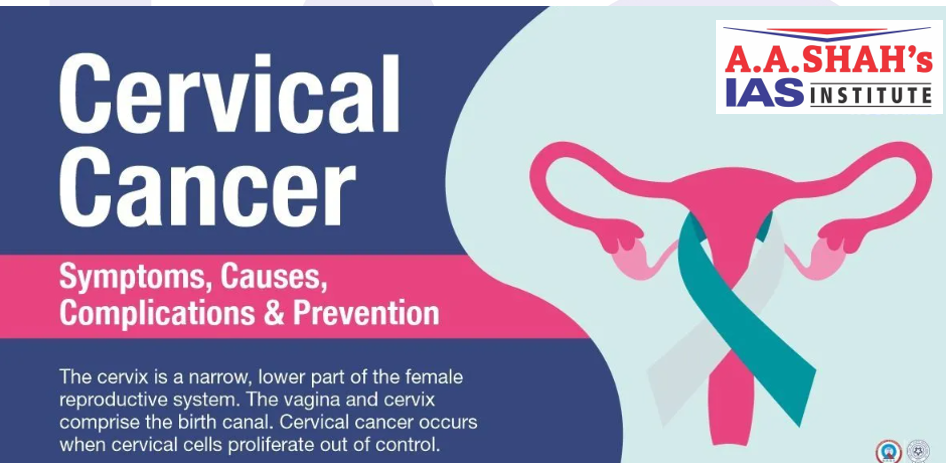
Cervical Cancer
- Cervical cancer remains the second most common cancer among women in India, with nearly 80,000 new cases and over 42,000 deaths reported annually.
- Scientific evidence establishes that almost all cases of cervical cancer are caused by persistent infection with high-risk types of HPV, particularly HPV types 16 and 18, which together account for more than 80% of cervical cancer cases in India.
- Almost all cervical cancer cases (roughly 99%) are caused by persistent, high-risk human papillomavirus (HPV) infections, which are transmitted through sexual contact.
- While it is primarily a sexually transmitted infection (STI), HPV can be passed via skin-to-skin genital contact, not just intercourse, and it is highly common.