Hunger monitor confirms famine in Darfur’s El Fasher
INTERNATIONAL – AFRICA
4 NOVEMBER 2025
A global hunger monitor confirmed famine conditions in El Fasher, the Sudanese city taken by the paramilitary Rapid Support Forces (RSF) after a lengthy siege, as well as Kadugli, another besieged city in Sudan’s south.
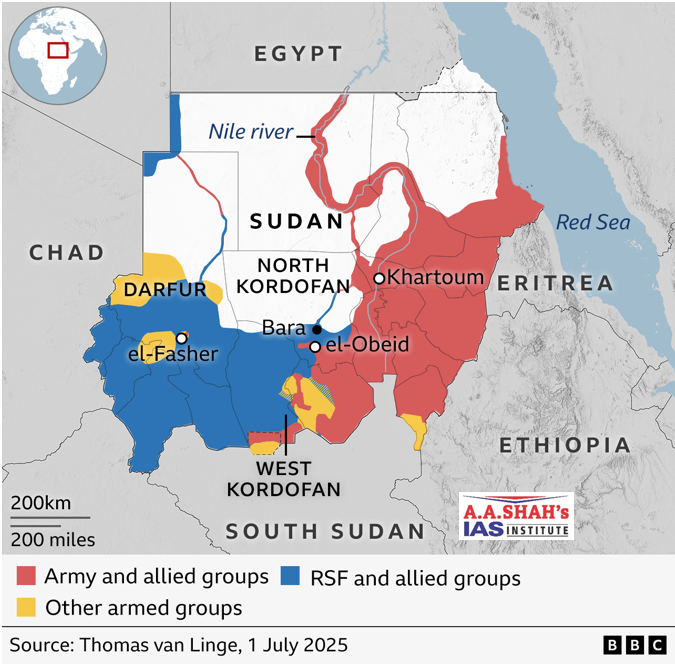
El Fasher was subject to RSF assaults and besieged for about 18 months before it fell in October 2025, deepening a geographical split in Sudan.
During the siege, residents said food supplies were cut off, forcing people to eat animal feed and sometimes animal hides.
International Criminal Court prosecutors said they were collecting evidence of alleged mass killings and rapes after El Fasher’s fall.
The head of the Red Cross said history was repeating itself in Darfur.
HISTORY OF SUDAN
Colonial Era
Sudan was ruled jointly by Britain and Egypt from 1899 to 1956
The north (Arab-Muslim majority) was developed and Arabized, while the south (African-Christian and animist communities) was neglected; sowing deep ethnic, cultural, and religious divides.
Independence and Civil Wars
Sudan gained independence in 1956, but instability followed immediately.
The First Sudanese Civil War (1955–1972) erupted between the north and the south over autonomy and marginalization.
A fragile peace came with the Addis Ababa Agreement (1972), granting limited southern autonomy.
Second Civil War (1983–2005)
Renewed fighting broke out when President Jaafar Nimeiri imposed Islamic Sharia law nationwide and revoked southern autonomy.
The Sudan People’s Liberation Army (SPLA) led by John Garang fought the government.
The war killed over 2 million people and displaced millions.
The Bashir Era (1989–2019)
In 1989, Omar al-Bashir seized power through a military coup backed by Islamist ideologue Hassan al-Turabi.
Bashir’s regime ruled for 30 years
The government armed Arab militias (Janjaweed) against non-Arab ethnic groups, causing genocide-level atrocities, including mass killings, rape, and displacement.
This resulted in U.S. sanctions, isolation, and economic decline.
The Janjaweed later evolved into the Rapid Support Forces (RSF) — the same group now fighting the Sudanese army.
Secession of South Sudan (2011)
The Comprehensive Peace Agreement (2005) ended the north–south civil war.
In 2011, South Sudan gained independence, taking with it most of Sudan’s oil reserves.
The loss of oil revenue devastated Sudan’s economy.
The Revolution and Fragile Transition (2019–2021)
Widespread protests in 2018–2019 over food prices and repression led to Bashir’s overthrow in April 2019.
A Transitional Government was formed:
Civilian leaders (e.g., Abdalla Hamdok)
Military leaders (Gen. Abdel Fattah al-Burhan – head of SAF, and Hemedti – head of RSF)
Power Struggles
The civilian-military alliance was uneasy.
The military coup in October 2021 ended the democratic transition, restoring military rule and deepening tensions between Burhan and Hemedti.
The Current Conflict (April 2023–Present)
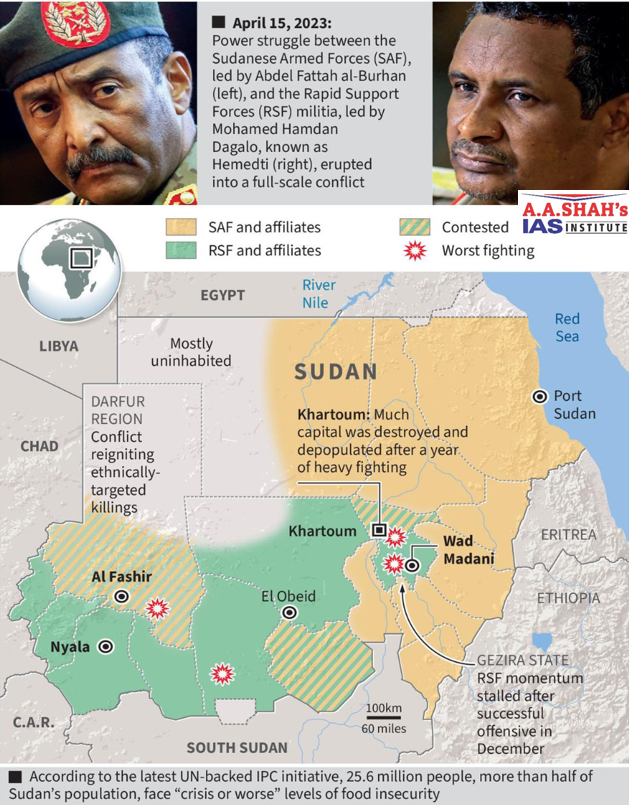
In April 2023, fighting broke out in Khartoum between the Sudanese Armed Forces (SAF) and the Rapid Support Forces (RSF)
Immediate Causes
Disagreements over integrating the RSF into the national army.
Competition for political and economic power.
Distrust between Burhan and Hemedti after years of rivalry.
Nature of the Conflict
Urban warfare devastated Khartoum and Darfur.
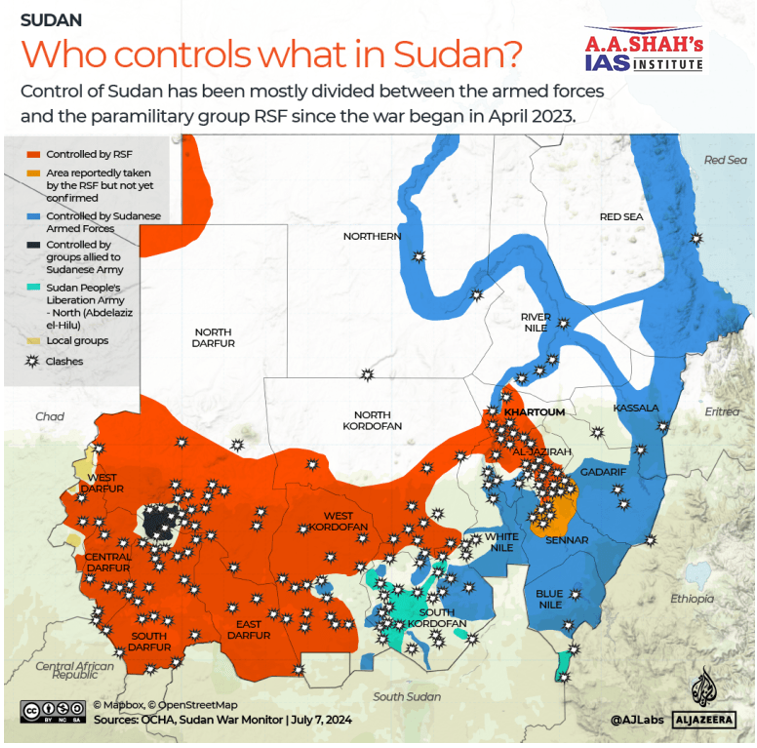
The RSF gained control over much of western Sudan; the army holds the east and north.
Both sides have committed war crimes, including massacres, sexual violence, and looting.
Humanitarian and International Impact
Over 15,000 killed, millions displaced, and famine conditions spreading.
Healthcare and infrastructure collapsed.
The UN warns of possible genocide in parts of Darfur.