IIT-Kanpur tried cloud seeding despite ‘no clouds’ alert
ENVIRONMENT – POLLUTION
2 NOVEMBER 2025
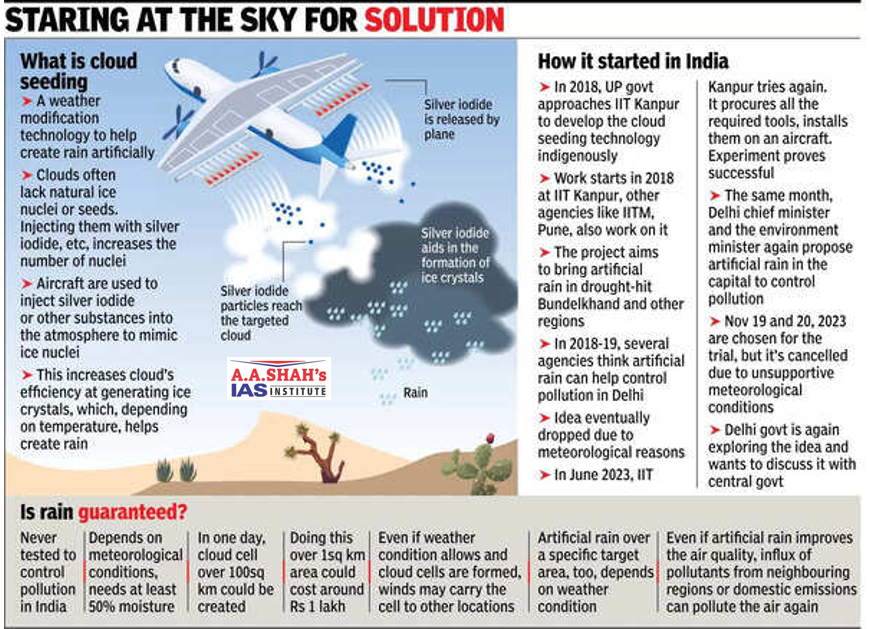
- Despite inputs from the India Meteorological Department (IMD) that clouds on October 28, 2025 in Delhi would be insufficient to coax artificial rain, researchers from the Indian Institute of Technology Kanpur went ahead with their plan of flying their Cessna plane and firing 10 kg of a concoction of silver iodide, common salt and rock salt into the clouds to tear them. Twice. And failed both times.
- With Delhi’s air quality predictably ‘poor’, it was the first time the capital had experimented with cloud-seeding since 1972 and for the first time ever, with the express plan of improving air quality.
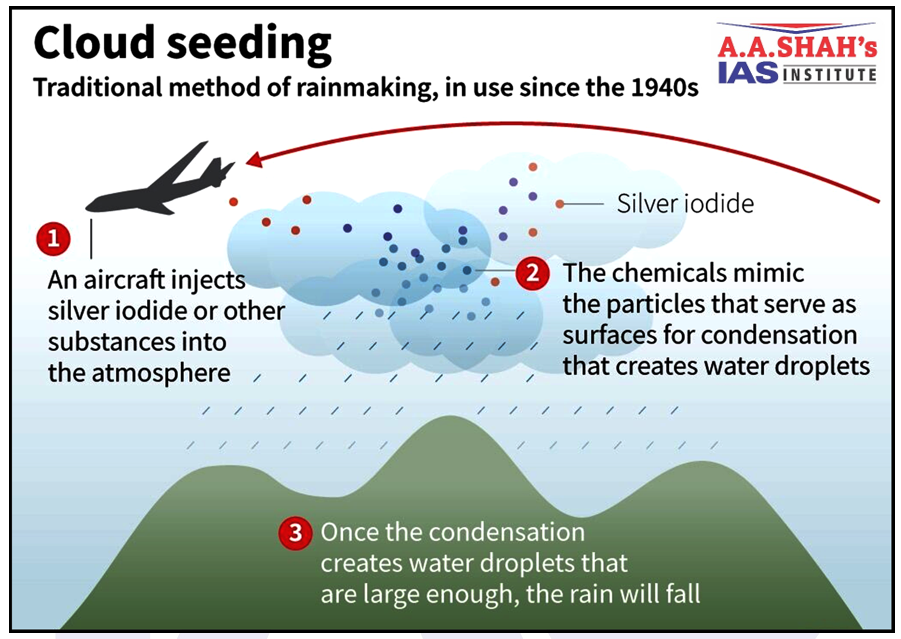
- Cloud seeding, or spraying fine chemical aerosols into rain clouds to induce rain, has been a subject of investigation in India for decades with the acknowledged authorities on the subject — the IITM, Pune — having conducted careful experiments on the effectiveness of cloud seeding to enhance monsoon rain since 2009.
- It may not have worked in India but it has in China and the United Arab Emirates.
- The implicit rule of cloud seeding is that it can only help in adding more water to clouds with minimum quantities of water vapour, called ‘warm clouds.’
- But if clouds already have water vapour, they would rain anyway. So what’s the gain from seeding?