Nine Botswana cheetahs released into Kuno park
ENVIRONMENT – BIODIVERSITY
1 MARCH 2026
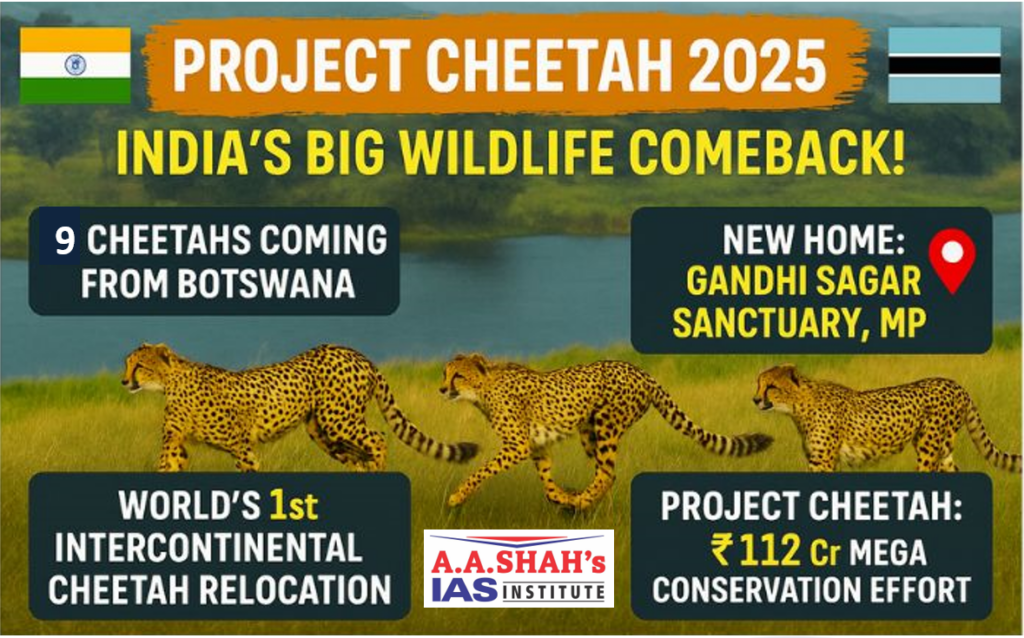
- In a major boost to Project Cheetah, nine cheetahs from Botswana have been released into enclosures at Kuno National Park by Union Environment Minister Bhupender Yadav.
Current Cheetah Population in India
- Total cheetahs in India: 48
- 28 Indian-born cubs
- 20 translocated adults from African nations
- However, since the programme began 21 cheetahs have died
- 9 translocated adults
- 12 Indian-born cubs
- Apart from Kuno, 3 adult cheetahs are currently at Gandhi Sagar Wildlife Sanctuary
Cheetah species
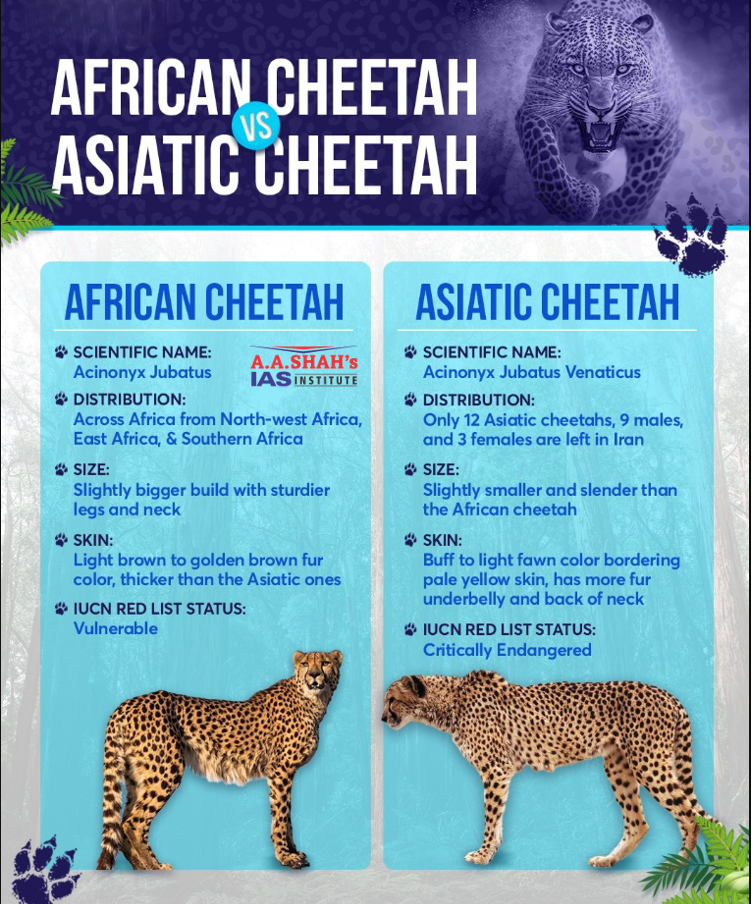
- The cheetah’s scientific name is Acinonyx jubatus.
- There is only one living species of cheetah, but it has different subspecies.
- Asiatic cheetah, once found in India and West Asia, now survives only in very small numbers in Iran.
- Southeast African cheetah found in countries like Namibia, South Africa and Botswana are being translocated to India.
Cheetah Translocations so far
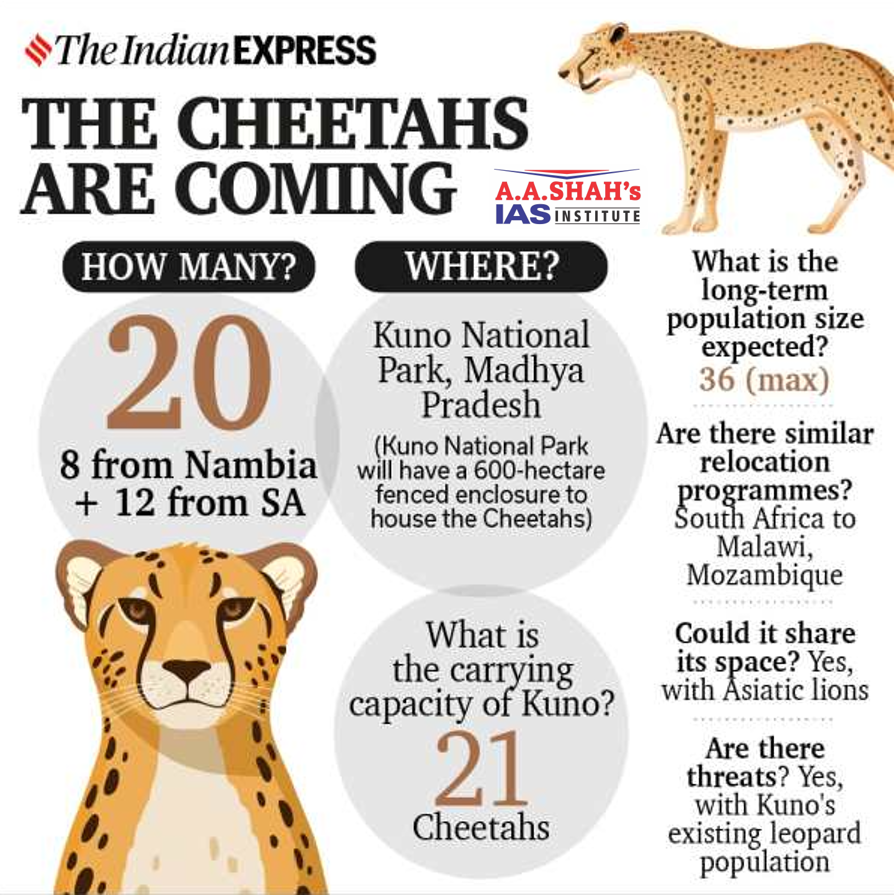
- 8 cheetahs from Namibia (September 2022)
- 12 cheetahs from South Africa (February 2023)
- 9 cheetahs from Botswana (February 2026)
Current Translocation
- The Botswana cheetahs were officially donated during President Droupadi Murmu’s visit in November 2025.
- Before being flown to India, they were kept in quarantine at Mokolodi Nature Reserve.
- The ywere airlifted by the Indian Air Force (IAF) to Gwalior Air Base and transported to Kuno via IAF helicopters.
- They will undergo minimum one month mandatory quarantine in special enclosures (bomas)
- They are fitted with tracking collars for monitoring movement and health
Why Cheetah’s got extinct in India
- Overhunting and Royal Sport
- Cheetahs were widely hunted during the Mughal and British periods.
- Thousands were captured and kept by rulers for hunting (coursing).
- They rarely bred successfully in captivity, so wild populations kept shrinking.
- Loss of Grassland Habitat
- Open grasslands were converted into agricultural land.
- Expansion of villages and livestock grazing reduced natural habitat.
- Grasslands were often not protected like forests.
- Decline in Prey Animals
- Animals such as blackbuck and chinkara were heavily hunted.
- Reduction in prey made it difficult for cheetahs to survive.
- Final Recorded Kill
- The last three recorded Asiatic cheetahs in India were reportedly shot in 1947 by Maharaja Ramanuj Pratap Singh Deo, the ruler of the former princely state of Koriya (in present-day Chhattisgarh).
- After this incident, no confirmed sightings of wild cheetahs were recorded in India, and in 1952, the Government of India officially declared the cheetah extinct in the country.
Why This Programme Is Important
- Project Cheetah aims to:
- Restore ecological balance
- Reintroduce a top predator
- Improve grassland ecosystem conservation
- India is the first country in the world to attempt intercontinental translocation of a large carnivore for reintroduction.