On backlash, Govt. pulls back revised earthquake zoning
DISASTER MANAGEMENT
8 MARCH 2026
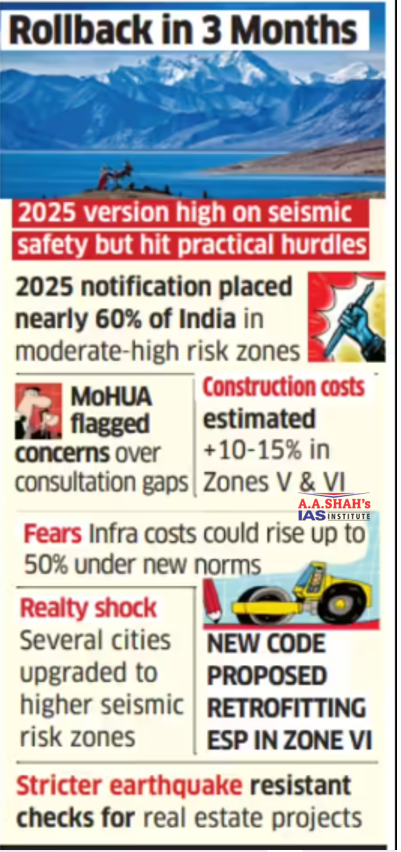
- Less than four months after issuing a revision to India’s earthquake zoning framework, the Centre has withdrawn its own notification following a major backlash from several government departments, Metro Rail corporations and infrastructure authorities that apprehended a surge in construction costs of marquee projects nationwide.
Revised Earthquake zoning
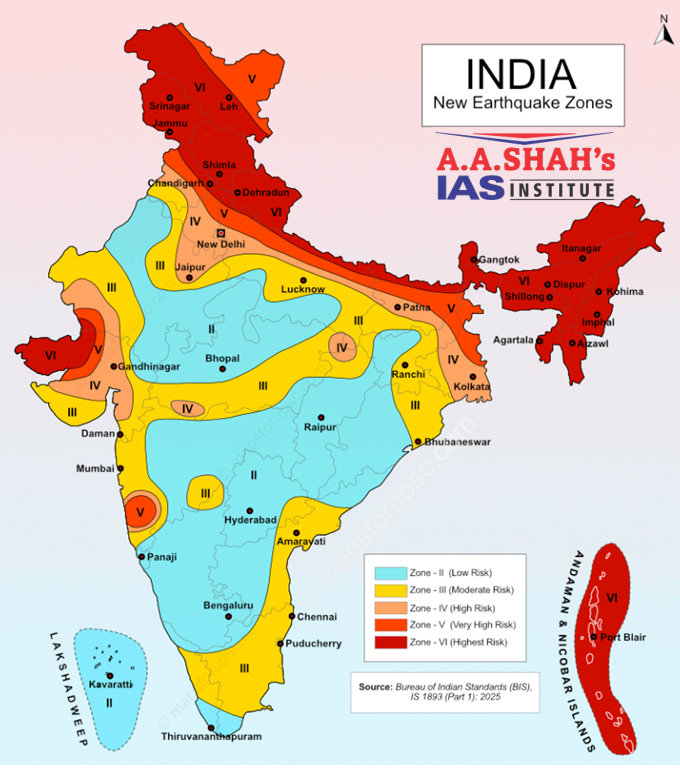
- The Bureau of Indian Standards (BIS) had issued a Gazette notification on November 6, 2025, introducing revised earthquake hazard zoning under the updated IS 1893 (Part 1): 2025 code, which governs the earthquake-resistant design of structures.
- It incorporated updated PSHA-based modelling and new hazard parameters.
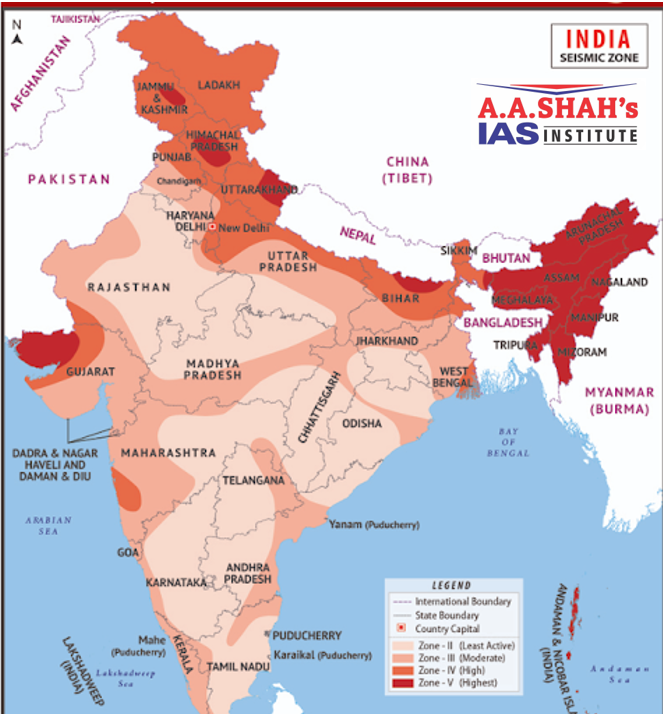
- The revised standard was meant to replace the existing IS 1893 (Part 1): 2016 framework that currently guides structural design norms across the country.
- Under the proposed classification, more than 60% of India’s landmass would fall under moderate to high earthquake risk zones, representing a major shift in the country’s seismic hazard mapping.
- However, the revised notification has now been withdrawn through a fresh Gazette notification issued on March 3, 2026, restoring the earlier code with immediate effect.
New highest-risk Zone VI
- A notable change in the revised framework was the introduction of a new highest-risk Zone VI, bringing parts of Kashmir, the North-East and the Kutch region of Gujarat under the most stringent seismic design standards.
- Several other regions across the Himalayan belt were categorised under Zone V, indicating very high seismic vulnerability.
- Such changes would have required significant revisions in structural design standards for buildings and infrastructure projects, including stronger foundationss.
Reason for withdrawal
- One of the strongest objections to the revised zoning framework came from Ministry of Housing and Urban Affairs (MoHUA )
- Several Metro Rail corporations across northern India, the National Dam Safety Authority (NDSA) and other infrastructure bodies that flagged the potential impact of the revised probabilistic seismic hazard assessment (PSHA) framework on construction costs.
- Some suggest that several under-construction high-rise developments could risk turning into ‘stranded assets’ if costs escalated sharply.
- Technical discussions within government agencies also raised questions about the methodology used in the revised probabilistic seismic hazard assessment.