Scientists chase the tough task of building a graviton detector
S&T – PHYSICS
20 JANUARY 2026
- The Stevens Institute of Technology in the U.S. recently said some of its scientists plus a group at Yale University will be building “the world’s first experiment explicitly designed to detect individual gravitons”.
- The announcement has already drawn sceptical attention from the physics community — but also $1.3 million from the W.M. Keck Foundation.
- The plan is to use an ultra-sensitive antenna of sorts to listen for the impact of the particles of gravity.
- The device of choice is a cylindrical resonator made of superfluid helium.
- The researchers chose this material because they can control it precisely at a macroscopic scale.
- To detect something as faint as a graviton, the detector must be completely free of noise, so the team plans to cool the cylinder down to its quantum ground state, where it will have no thermal vibrations. It will effectively be waiting in near total silence.
- When a strong gravitational wave, for example from a pair of black holes merging together, passes through the detector, the theory posits that it could transfer exactly one quantum of energy, i.e. a single graviton, into the cylinder. And when it does, the energy will be converted into a mechanical vibration within the cylinder. Lasers monitoring the cylinder will watch out for this vibration, revealing when a graviton has been absorbed.
Graviton
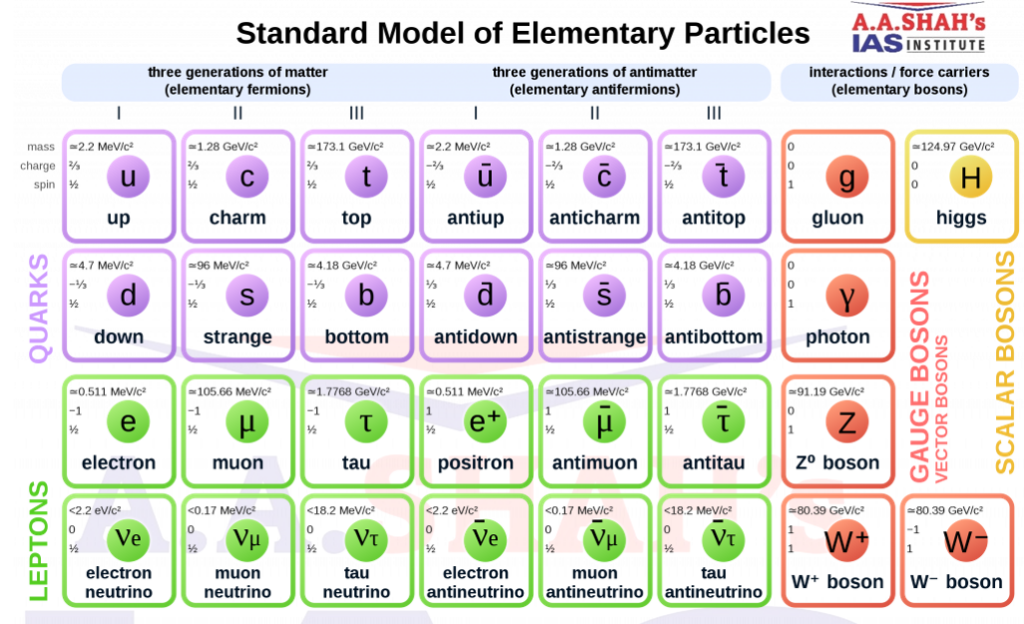
- The graviton is the hypothetical particle of gravity.
- Scientists do not know if it is real but they have some reasons to believe it could exist.
- In modern physics, forces are transmitted by particles.
- For instance, when two magnets repel each other, they are actually exchanging streams of (virtual) photons.
- Physicists believe gravity could work the same way: if the sun pulls on the earth, it could be doing so by exchanging gravitons.
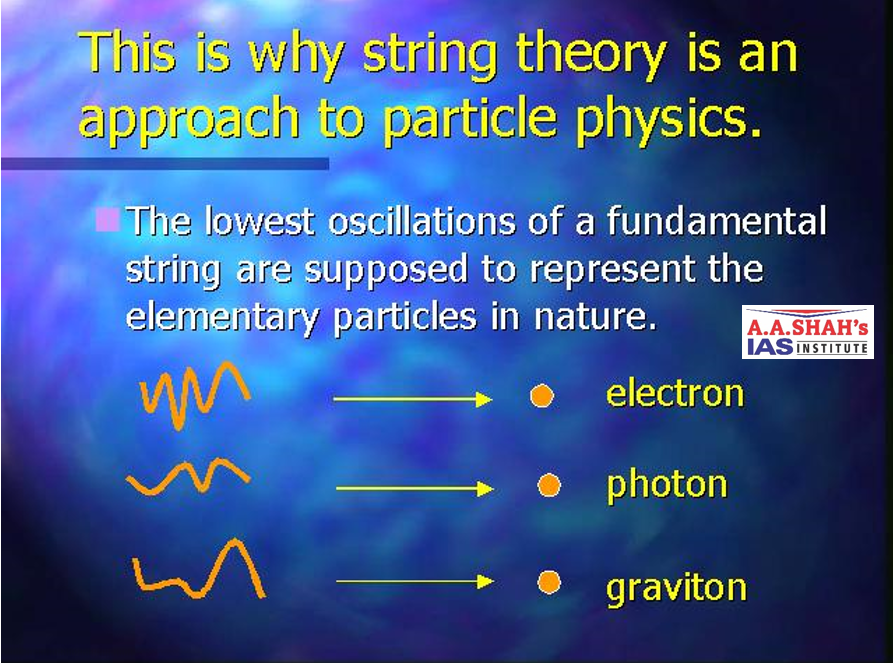
- Another way to understand a graviton is to compare it to light.
- Light is an electromagnetic wave but at the smallest level it’s made of particles called photons.
- Gravity acts like a wave — they’re called gravitational waves — but at the smallest level, physicists believe, it could be made of particles called gravitons.
Theory of Everything
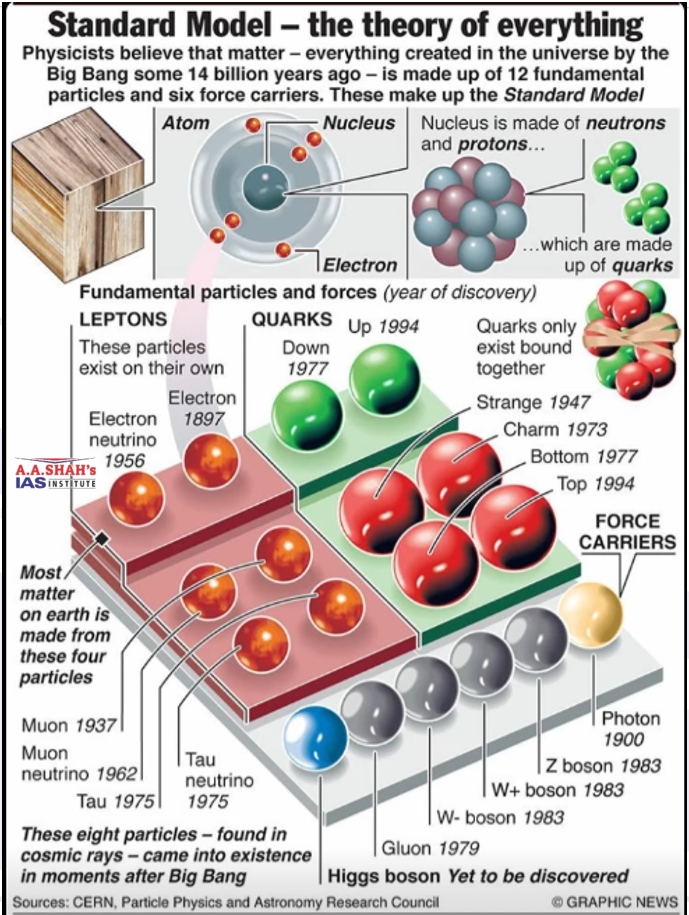
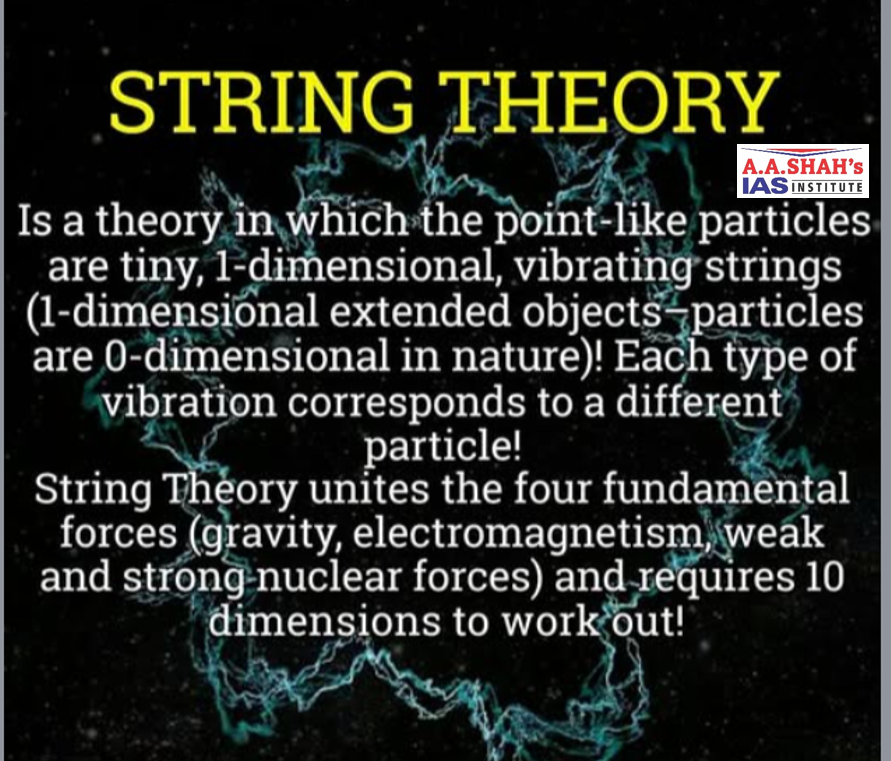
- If gravitons exist, they’d open the door to a theory of everything.
- Currently, physics theories are split into two camps:
1. general relativity, which explains the macroscopic universe like stars and gravity using the bending of spacetime; and
2. quantum mechanics, which explains small things like atoms using the properties of particles.
- The problem is that the maths of these two theories refuse to work together.
- If physicists find the graviton, it will prove that gravity is also a quantum force like the others — a bridge between the camps.
- While physicists have detected gravitational waves, they’ve never detected a graviton.
Four fundamental Forces
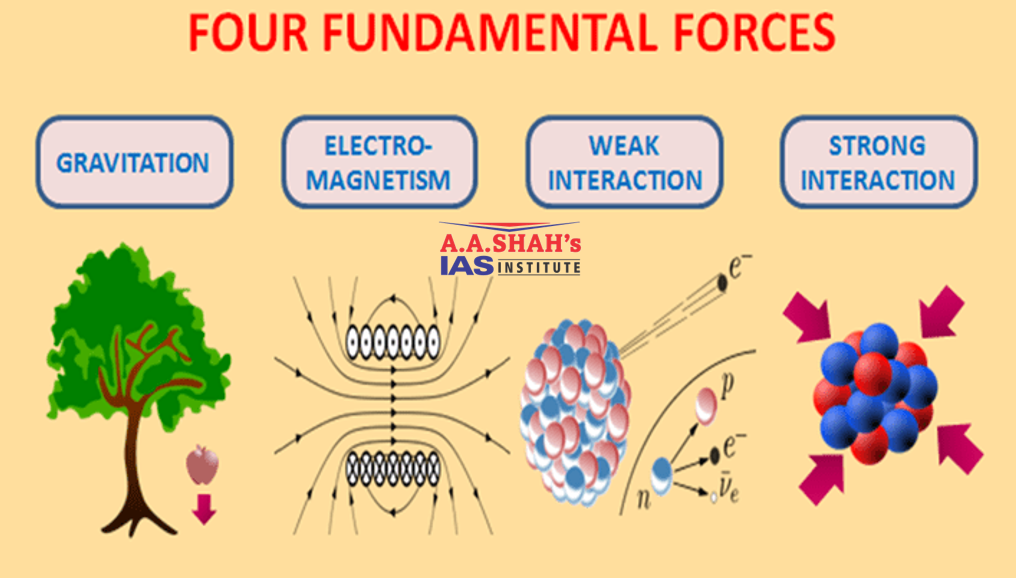
- Gravity is one of nature’s four fundamental forces; the others are electromagnetism and the strong and weak nuclear forces.
- And gravity is 1 billion billion billion billion times weaker than the electromagnetic force, the next strongest.
- This is why a simple fridge magnet can overcome the gravitational pull of the entire earth to pick up a paperclip.