Supreme Court to look into plea against law on Muslim inheritance
POLITY – JUDICIARY
11 MARCH 2026
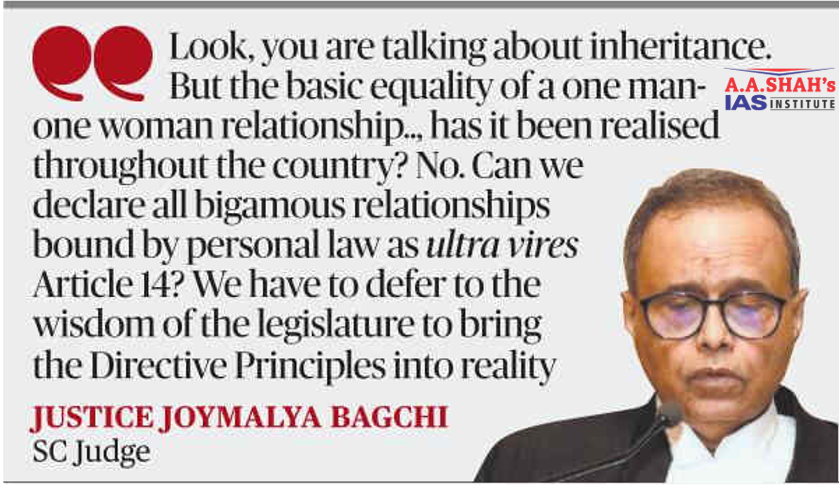
- The Supreme Court orally observed that it would be better to defer to Parliament’s wisdom to bring a Uniform Civil Code rather than judicially strike down the Shariat Application Act, 1937, on the ground of discrimination for giving Muslim women a smaller share of family inheritance compared with their male counterparts.
- Article 44 of the Directive Principles of State Policy (DPSP) of the Constitution, which says that the state shall endeavour to secure for citizens a Uniform Civil Code across the country.
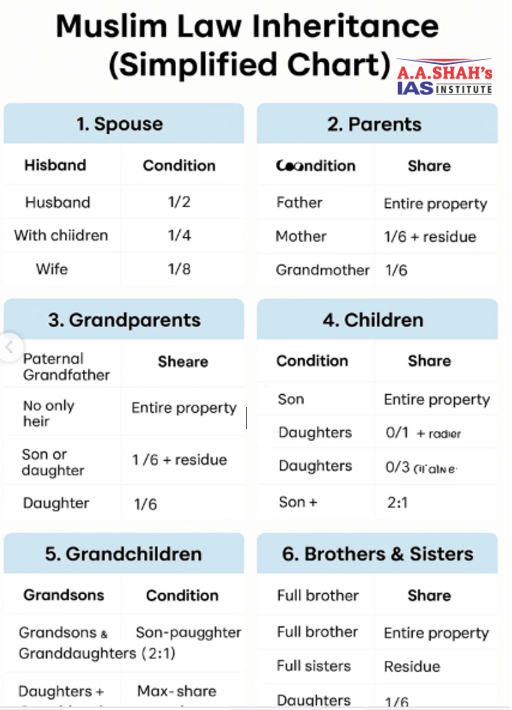
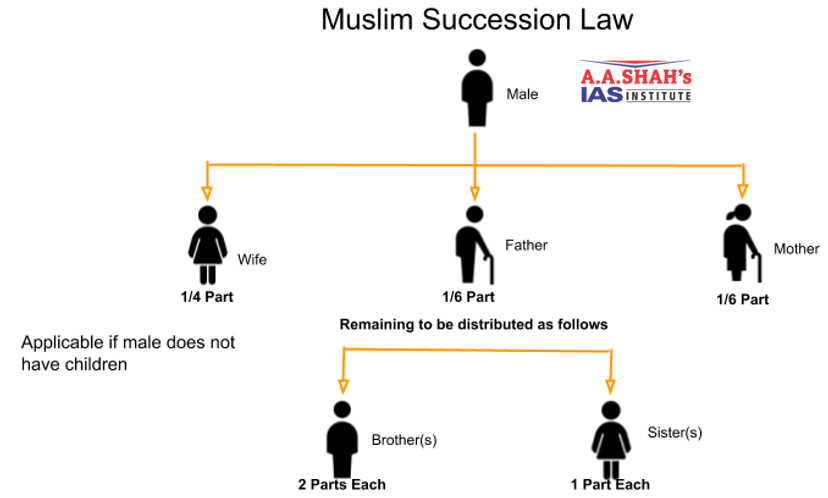
- The law for inheritance among Indian Muslims, providing widows with children a one-fourth share, or a further reduced one-eighth share if they do not have children, and daughters half of a son’s share.
- The petition had challenged what it called “artificial discrimination” between Muslim women and men regarding their right to inheritance.
- The Bench, comprising Chief Justice Surya Kant and, Justices R. Mahadevan and Joymalya Bagchi, posed a practical question, asking which law would govern Muslim inheritance if the Shariat Act were struck down.
- Mr. Bhushan responded that the more secular Indian Succession Act could apply. He referred to the landmark judgment in Mary Roy vs State of Kerala, in which the petitioner successfully fought for equal inheritance rights for Syrian Christian women in the State, nullifying the discriminatory Travancore Christian Succession Act, 1916.