Rising state borrowings complicate Indian central bank’s rates
ECONOMY – BANKING
20 JANUARY 2026
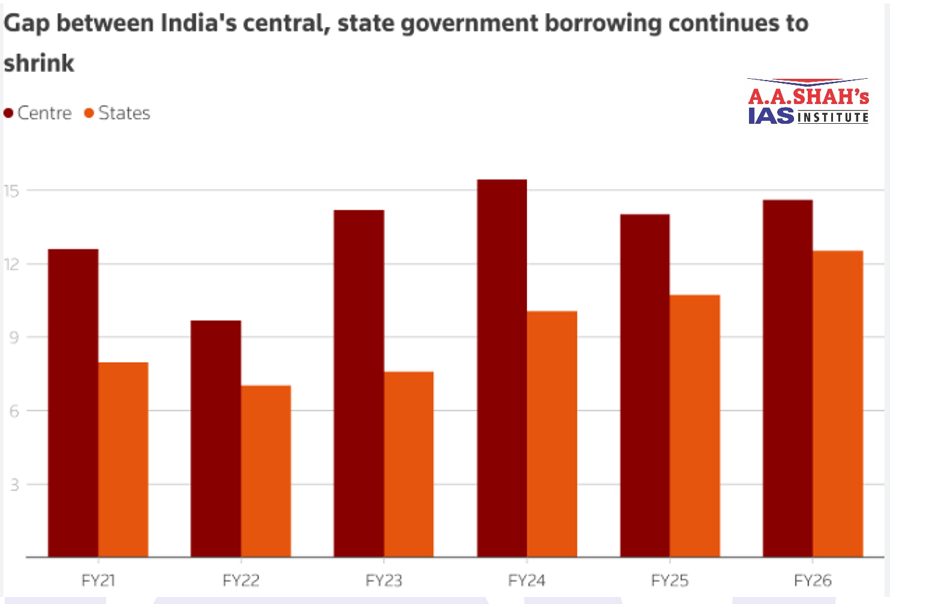
- A surge in borrowing by Indian States is complicating the central bank’s efforts to lower interest rates as officials worry the increased supply of State bonds could affect the yield curve.
- State governments are issuing debt at a pace that increasingly rivals sovereign borrowing, significantly boosting bond supply for a shared pool of investors.
- Amid the increased supply of State debt, which typically offers a modest yield premium over federal bonds, investors are now demanding higher returns on Central government securities, making it more difficult for the Reserve Bank of India to bring down borrowing costs despite recent interest rate cuts.
- Sub-sovereign borrowing overtaking Central government issuance is a mounting concern since it risks distorting the yield curve and weakening the transmission of monetary policy and liquidity measures, one of the sources familiar with the central bank’s thinking said, requesting anonymity because they were not authorised to speak publicly.
- Investors generally view debt issued by Indian States as equivalent to federal government debt, since a reserve pool of funds held by the central bank is used for payouts during periods of financial stress.
- To keep yields in check, the RBI is expected to purchase about ₹5.7 trillion of Central government bonds in 2026, an amount equivalent to more than half of the government’s net borrowing, effectively easing the supply burden.
- No such support exists for State bonds, leaving the heavy sub-sovereign issuance to be absorbed entirely by the market.