Kerala has a new outbreak of bacterial disease shigellosis
SOCIAL – HEALTH
14 JUNE 2026
- Shigellosis is diarrhoeal disease caused by Shigella, a Gram-negative, rod-shaped bacterium.
- The disease was first identified by Kiyoshi Shiga in 1897, and the bacterium was later named after him.
Symptoms
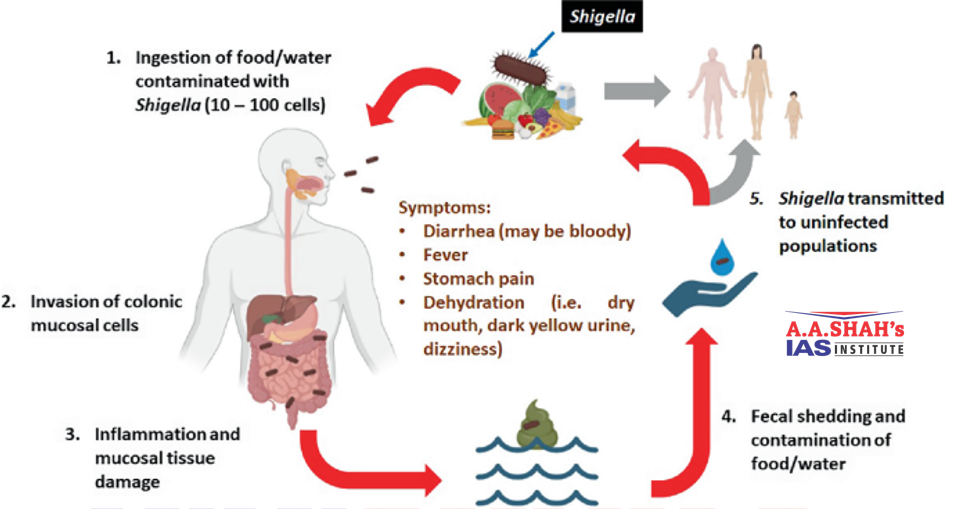
- Shigellosis is characterized by fever, abdominal cramps, diarrhoea, and bloody diarrhoea (dysentery).
- Some patients may also experience nausea, vomiting, and dehydration.
Transmission
- The disease spreads mainly through the faeco-oral route through contaminated food, water, or unwashed hands.
- Even 10–100 bacteria can cause infection.
High-Risk Groups
- Children below five years are the most vulnerable to shigellosis.
- The incidence of the disease has also been observed to increase after the age of 40.
Treatment
- Mild infections usually recover with adequate hydration and rest. Severe cases require antibiotic treatment, which should be guided by laboratory testing.
Antibiotic Resistance
- The growing presence of multidrug-resistant Shigella strains in India is a major concern.
- Continuous surveillance and judicious use of antibiotics are essential to ensure effective treatment.