Romania shuts down nuclear plant as water level drops in the Danube
INTERNATIONAL – EUROPE
14 AUGUST 2026
Romania’s Cernavodă Nuclear Plant Shutdown
- Romania completely shut down its only nuclear power plant, Cernavodă, on August 13, 2026.
- A severe drought and heatwave caused the Danube River to fall to exceptionally low levels.
- The plant uses Danube water for cooling its reactors. With the river level falling below operational requirements, there was insufficient cooling water.
- Cernavodă normally produces about 20% (one-fifth) of Romania’s electricity.
- The plant had previously experienced a drought-related shutdown in 2003.
- Authorities attempted to maintain water flow by redirecting the river, including removing underwater obstructions and using barges loaded with rocks. These measures ultimately failed to prevent the shutdown.
- Romania is relying more on alternative electricity sources and imports to maintain supply. The shutdown is expected to last at least several days while the drought continues.
- It shows how climate change and extreme drought can affect even nuclear power plants. Nuclear reactors themselves do not depend on rainfall for electricity generation, but many nuclear plants require large quantities of water for cooling. When rivers become exceptionally warm or their flow becomes too low, nuclear plants may have to reduce output or shut down.
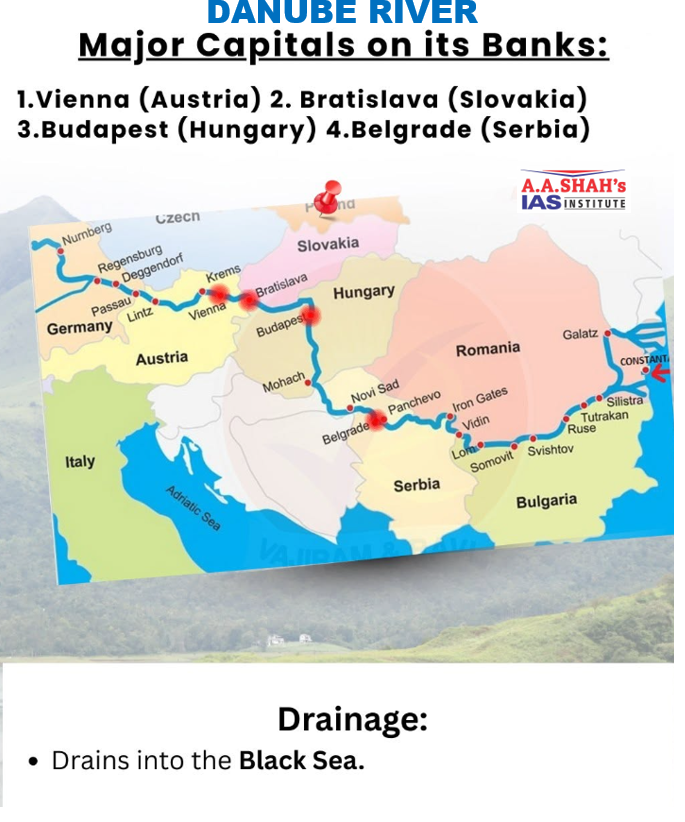
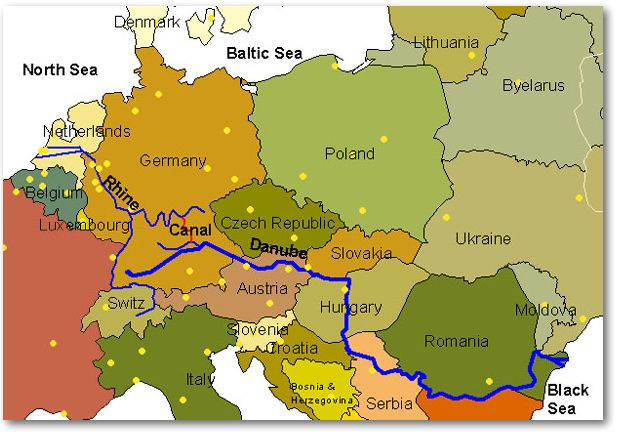
Danube River
- The Danube is one of Europe’s most important rivers and the second-longest river in Europe, after the Volga.
- Source: Black Forest, Germany
- Mouth: Black Sea, through the Danube Delta
- Length: About 2,850 km
- Countries crossed or forming borders: 10 countries — Germany, Austria, Slovakia, Hungary, Croatia, Serbia, Romania, Bulgaria, Moldova and Ukraine.
- Major cities along it: Vienna, Bratislava, Budapest and Belgrade
- Importance: Used for transport, irrigation, drinking water, hydroelectric power and industry.
- Danube Delta: A large wetland at its mouth in Romania and Ukraine, famous for its biodiversity.
Danube River water levels low:
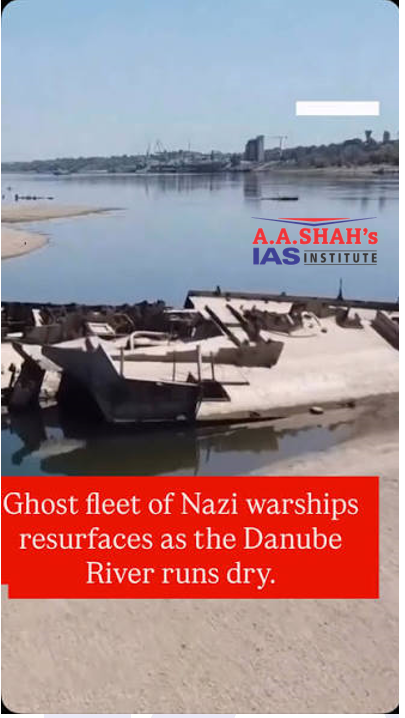
- In August 2026, severe drought and extreme heat in Europe caused its water level and flow to fall to exceptionally low levels in parts of the river.
- Main cause: A combination of prolonged drought + extreme heat + reduced rainfall.
- This has caused several problems:
- Low water levels → Less water available for various uses.
- Nuclear power problems → Romania’s Cernavodă Nuclear Power Plant relies on Danube water for cooling. The extremely low river level contributed to its shutdown.
- Navigation problems → Shallow water makes it difficult for large cargo vessels to operate.
- Agriculture affected → Less water is available for irrigation.
- Aquatic ecosystems threatened → Fish and other river organisms face reduced habitat and warmer water.
- Electricity supply pressure → Romania loses a significant source of electricity when Cernavodă is offline.