Seven-judge Bench to hear case concerning legislative privileges
POLITY – LEGISLATURE
14 AUGUST 2026
- In April 2003, The Hindu published an editorial criticising then Tamil Nadu Chief Minister J. Jayalalithaa and commenting on proceedings of the Tamil Nadu Legislative Assembly.
- The Tamil Nadu Assembly accused the newspaper of distorting Assembly proceedings and passing comments contrary to what had happened in the House.
- The Assembly treated the editorial as a breach of legislative privilege under Article 194 of the Constitution.
- It passed a resolution seeking the arrest of five senior journalists of The Hindu, including then Editor N. Ravi.
- Police subsequently moved to arrest them.
- The journalists approached the Supreme Court, which stayed coercive action against them.
- This case concerns a major constitutional question: Can a State Legislature use its legislative privileges to punish or arrest journalists for criticism of the legislature, even when such criticism is protected by freedom of speech?
The constitutional conflict
The case involves two important constitutional provisions:
| Provision | What it protects |
| Article 19(1)(a) | Freedom of speech and expression, including freedom of the Press |
| Article 194 | Powers, privileges and immunities of State Legislatures and their members |
The central question is:
Can legislative privilege under Article 194 override a citizen’s fundamental right to freedom of speech under Article 19(1)(a)?
It also involves Article 21, which protects life and personal liberty.
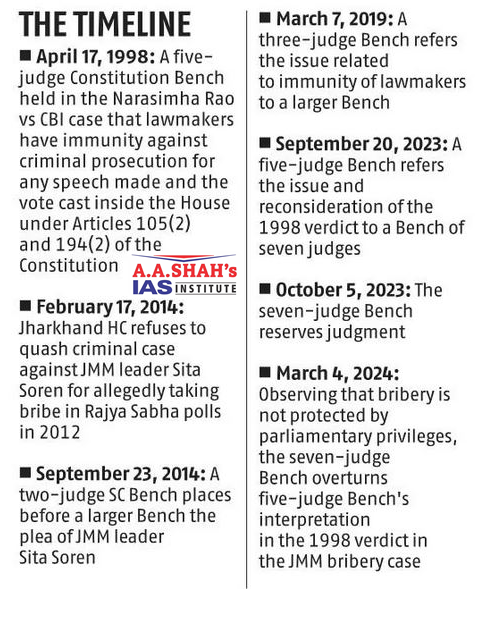
TIMELINE
- 2003: A Division Bench referred the constitutional questions to a 5-judge Constitution Bench.
- 2004: The 5-judge Bench noted conflicting constitutional interpretations concerning legislative privilege and freedom of speech.
- The matter was therefore referred to a 7-judge Constitution Bench for an authoritative ruling.
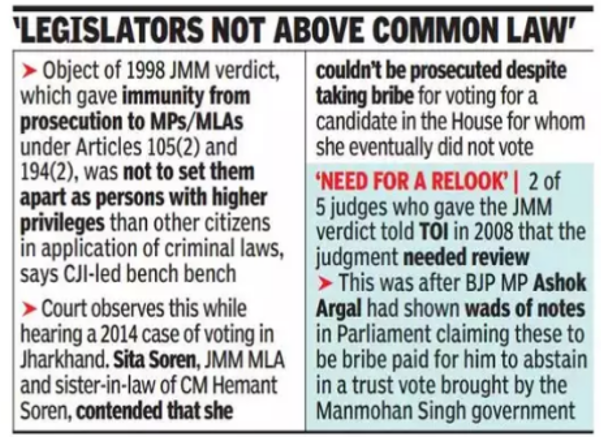
- 2023: A 7-judge Bench headed by then CJI D.Y. Chandrachud impleaded the Union government and sought assistance from the Attorney General.
- August 12, 2026: The case came before current CJI Surya Kant.
- October 6, 2026: The 7-judge Constitution Bench is scheduled to begin hearing the matter.
Parliamentary Privileges
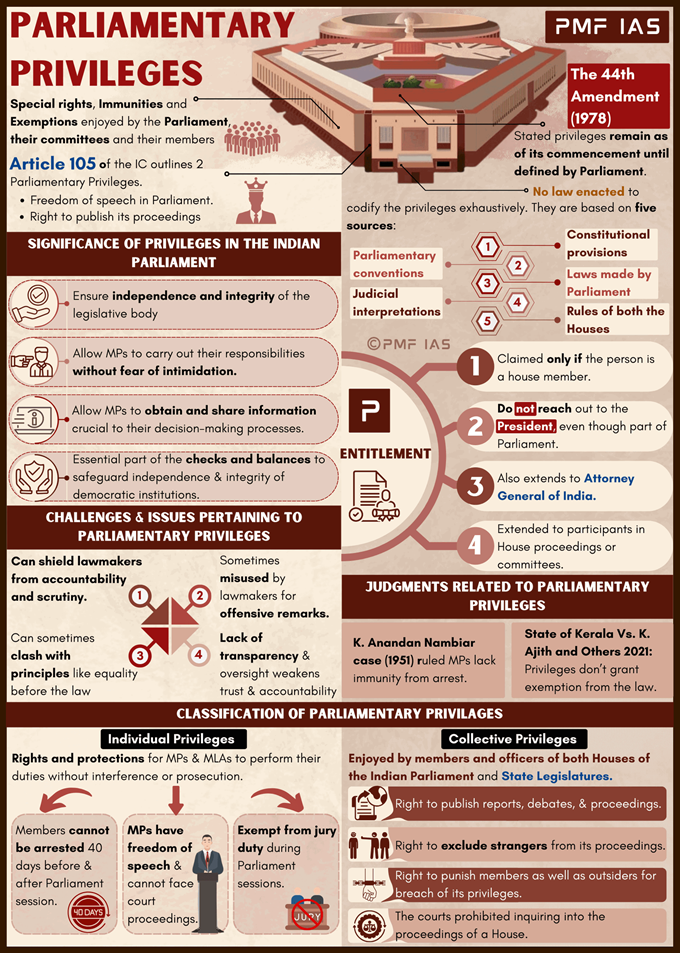
- Parliamentary privileges are the special rights, immunities and protections given to Parliament, its committees and its members so that they can perform their functions freely and independently.
- Main Parliamentary Privileges in India
- Freedom of Speech
- Members of Parliament have freedom of speech inside Parliament.
- Their speech in Parliament cannot normally be challenged in court.
- Freedom from Arrest
- MPs enjoy certain protections from arrest in civil cases while Parliament is in session and for a specified period before and after a session.
- This protection does not generally apply to criminal offences.
- Freedom from Court Proceedings
- No MP can be held liable in court for anything said or any vote given in Parliament.
- Right to Regulate Internal Proceedings
- Each House can regulate its own proceedings and functioning.
- Right to Punish for Contempt or Breach of Privilege
- Parliament can take action against a person who breaches its privileges or commits contempt of the House.
- Right to Exclude Strangers
- The House can exclude outsiders from its proceedings when necessary.
- Right to Receive Information
- Parliament and its committees have certain powers to call for persons, documents and records relevant to their proceedings.
Constitutional Basis
- Article 105 → Parliamentary privileges of Parliament and its members.
- Article 194 → Similar privileges of State Legislatures and their members.
Parliamentary vs State Legislative Privileges
| Parliament | State Legislature |
| Article 105 | Article 194 |
| MPs | MLAs/MLCs |
| Lok Sabha & Rajya Sabha | Legislative Assembly & Legislative Council |
Important: Parliamentary privileges are not the same as unlimited freedom of speech. They exist to enable Parliament to function effectively, and their relationship with fundamental rights—especially Article 19(1)(a)—is an important constitutional issue.