Can the ED attach a firm’s assets after it enters insolvency?
ECONOMY – POLICY
6 JULY 2026
- The National Company Law Appellate Tribunal (NCLAT) has held that the Insolvency and Bankruptcy Code (IBC) moratorium cannot shield assets alleged to be “proceeds of crime” from attachment under Prevention of Money Laundering Act (PMLA).
- The ruling came in a case concerning Siddhi Vinayak Logistics Ltd., where the Enforcement Directorate (ED) had attached assets in 2017 despite the company entering insolvency proceedings.
- The case arose from proceedings against Siddhi Vinayak Logistics Ltd., whose promoters were accused of bank fraud, forgery, criminal conspiracy and diversion of loan funds exceeding ₹1,600 crore.
- “Parliament did not legislate IBC with an intent to create a holy Ganges out of the IBC to wash the corporate debtor of its sin of criminality under the PMLA”, the Principal bench ofthe NCLAT observed on June 30, 2026.
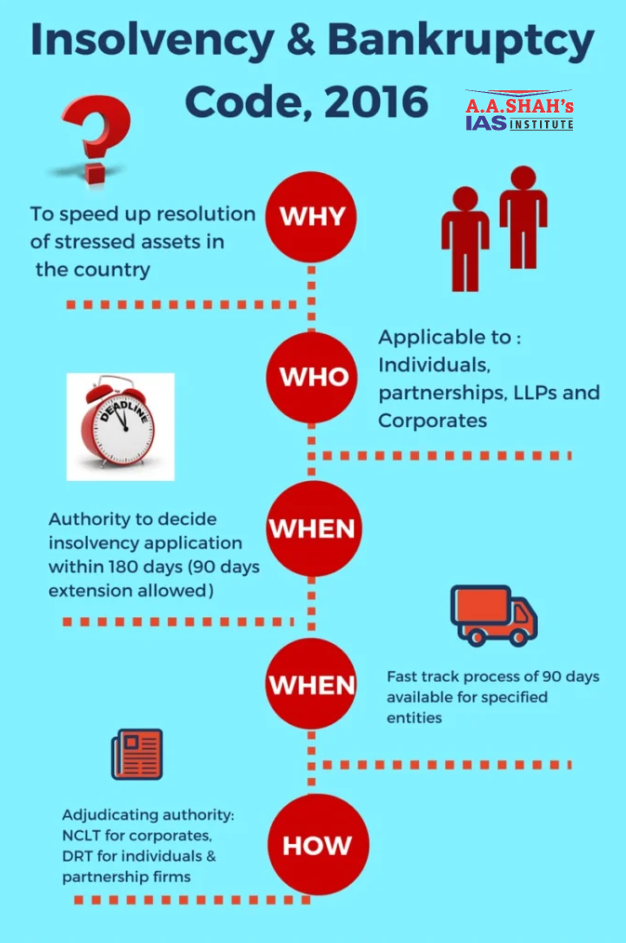
Moratorium under Insolvency and Bankruptcy Code (IBC)
- In 2017, the company entered the Corporate insolvency resolution process (CIRP), triggering moratorium under section 14 of the IBC.
- The moratorium in terms of IBC is described as a period wherein no judicial proceedings for recovery, enforcement of security interest, sale or transfer of assets, or termination of essential contracts can be instituted or continued against the Corporate Debtor.
- The main purpose of declaring the moratorium is to keep the Corporate Debtor’s assets intact during the CIRP, which otherwise may be attached by any competent court of law during the pendency of proceedings against the Corporate Debtor.
- During the moratorium, the ED withdrew ₹2.29 crore from one of the company’s bank accounts. In 2019, while liquidation proceedings were under way and provisionally attached more than 6,000 vehicles belonging to the firm.
- The liquidator challenged these actions before the National Company Law Tribunal (NCLT), arguing that they violated the IBC moratorium by reducing the assets available for creditors. After the NCLT rejected the plea, the matter reached the Appellate tribunal, NCLAT.
IBC, PMLA conflict
- The dispute lies at the intersection of two laws with different objectives.
- The IBC seeks to resolve corporate insolvency by preserving a firm’s assets and ensuring the creditors recover dues in an orderly manner.
- To facilitate this, Section 14 imposes a moratorium that generally bars proceedings and recovery actions against the corporate debtor once insolvency proceedings begin.
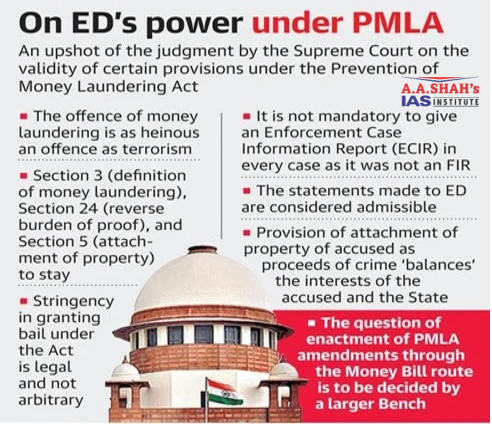
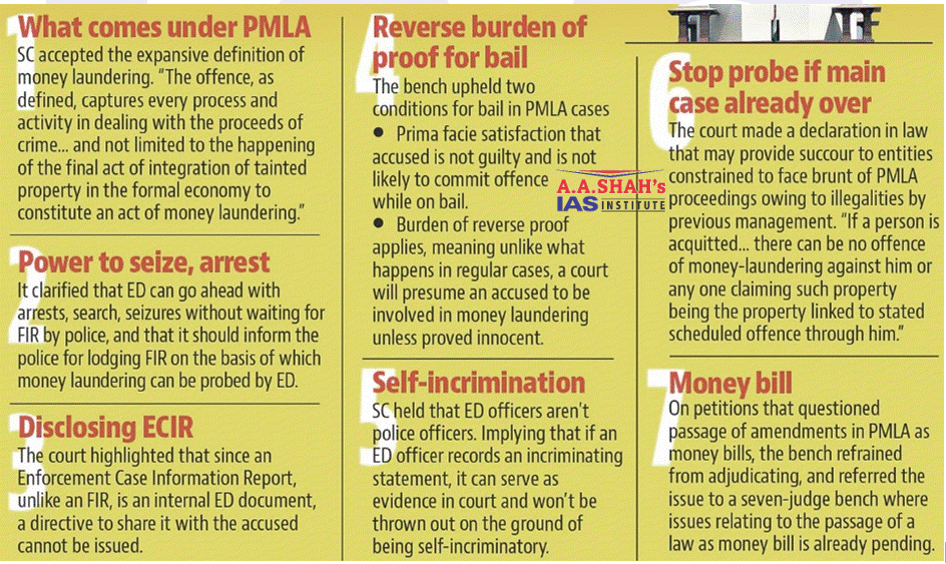
- The PMLA, on the other hand, empowers the Enforcement Directorate to identify, attach and eventually confiscate the assets alleged to be the “proceeds of crime”.
- The legal question before the tribunal was whether the protection available under the IBC moratorium extends to assets that are simultaneously the subject of proceedings under the PMLA.
Ruling, importance
- The tribunal described the dispute as one between the IBC and the PMLA rather than between the liquidator and the ED, holding that the two statutes operate in distinct fields.
- It held that the IBC was enacted to maximise value for creditors through the sale of a company’s legitimate assets and was not intended to legitimise wealth allegedly derived from criminal activity.
- The moratorium under Section 14, therefore, protects only legitimately acquired assets and does not extend to assets alleged to be proceeds of crime under the PMLA.
- The tribunal observed that while creditors routinely accept reduced recoveries during insolvency proceedings, the national interest underlying the PMLA cannot be compromised.
- It remarked Parliament did not enact the IBC to create a “holy Ganges” capable of washing away a corporate debtor’s alleged criminality or legitimising “ill-gotten wealth”.
- The tribunal held that insolvency tribunals cannot examine the validity of attachment orders passed under the PMLA.
- It also referred to a 2025 circular issued by the Insolvency and Bankruptcy Board of India advising insolvency professionals to approach the Special Court under the PMLA for restitution of attached assets.