Cess levied on sales tax falls within State’s ambit, says SC
ECONOMY – POLICY
5 NOVEMBER 2026
- The Supreme Court held that an additional tax levied by a State legislature on the sale or purchase of goods will not fall outside the State’s competence.
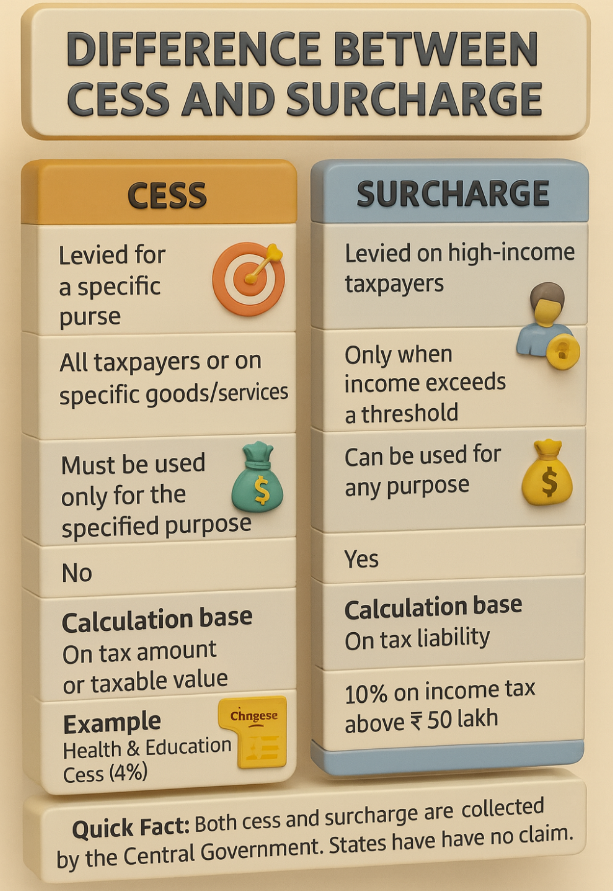
- A seven-judge Bench confirmed a 1975 ruling (S. Kodar versus State of Kerala) that a cess levied as an increment to an existing sales tax has to be judged in the same way as the principal tax.
- “S. Kodar (supra) squarely holds that an additional tax or surcharge computed as a percentage of the sales tax payable is an enhancement of the rate of sales tax and a tax on the sale or purchase of goods within Entry 54 of List II, as it then stood. That decision continues to hold the field,” the lead opinion authored by Chief Justice of India (CJI) Surya Kant held.
- The Constitution Bench’s judgment was based on petitions dating as far back as 1994, raising the question as to the legislative competence of a State Legislature, to levy a tax on the sale or purchase of goods under Entry 54 of List II of the Seventh Schedule to the Constitution, on sales tax payable by a dealer rather than directly on his turnover.
- The assessees had insisted that such an extra tax could be construed as a ‘tax on tax’. They urged that a levy measured by the quantum of tax already payable does not fall upon the ‘sale’ or ‘purchase of goods’, which alone is the subject of Entry 54 of State List. Entry 54 covered taxes levied by States on the sale or purchase of goods other than newspapers.
- The States, on the other hand, maintained that such a surcharge was nothing more than an enhancement of the rate of sales tax for a class of dealers, and that the mode of its computation did not alter its essential character as a tax on sale of goods.