Concern in Nepal on Kailash Yatra route
BILATERAL – INDIA-ASIA
4 MAY 2026
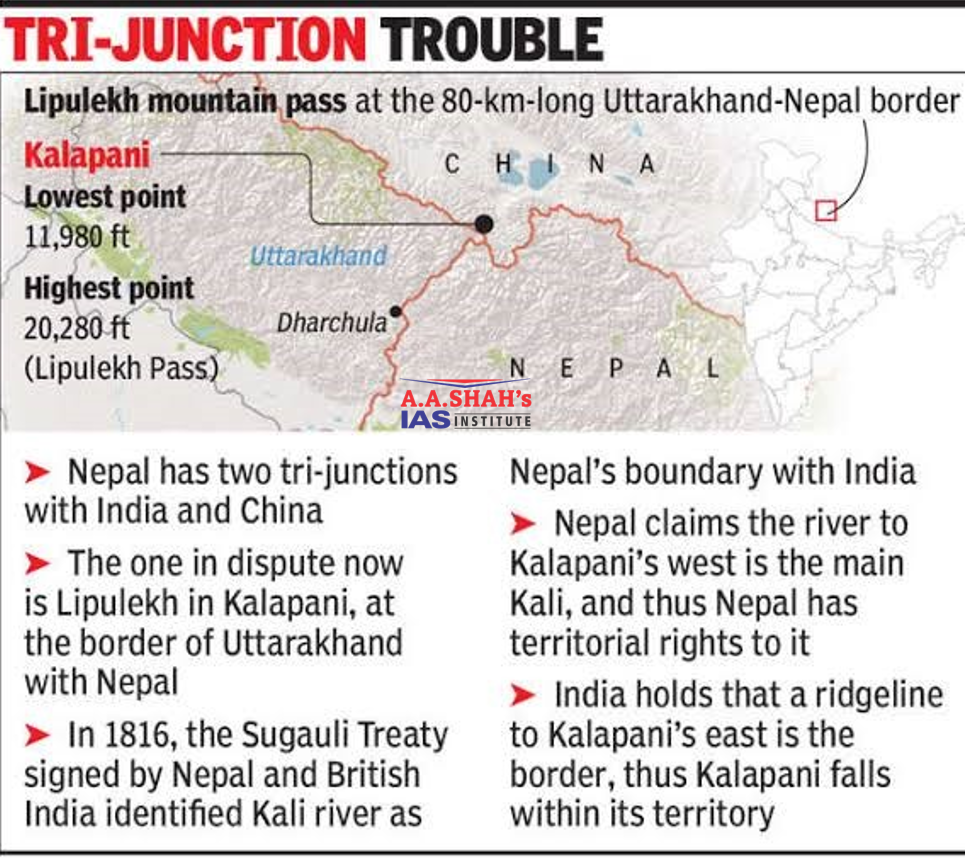
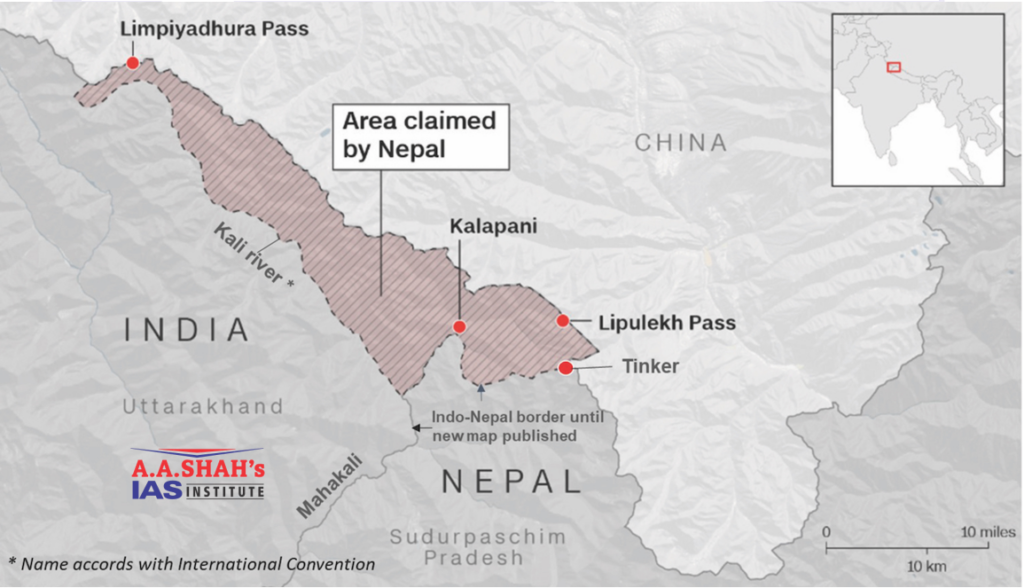
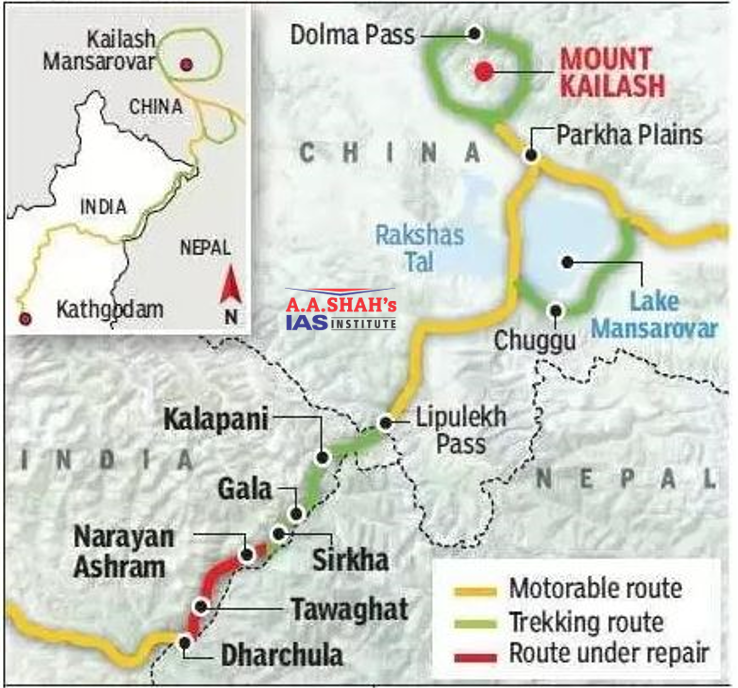
- Nepal, under itsnew Prime Minister, Balendra Shah, has expressed “concerns” to both India and China over the next season of Kailash Manasarovar Yatra through the Kalapani-Limpiyadhura-Lipulekh region. It reiterated that the region is part of Nepal’s sovereign territory.
- In an announcement, Nepal’s Ministry of Foreign Affairs (MoFA) said, “The Government of Nepal is completely clear and steadfast in the fact that Limpiyadhura, Lipulek and Kalapani east of the Mahakali river are integral parts of Nepal since the Treaty of Sugauli of 1816.
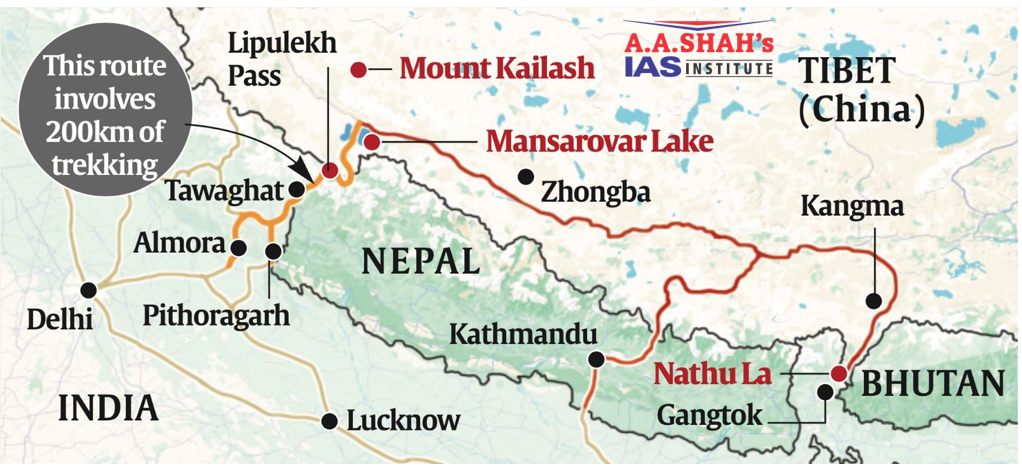
- Lipulekh Pass has been a long-standing route for the Kailash Manasarovar Yatra since 1954.
- India had announced that the next round of Kailash Yatra would take place in coordination with China.
- In response to Kathmandu’s remarks, the Ministry of External Affairs (MEA) said that Nepal’s claims on the Lipulekh Pass are not based on “historical facts”.
- “India remains open to a constructive interaction with Nepal on all issues in the bilateral relationship, including on resolving agreed outstanding boundary issues through dialogue and diplomacy,” Mr. Jaiswal posted on X in response to media queries on claims made by Kathmandu.
Treaty of Sugauli
- It was a historic agreement signed in December 1815 (ratified in March 1816) between the British East India Company and the Kingdom of Nepal, marking the end of the Anglo–Nepalese War (1814–1816).
- The conflict revealed the remarkable resilience and military skill of the Gurkha (Gorkha) soldiers.
- Peace negotiations took place at Sugauli, a small town in present-day Bihar, India.
- The Treaty significantly reduced Nepal’s territorial extent. The kingdom lost about one-third of its land, including valuable forested and fertile plains. It lost the western hill regions (Kumaon and Garhwal) and the eastern territories (Sikkim)
- Under the treaty, River Mechi was recognised as Nepal’s eastern boundary, while the River Mahakali (Kali) was designated as the western boundary.
Kailash Mansarovar Yatra
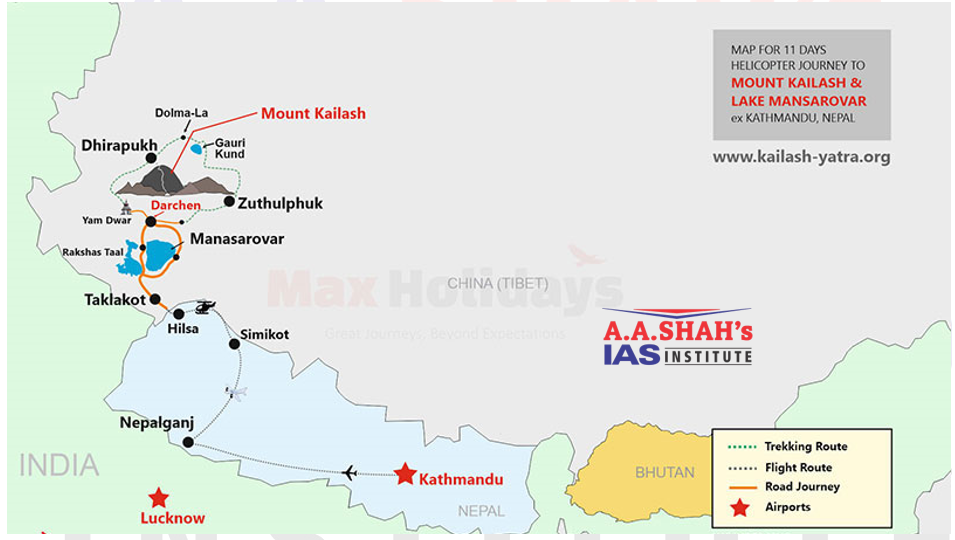
- It is a 12–16 day sacred pilgrimage in Tibet for Hindus, Buddhists, and Jains.
- It runs from June to September via Lipulekh (Uttarakhand) and Nathu La (Sikkim).
- It features a 3-day parikrama (circumambulation) around Mt. Kailash and holy dips in Lake Mansarovar.
- The Ministry of External Affairs (MEA) organizes the yatra.
Mount Kailash
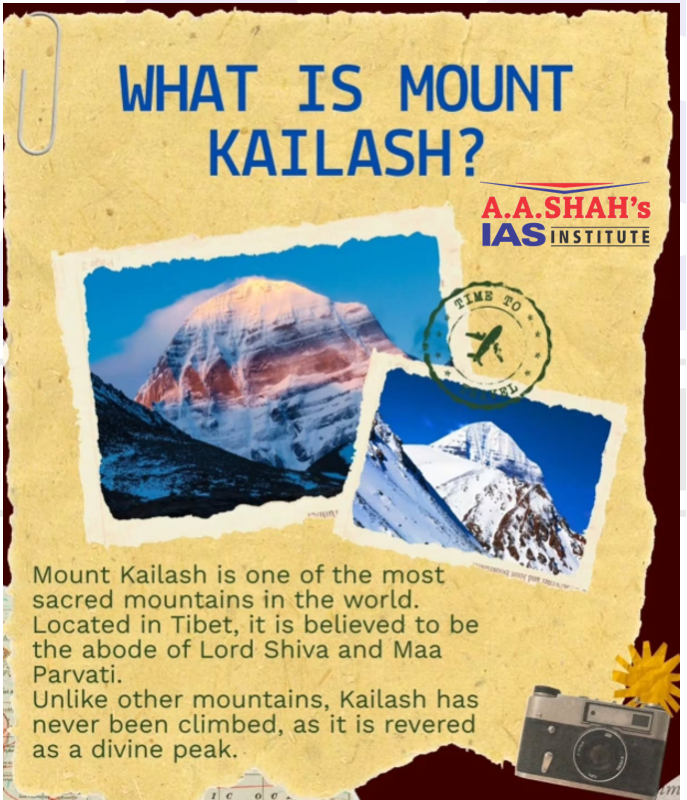
- Mount Kailash (6,638m) is a sacred, unclimbed peak in Tibet’s Ngari Prefecture.
- It is revered by Hindus, Buddhists, Jains, and Bon followers as the spiritual center of the universe and home to Lord Shiva.
- Pilgrims perform a 52-km clockwise trek (Kora/parikrama/circumambulation) around the diamond-shaped peak and visit nearby Lake Manasarovar for purification.
Lake Mansarovar
- It is a sacred high-altitude freshwater lake in Tibet, China, situated near Mount Kailash at 4,590 meters (15,059 feet).
- Revered by Hindus, Buddhists, and Jains, it is believed bathing here purifies the soul.