EU fines Google €890 mn over breach of digital rules
S&T – IT
24 JULY 2026
- The European Union hit Google with fines totalling 890 million euros, in a move that risks escalating tensions with the United States.
- An EU official said the penalties amount to just 0.22 percent of Google’s turnover.
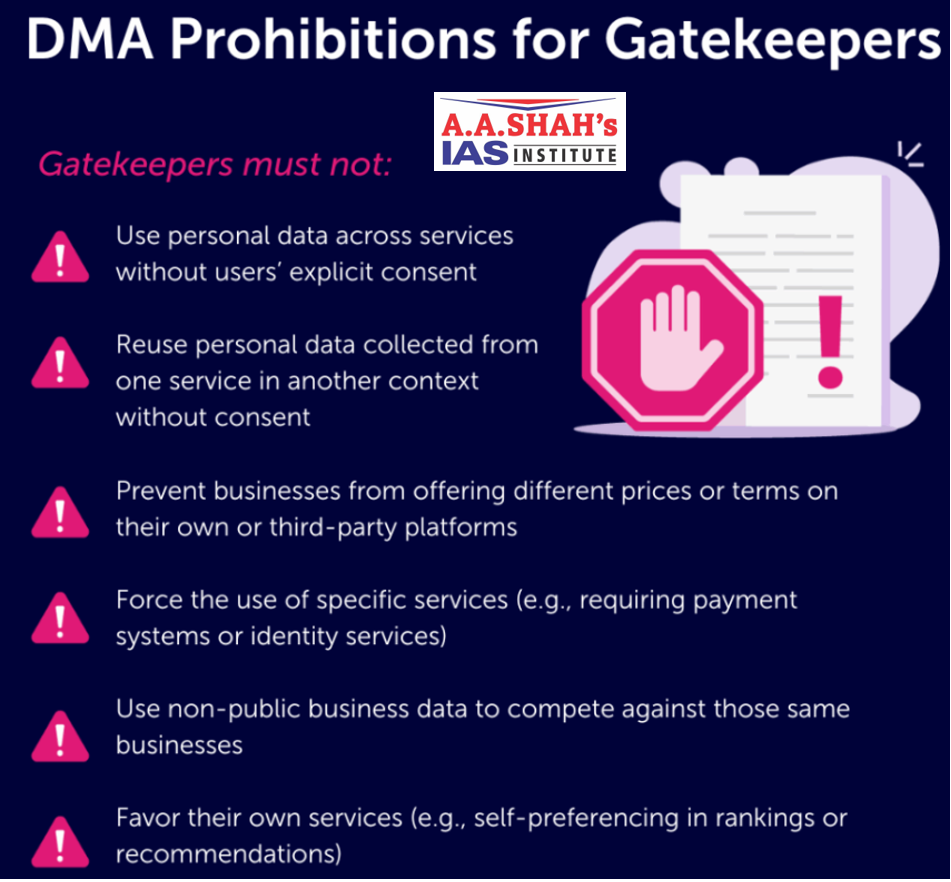
- The EU fined the U.S. tech giant 460 million euros for illegally favouring its own services — such as Google Flights and Google Hotels — over rivals in search results.
- A second fine of 430 million euros was levied because Google barred app developers from showing consumers offers, free of charge, outside the Google Play Store, the European Commission said in a statement.
- The penalties are the largest yet against a single company under the Digital Markets Act (DMA), 2024 the EU’s signature tech competition law.
- In 2025, the EU fined Meta 200 million euros and Apple 500 million euros under the same rules.
- The U.S. tech giant accused the EU of dismantling safety protections on Google Play through its enforcement.
- The fines land just days before the first anniversary of a tariff deal between Washington and Brussels that had eased trade tensions.
- President Donald Trump’s administration has repeatedly accused Brussels of targeting U.S. tech firms and has threatened retaliatory tariffs.
Digital Markets Act (DMA), 2024
- The Digital Markets Act (DMA) is a European Union (EU) law designed to make digital markets fairer and more competitive by limiting the market power of very large online platforms, known as “gatekeepers.”
- Although the law entered into force in 2022 and became applicable in 2023, it was a major focus of implementation and enforcement during 2024.
- The DMA aims to curb what Brussels views as Big Tech’s excesses and ensure fair competition in the digital economy.
- Washington firmly objects to the DMA and other EU tech regulations.
- Under the DMA, the EU can fine companies up to 10 percent of their global turnover for violations.
Digital gatekeepers
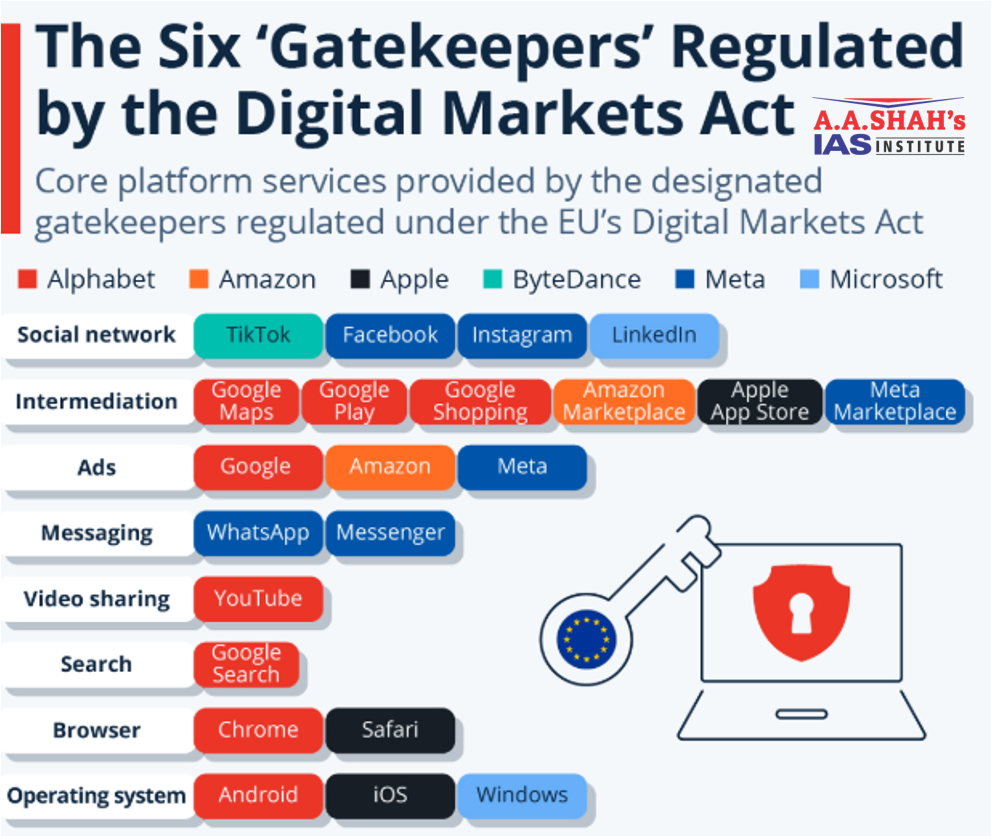
- Digital gatekeepers are large technology companies—such as Alphabet, Amazon, Apple, ByteDance, Meta, Microsoft, and Booking—that control access to essential online platforms like app stores, search engines, and social networks.
- Under the European Union’s Digital Markets Act, these dominant firms face strict rules to ensure fair competition and open markets for smaller businesses.