Europe-China mission to probe how earth fends off raging solar winds
S&T – SPACE
18 MAY 2026
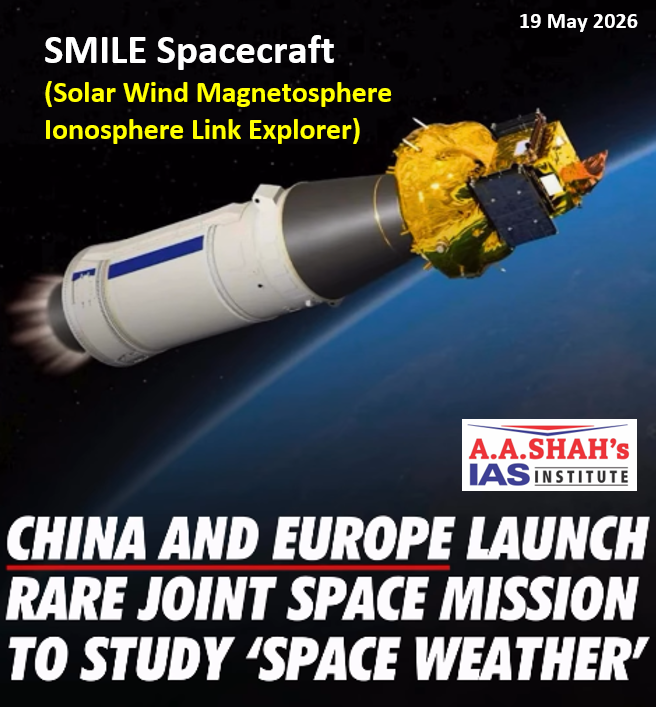
- A joint European-Chinese van-sized SMILE spacecraft is set to blast off on 19 May 2026 to investigate what happens when extreme winds and giant explosions of plasma shot out from the sun slam into the earth’s magnetic shield.
- It is tasked with making the first-ever X-ray observations of the earth’s magnetic field.
- The spacecraft will observe this phenomenon from several important locations, including the magnetopause — where the magnetic shield deflects solar particles.
- It will also soar above the earth’s poles, where X-ray photons are visible.
- SMILE — or the Solar Wind Magnetosphere Ionosphere Link Explorer — is a joint mission between the European Space Agency (ESA) and the Chinese Academy of Sciences.
- The spacecraft is scheduled to launch on a Vega-C rocket from Europe’s spaceport in Kourou, French Guiana, on the northeastern coast of South America.
Solar Winds
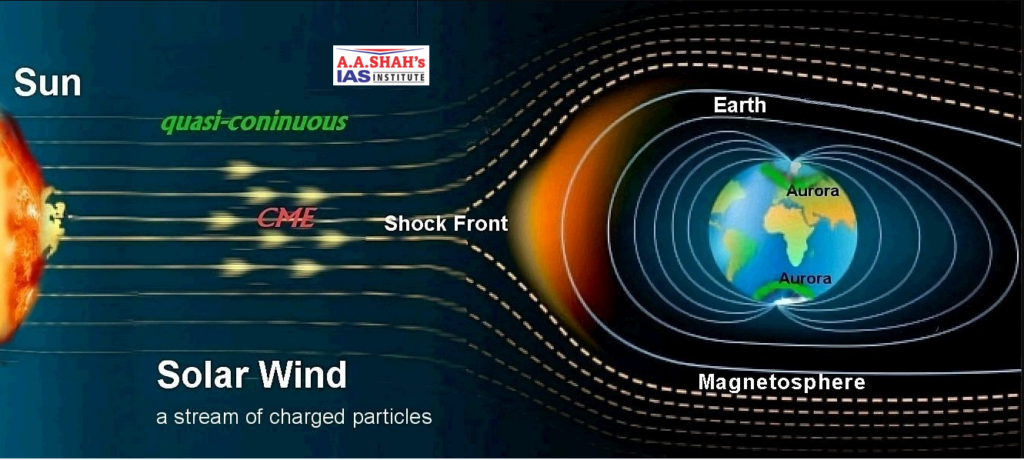
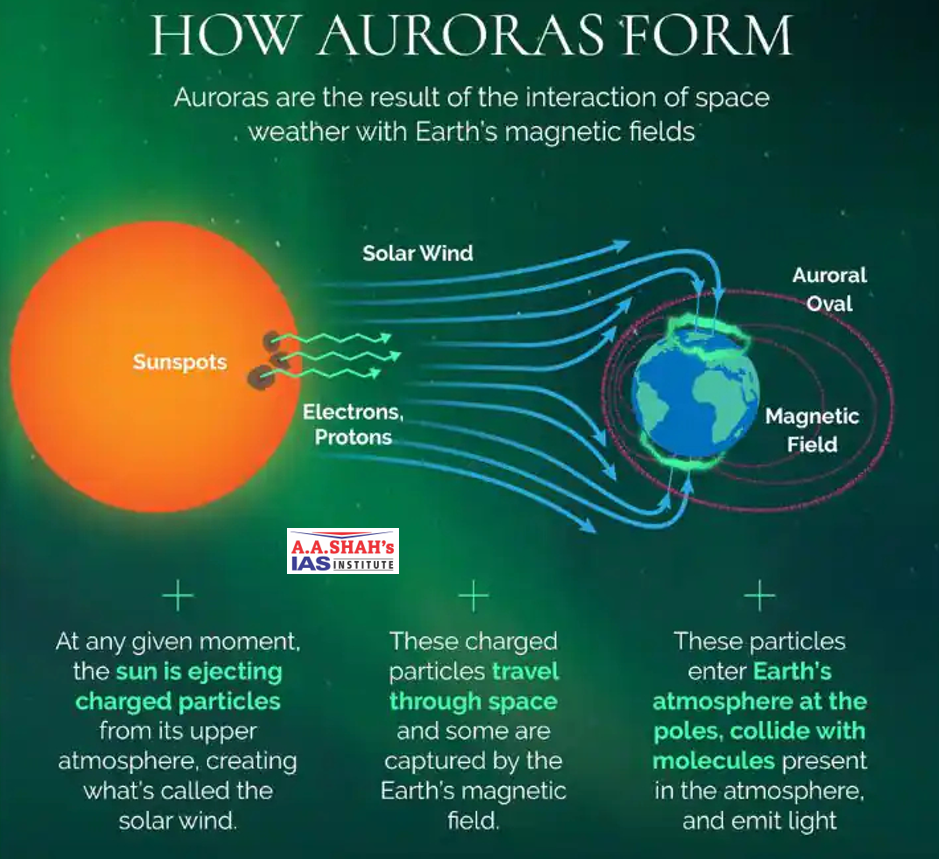
- Solar wind is a stream of charged particles shot out from the sun.
- Sometimes this wind is kicked up into a huge storm by massive eruptions of plasma called coronal mass ejections.
- Hurtling at around two million kilometres an hour, these powerful blasts take a day or two to reach the earth.
- When they arrive, the earth’s magnetic field acts as a shield, deflecting most of the charged particles.
- However, during particularly intense events, some particles can penetrate the atmosphere, where they have the potential to take out power grids or communication networks.
- Particularly fierce solar storms can knock out satellites and threaten astronauts.
- They also create dazzling auroras known as the northern lights or Aurora Borealis towards the North pole and southern lights or Aurora Australis towards the south pole.