Govt. slams J.D. Vance over his ‘indentured servants’ remark
BILATERAL – INDIA-USA
10 OCTOBER 2026
- The Ministry of External Affairs slammed as “unwarranted” and “deeply offensive” U.S. Vice President J.D. Vance’s comments in which he called foreign workers, including Indian IT professionals, “indentured servants”.
- Hitting out at the U.S. government for its decision to suspend “labour certifications” from several Indian technology firms based in America, the Ministry said the steps would not “advance the shared ambitions of both countries”, indicating further trouble in the already difficult economic relationship between the two countries.
Permanent Labour Certification (PERM) suspended
- Mr. Vance and U.S. Labour Secretary Keith Sonderling announced the suspension of the Permanent Labour Certification (PERM) programme for eight IT outsourcing giants, including five Indian IT multinationals operating in the U.S., and accused them of visa fraud.
- The list included Infosys, Tata Consultancy Services, Wipro, Cognizant, and HCL from India, often called the Big 5, as well as Capgemini, Microsoft, and Adobe.
- The PERM programme allows companies to certify professionals who are not U.S. citizens for essential skills, qualifying them to be sponsored for a Green Card of Permanent Residency status in the country.
- The U.S. government said this process benefitted more than 2,30,000 H1B visa approvals and 1,00,000 permanent residencies since 2009, claiming that the eight companies had brought in hundreds of thousands of foreign workers at lower wages through a “pernicious system” that “defrauded the American worker”.
- About 70% of all H1B visa holders are Indian.
- The PERM programme enables a company to sponsor a foreign employee for permanent residence in the U.S., and it must prove to the Labour Department that it tried and failed to find a comparatively qualified American for the job.
Comments condemned
- “Such descriptions are unwarranted and ignore the fact that Indian professionals in the United States are highly educated and skilled contributors to its economy and innovation ecosystem,” the Ministry said in a strongly worded statement that reminded the Trump administration that the U.S. had been “shaped by generations of immigrants.”
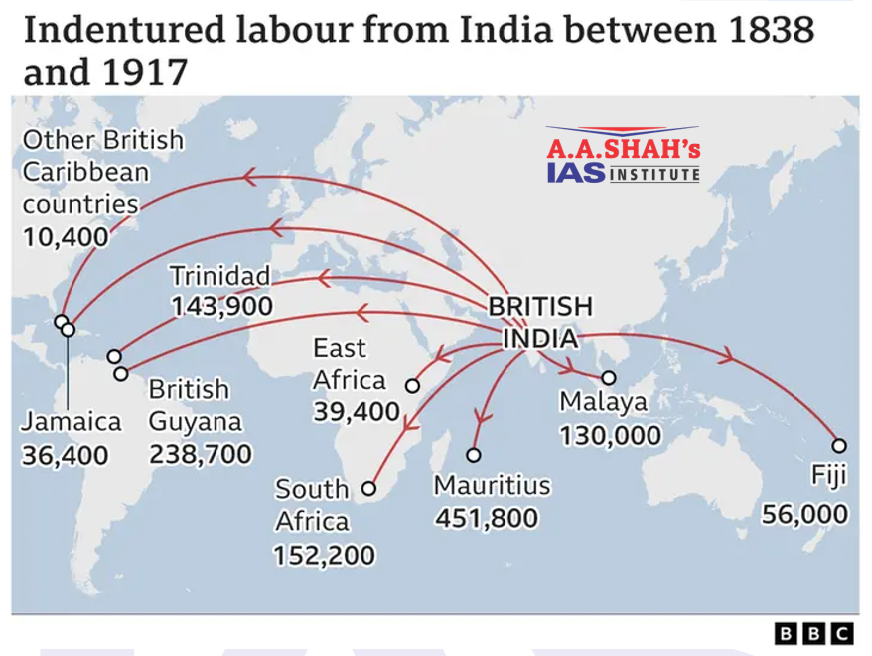
- “Resorting to terminology that carries painful historical and colonial legacy connotations is deeply offensive,” the Ministry added, pointing to the use of indentured labour by American and European colonial settlers in the 19th century, including in the U.S. and nearby islands to work on their farms.
Indentured labour system
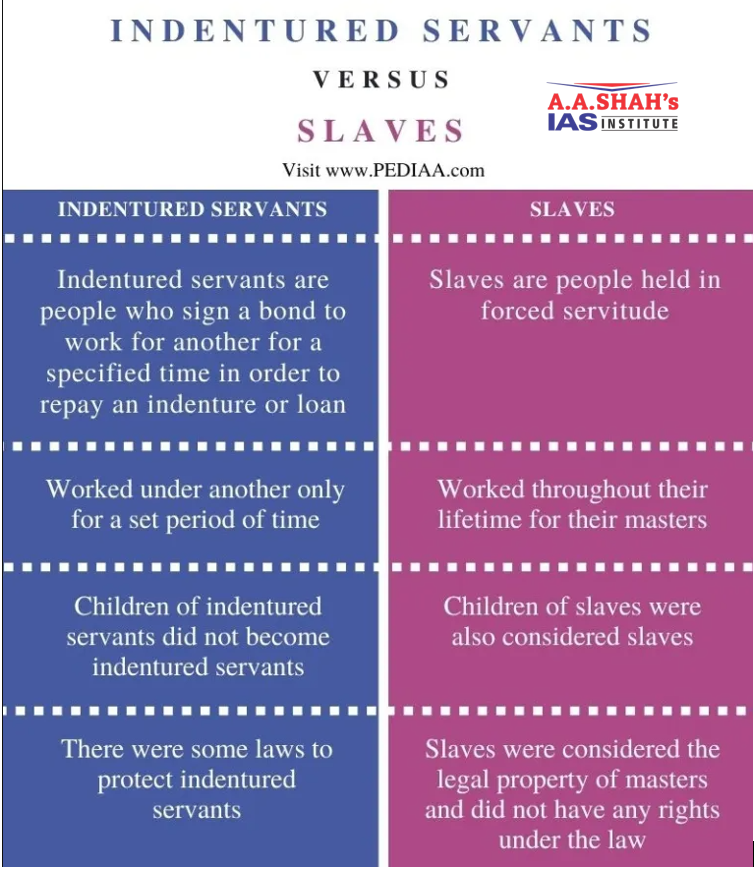
- The system of indentured labor was created to replace enslaved labor after the British Empire abolished slavery in 1833.
- Planters in European colonies faced a sudden, massive shortage of workers for their sugar, tea, and rubber plantations.
- When newly freed Black populations largely refused to work for low wages under harsh plantation conditions, colonial powers turned to India and China for cheap labour.
- A Legal Contract (Indenture): Workers signed a binding agreement (the “indenture”) to work for a specific employer for a fixed term—usually 5 years.
- The Trade-Off: In exchange for their labor, workers were promised free passage to the colony, basic housing, food rations, minimal wages, and sometimes a return ticket home after their contract ended.
- Legal Control for Planters: Unlike free wage laborers, indentured servants could not quit, change employers, or leave the plantation without permission. Breaking the contract resulted in criminal penalties, including imprisonment or hard labour.