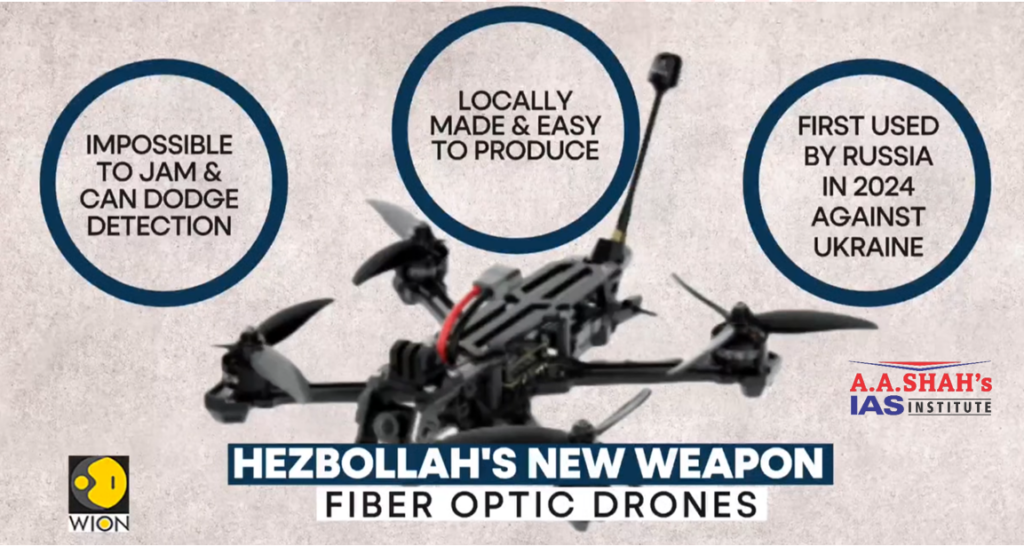
Hezbollah’s new weapon against Israel: fibre-optic drones honed in Ukraine war
INTERNATIONAL – ASIA
1 MAY 2026
- Hezbollah — the Iran-backed militant group in Lebanon — has mostly been using the fibre optic drones on Israeli soldiers operating in southern Lebanon or towns on the border.
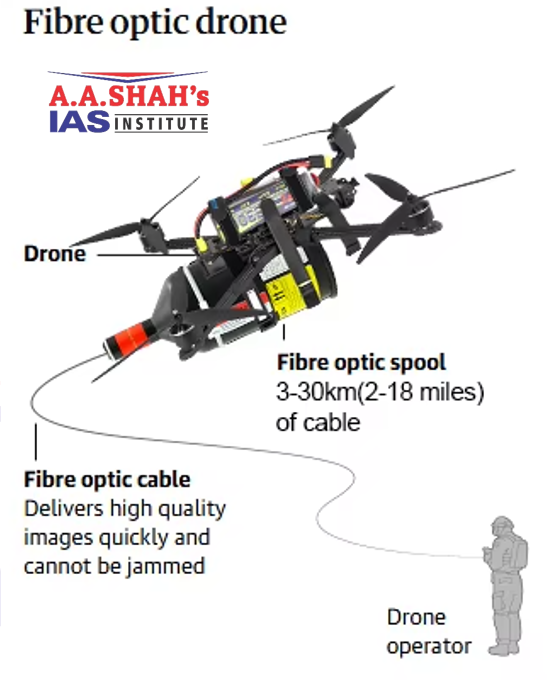
- These are small drones controlled with fibre-optic cables the width of dental floss that avoid electronic detection.
- Russia pummels Ukraine almost nightly with Shahed long-range attack drones — originally from Iran.
- Although Moscow has made many improvements to the drones, some can still be taken down by electronic jamming.
- The fibre option drones — now used widely in the war in Ukraine by Russia — are small, hard to track and potentially lethal.
- But fibre-optic drones are not controlled remotely. They have a thin cable that connects an operator directly to the drone, making it impossible to electronically jam.
- Many other drones are susceptible to electronic jamming by air defences. Jamming can cause a drone to crash or return to its point of origin.
- The drones are not infallible because the wind — or other drones — can cause the cables to tangle.
- Experts say militaries must either intercept the drones, which is difficult due to their small size and short flight path, or find a way to snip the nearly invisible cable.
- Fibre-optic drones do not have the same range as a drone that uses a radio link or artificial intelligence to navigate.
- In some cases, fibre-optic drones have been recorded with cables extending as far as 50 kms.