India’s cement footprint stands in its way to net-zero emissions
ENVIRONMENT – POLLUTION
8 OCTOBER 2026
- India aims to become an economically developed nation by 2047 and a net-zero emissions economy by 2070. Achieving both requires addressing the heavy carbon footprint of the construction sector.
- Construction contributes 35% to 40% of all global greenhouse gas (GHG) emissions, primarily driven by the extreme heat needed to process steel and cement.
- The “Hard-to-Abate” Sector: Cement alone accounts for 7% to 11% of global emissions (nearly double that of aviation).
Emissions Breakdown in Cement Making:
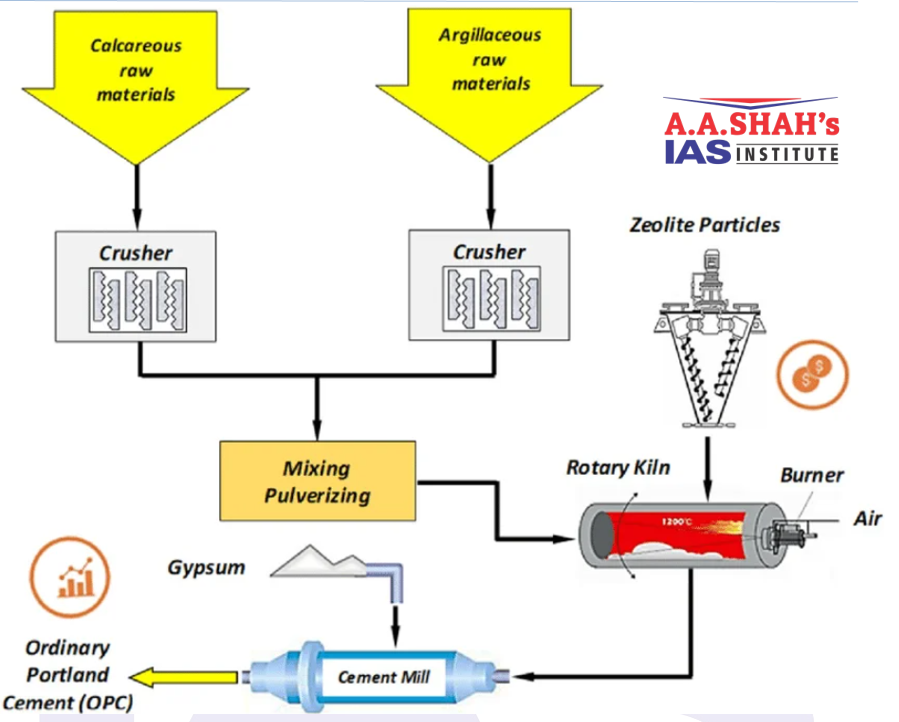
- 35–40% comes from the fossil-fuel energy required to heat kilns to ~1,450 °C.
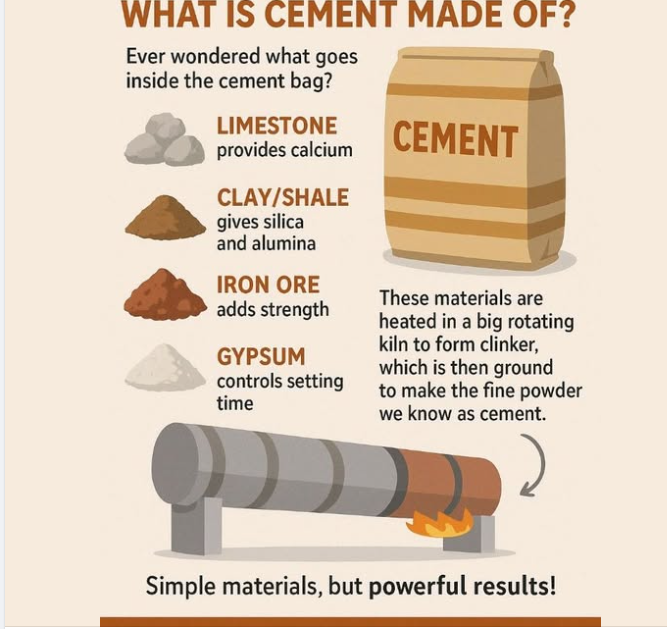
- 53–65% comes directly from the calcination process—the chemical breakdown of limestone when heated, which releases CO2 as a byproduct alongside clinkers.
India’s Baseline & Growth Projections:
- Current emissions rate: 0.62 tonnes (620 kg) of CO2 per tonne of cement.
- Targets (GCCA & TERI roadmap): Reduce to 0.56 tonnes by 2030 and 0.51 tonnes by 2047.
- Production is projected to surge from 334 million tonnes (2019–20) to 1,546 million tonnes by 2070.
Uncounted / “Hidden” Environmental Costs
- Pre- & Post-Production Impacts: Clearing topsoil/forests to mine limestone (30–60 m deep in states like Karnataka, Chhattisgarh, and Andhra Pradesh), loss of vegetation and long-term carbon sequestration, long-distance transport emissions, and cutting down hills.
- Air Pollutants: Beyond CO2, manufacturing releases nitrogen oxides (NOx), sulphur dioxide (SO2), and particulate matter.
Existing & Proposed Technological Solutions
- Refuse-Derived Fuel (RDF): NITI Aayog recommends substituting coal in kilns with processed municipal solid waste (RDF) to reach a 20% thermal substitution rate by 2030, saving ~80 million tonnes of CO2 equivalent. (Requires better source segregation of waste).
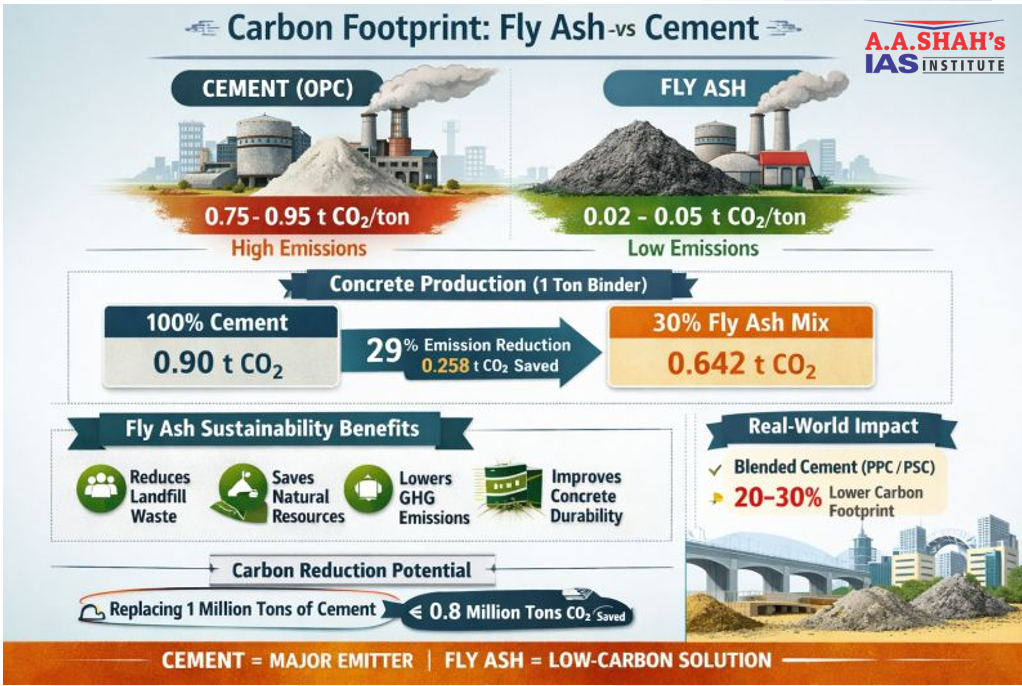
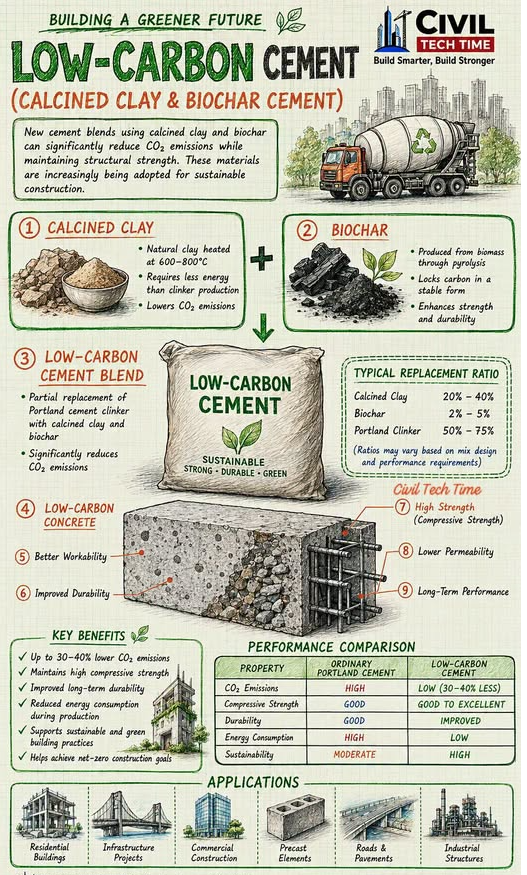
- Clinker Substitution: Replacing clinker with industrial by-products like fly ash (power plants) or granulated blast-furnace slag (steelmaking). Substituting 1 tonne of clinker avoids 0.83 tonnes of CO2.
- India’s current clinker-to-cement ratio is 67.5% (lower than the global average of 77%).
- Limitation: Substitution cannot practically exceed 40% average without compromising structural integrity.
- Carbon Capture: Because calcination releases CO2 as a fundamental chemical reaction, total decarbonization is impossible without carbon capture and storage (CCS).
Cement Types & Market Preference Friction
| Cement Type | Clinker Content | Secondary Materials | Strength & Setting Characteristics | Industry Preference |
| Ordinary Portland Cement (OPC) | > 95% | Gypsum | Sets in ~30 min; gains strength in 1 week | Highly Preferred by real-estate developers |
| Portland Pozzolana Cement (PPC) | 65–80% | Fly ash + Gypsum | Sets in ~30 min; takes twice as long (~2 weeks) to gain full strength | Less preferred due to project timelines |
| Portland Slag Cement (PSC) | 35–64% | Blast furnace slag + Gypsum | Sets in ~30 min; takes twice as long (~2 weeks) to gain full strength | Less preferred despite being “greener” |
Traditional & Indigenous Alternatives
Before Portland cement was developed in Britain in the 1820s, civilizations used alternative binders and pozzolanic materials:
- Historical Binders: Lime-based mortars, lime-surkhi mortars, mud/clay, and natural pozzolans (e.g., Roman structures using volcanic materials, Taj Mahal using lime mortar).
- Regional & Vernacular Solutions across India:
- South India: Compressed earth blocks and rammed earth (soil, sand, small amounts of lime/cement).
- Natural Additives: Cactus juice (water-repellant fluid mixed with lime and mud) and marble powder by-products.
- Himachal Pradesh (Kath Kuni): Dry masonry using alternating wooden beams on a raised stone plinth without cement.
- North/Northeast India: Elevated houses built with lightweight wood and bamboo to resist floods and earthquakes.
Major Systemic & Operational Barriers
- Entrenched Industry Ecosystem: Cement is deeply embedded due to standardized building codes, commercial availability, established supply chains, and extensive marketing.
- Speed & Versatility: OPC is widely understood, fast-setting, and versatile for modern urban high-rises.
- Context Dependency: Vernacular/traditional materials cannot easily replace reinforced concrete for multi-storey structures and cannot be uniformly applied across all climate zones.
- Policy Recommendation: To create initial market demand for greener blends, researchers suggest mandatory public procurement of green cement by the government.