Israel-Lebanon ceasefire extended by 3 weeks
INTERNATIONAL – ASIA
25 APRIL 2026
- Israel and Lebanon have extended their fragile ceasefire by three weeks, U.S. President Donald Trump announced after meeting representatives from both countries in Washington.
- The latest round of war between Israel and Hezbollah, a Lebanese Shia militant group and political party, broke out on March 2, 2026, three days after the U.S. and Israel launched strikes on Iran, killing Supreme Leader Ayatollah Ali Khamenei.
- Mr. Trump extended his ceasefire with Iran indefinitely but kept an American blockade of Iranian ports in place.
Iran-Lebanon vs Israel-USA
- When Mr. Trump announced the U.S.-Iran ceasefire on April 8, 2026, Iran said Lebanon was part of the agreement.
- Israel initially rejected this claim but agreed to a 10-day ceasefire in Lebanon on April 16, 2026.
- Mr. Trump then said Israel was “prohibited” from bombing Lebanon any longer.
- However, limited Israeli attacks continued in Lebanon.
Lebanese territory captured by Israel
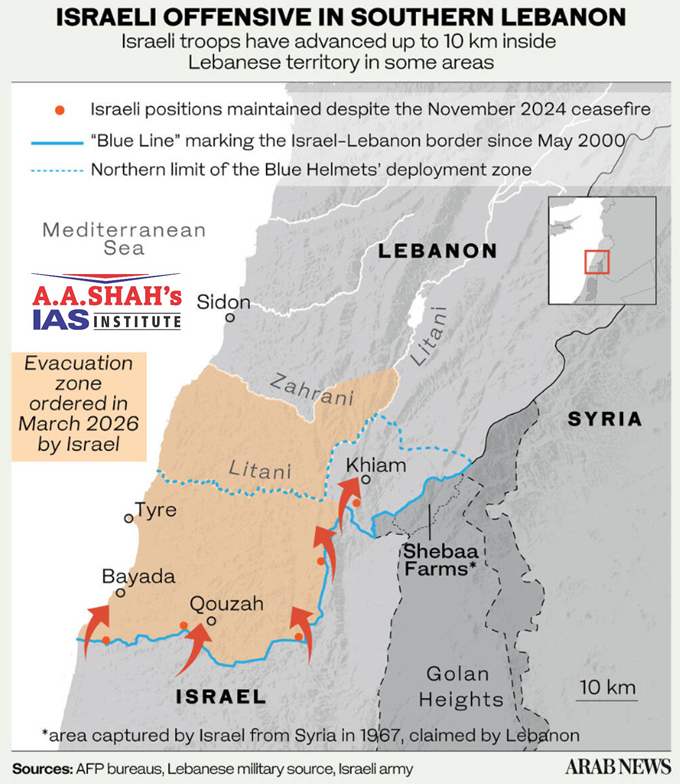
- Israel has said it is observing the ceasefire but ruled out withdrawing from the south Lebanese territory it has captured since the ground invasion began in mid-March.
- Hezbollah, on the other side, demands a full Israeli withdrawal.
- The Lebanese government, which was not involved in the war, says it would push for the Israeli withdrawal diplomatically.
Sheba’a Farms and Golan Heights
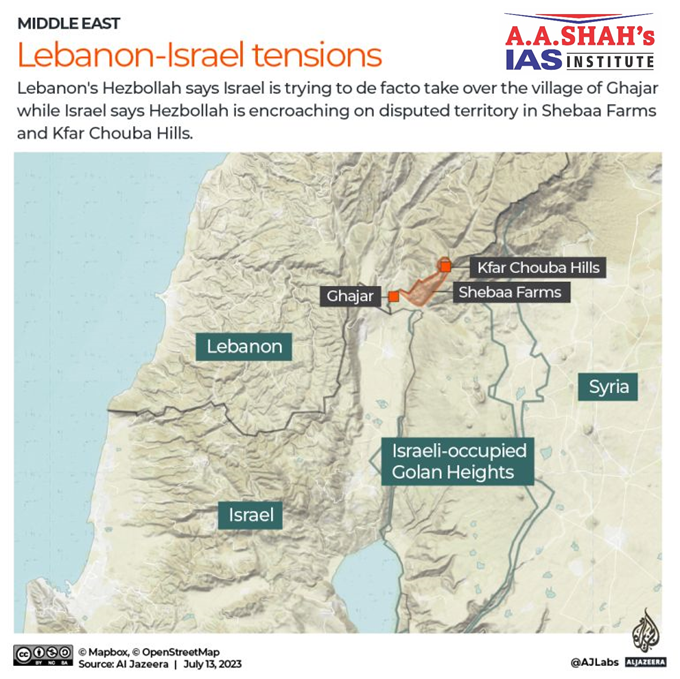
- The Sheba’a Farms, also known as Mount Dov, is a strip of land on the Lebanese–Syrian border that is currently occupied by Israel.
- Lebanon claims the Shebaa Farms as its own territory, and Syria agrees with this position.
- Israel claims it is part of the Golan Heights, Syrian territory that it has occupied since 1967 and effectively annexed in 1981.
- This dispute plays a significant role in contemporary Israel–Lebanon relations.