Return of Chola-era copper plates from Netherland
ART & CULTURE
18 MAY 2026
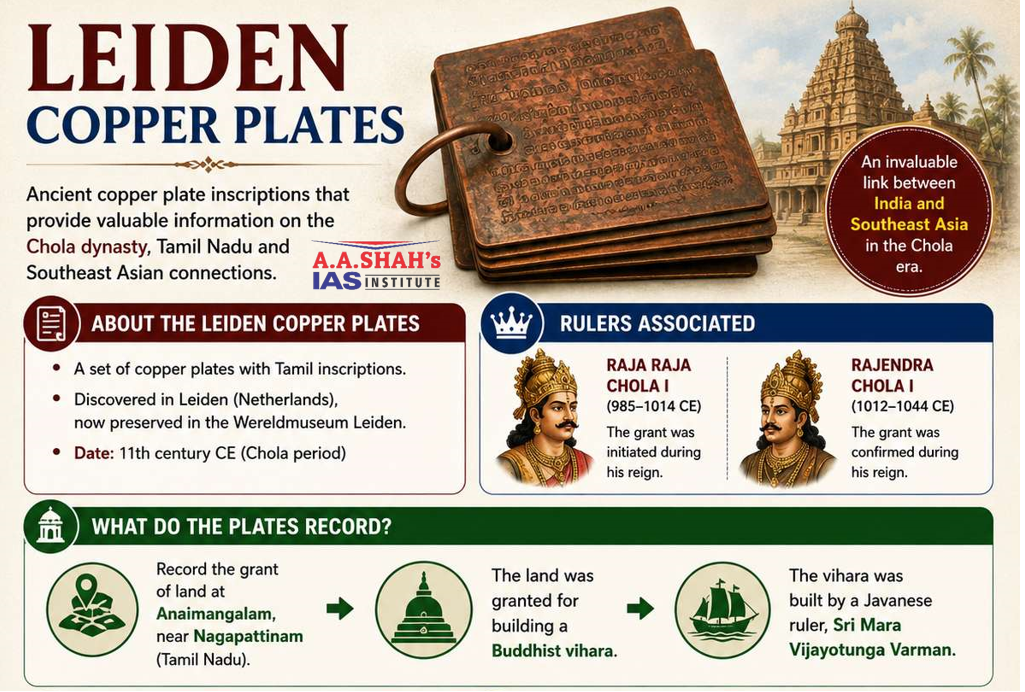
- The return of the Chola-era Anaimangalam copper plates charter from the Netherlands this week marks a watershed event in the history of the repatriation of India’s invaluable bronzes, stone sculptures, and carved temple pilasters, according to historians and archaeologists.
- The artefacts, which have been in the possession of Leiden University for almost two centuries and are popularly known as the Leiden copper plates, were presented in a ceremony at the Hague, in the presence of Prime Minister Narendra Modi and his Dutch counterpart, Rob Jetten.
- They are one of the most important copper plates of Raja Raja Chola I (regnal years 985-1014 CE) is from Anaimangalam near Nagapattinam.”
- The plates recorded Raja Raja Chola I’s gift of land at Anaimangalam village to a Buddha vihara, he had said.
- This vihara was built by the king Sri Mara Vijayotunga Varman of Java in the name of his father Sri Chudamani Varman, and so was called the Chulamanivarma Vihara.
- Unfortunately, the tower of the vihara itself was demolished by Jesuit priests in 1867, with the permission of the colonial government of Madras.
- Buddhist vihara
- The plates are an interesting example of how a Saivite king helped in building a Buddha vihara.
- While Raja Raja Chola I gave the order for building the Buddha vihara, it was his son Rajendra Chola I (regnal years 1014-1044 CE), who implemented the command. This is mentioned in the larger Leiden plates.
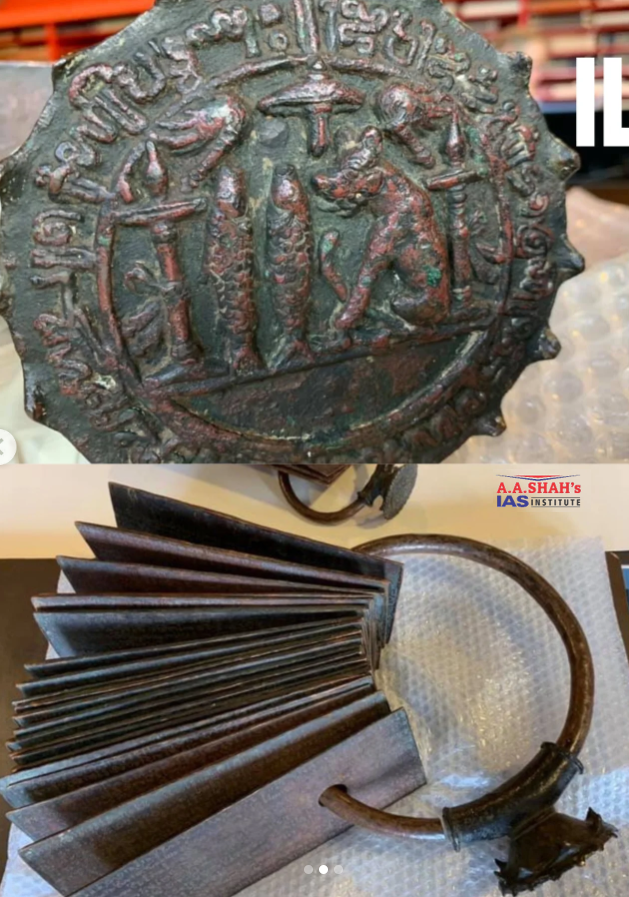
- The Leiden copper plates are a complete set of 21 large plates and three small plates.
- The large plates were committed to writing by Rajendra Chola I in five Sanskrit plates and 16 Tamil plates, honouring his father Raja Raja’s oral commitment.
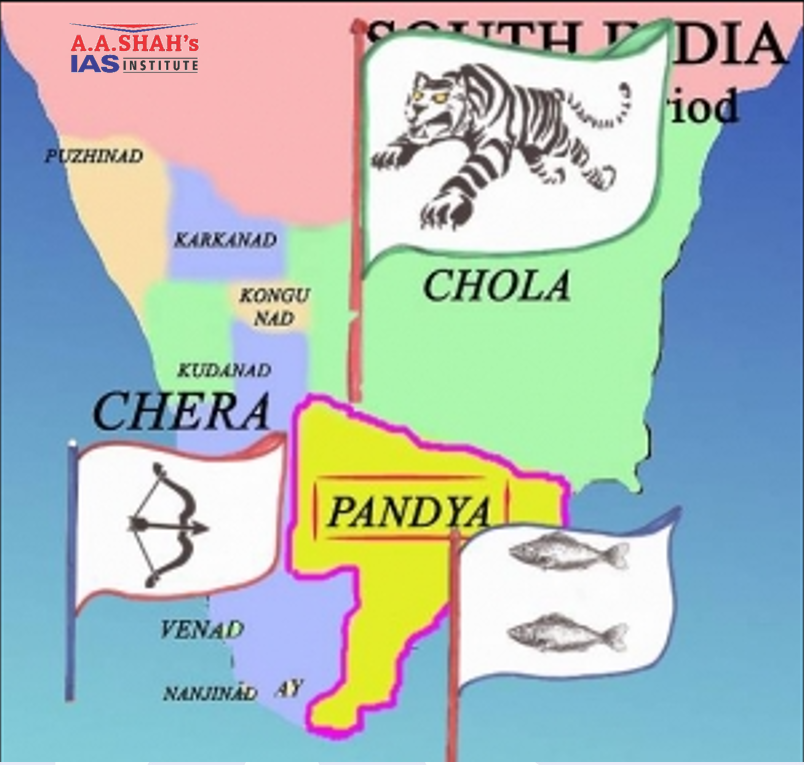
- The Leiden plates were strung together by a ring bearing the royal insignia of the Chola dynasty. These included a tiger, the royal emblem of the Cholas, the two fish of the Pandyas, the bow of the Cheras, two chamaras, the royal parasol, lamps, and a swastika.
- The inclusion of the two fish and the bow signified that the Cholas had defeated the Pandyas and the Cheras.