U.S. attacks third ship with Indian seafarers, crew safe
BILATERAL – INDIA-USA
12 JUNE 2026
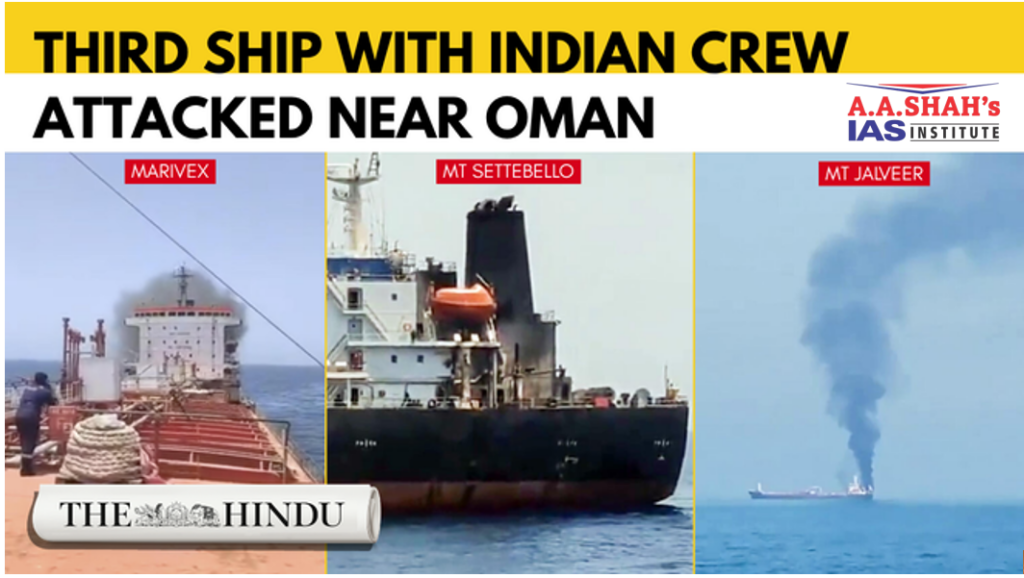
- U.S. forces attacked a merchant ship carrying Indian seafarers for the third time in four days.
- The Guinea-Bissau flagged bitumen carrier Jalveer which was attacked on 11th June 2026 off the port of Shinas, Oman, had 20 Indian seafarers, and they are all safe.
- The External Affairs Ministry summoned the U.S. Chargé d’affaires Jason Meeks and lodged a “strong protest” regarding the attacks.
- U.S. Centcom has said in a statement that two Hellfire missiles were fired into Jalveer’s engine room after the “crew repeatedly failed to comply with directions from U.S. forces”. The ship was attacked for “attempting to transport Iranian oil.”
- Jalveer’s safety manager is an Indian company located in Chembur, Mumbai, as per the Equasis database.
- U.S. aircraft attacked Palau-flagged tankers Marivex and Settebello on 8th June and 10th June, respectively.
- Three Indian seafarers on Settebello died in the attack, which the Indian government confirmed.
- The three attacks have targeted the engine rooms of the ships and sometimes the steering compartment but above the waterline. This would render the ship without the means to move or manoeuvre but not sink it.
- The Directorate General of Shipping had issued an advisory mid-February asking seafarer recruiters and shipowners not to deploy seafarers on ships calling on Iranian ports.
- An official source said the crew onboard the three vessels had joined before the advisory was issued.
- The three ships, though foreign flagged, have deeper Indian links than just the crew on board, including potentially in ownership and management.
- Two ships were serving Indian ports, facilitating Iranian oil trade with India.
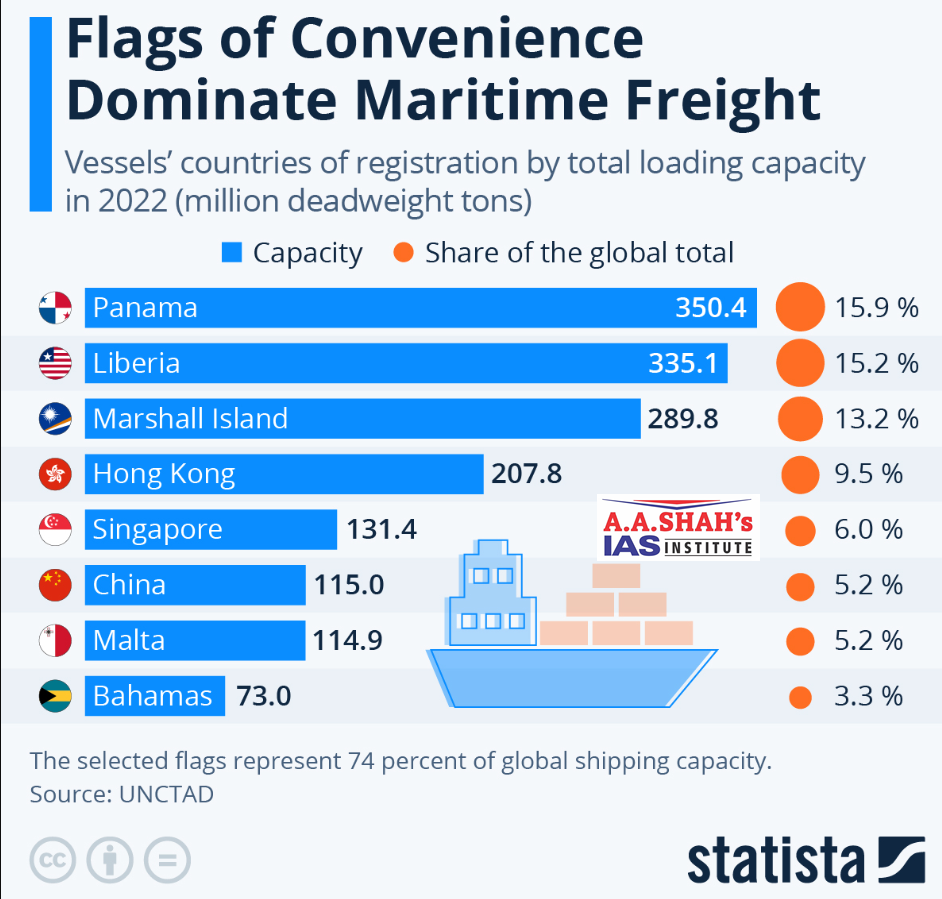
Flag of Convenience (FOC)
- A flag of convenience (FOC) is a business practice where a shipowner registers a merchant vessel in a country other than their own, allowing the ship to fly that nation’s civil ensign.
- Shipowners use FOCs (also known as “open registries“) to maximize profits by avoiding the stricter safety standards, higher taxes, and labor regulations of their home countries.
- While it offers economic flexibility, the practice is frequently criticized for enabling sub-standard working conditions and environmental risks.