Weak enforcement, poor regulation sustain illicit liquor among poor
SOCIAL – HEALTH
30 MAY 2026
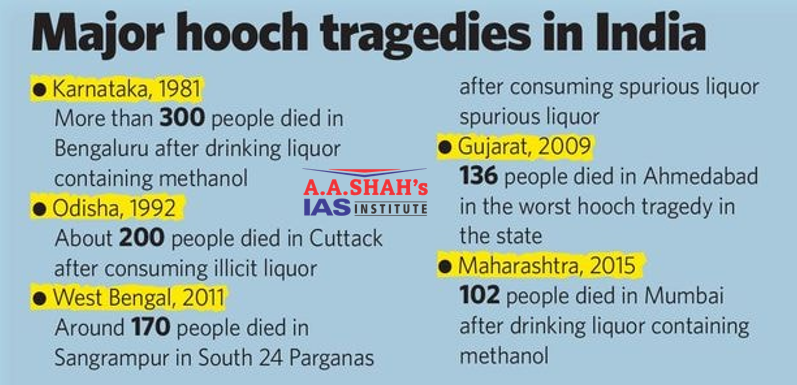
- India has suffered multiple mass deaths due to consuming illicit liquor, across Tamil Nadu, Gujarat, Punjab, Uttar Pradesh, Bihar, Assam, and Maharashtra.
- The Malwani incident in 2015, which left over 100 people dead, prompted official promises of systemic reform that never fully materialised — neither there nor elsewhere.
- The Pune-Pimpri-Chinchwad tragedy unfolded in May 2026 with more than a dozen victims of working-class backgrounds in poor neighbourhoods.
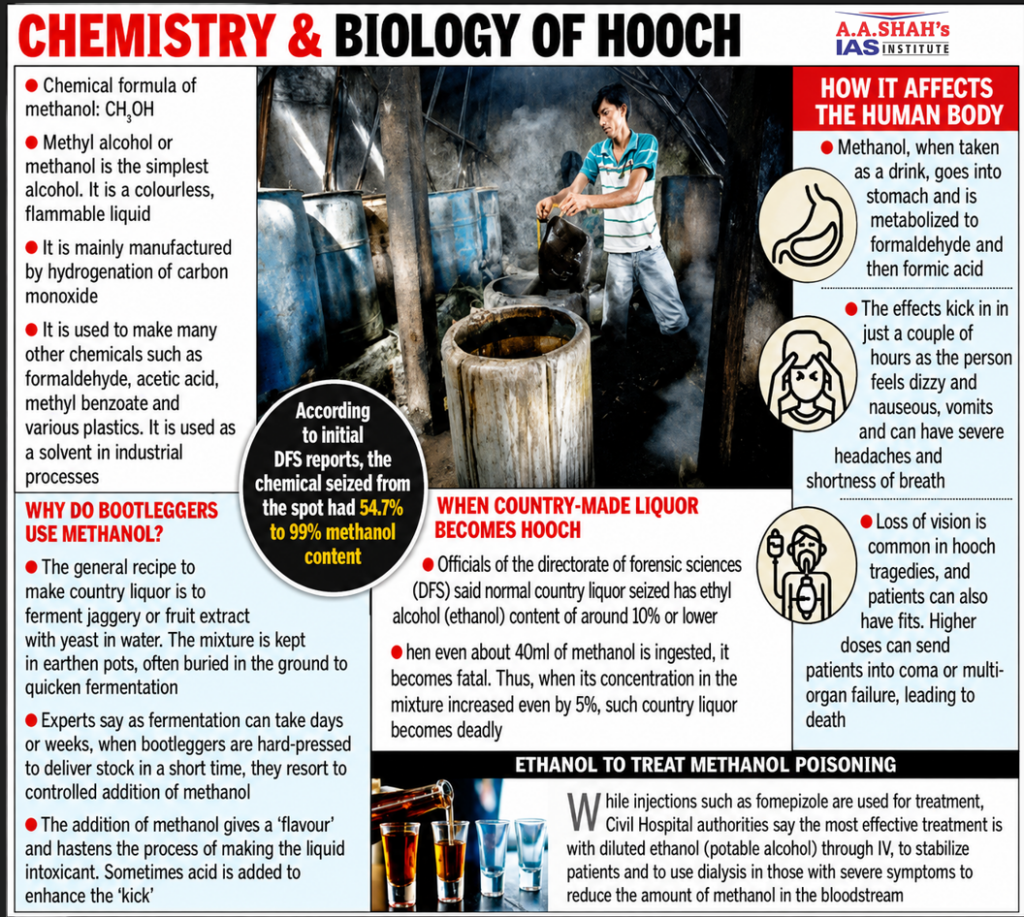
- Preliminary investigation has revealed a better than ad hoc supply chain with industry-grade methanol — the toxin behind most hooch tragedies— brought from outside the State and mixed with ethanol to produce a highly potent country liquor.
- The demand for licensed alcohol faces high State taxes, encouraging low-income individuals to turn to illicit liquor.
- In a 2024 analysis, public health experts found that higher prices for legal liquor push the poorest consumers toward the illicit market, which accounts for an estimated 40% of alcohol consumption in India.
- Adding industrial methanol increases the batch volume at negligible input cost, dramatically improving margins, although some people under investigation have also said during official questioning that it is not in the interest of ‘regular’ vendors to poison their ‘customers’.
- Nonetheless, such operations are typically semi-visible local economies that get by on tolerance rather than secrecy, and so allegations of police and local authorities’ complicity must be investigated.
- Early enforcement following most deadly incidents only arrests retail vendors; investigations into upstream suppliers and alleged kingpins have frequently proved uneven or inconclusive.
- There are 4 dry states in India where the sale and consumption of alcohol are officially prohibited; Bihar, Gujarat (Regulated permits are available in specific zones like GIFT City), Mizoram (Operates on a regulated approach where traditional fruit wines are permitted) and Nagaland
- Total bans, however, could deflect the market to criminal syndicates, where quality control is optional and oversight is poor.