New code voids 1978 definition of ‘industry’: SC
POLITY – BILL/ACT
21 AUGUST 2026
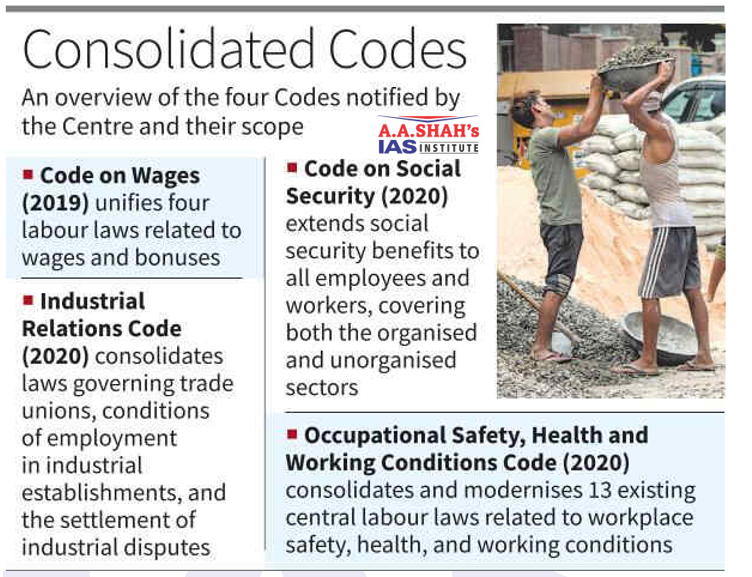
- What does the word “industry” mean under the new Industrial Relations Code (IRC), 2020, which came into force in November 2025?
Earlier position — Bangalore Water Supply case, 1978
- In Bangalore Water Supply and Sewerage Board v. R. Rajappa (1978), a 7-judge Constitution Bench gave a wide meaning to “industry”.
- It introduced the famous Triple Test:
- Activity is systematic/organised.
- There is employer–employee cooperation.
- Goods or services are produced to satisfy human wants.
- Therefore, institutions such as hospitals, educational institutions and municipalities could fall within the definition of industry.
- This gave many workers access to labour protections, industrial disputes mechanisms and collective bargaining.
- Core sovereign functions such as defence, judiciary and law-and-order functions were excluded.
What the 2026 Supreme Court verdict says
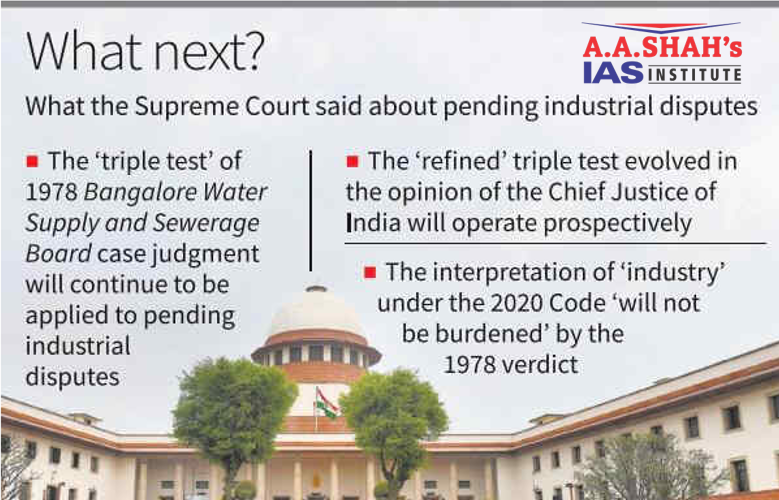
- A 9-judge Constitution Bench has held that the 1978 interpretation will not automatically carry over to the new IRC.
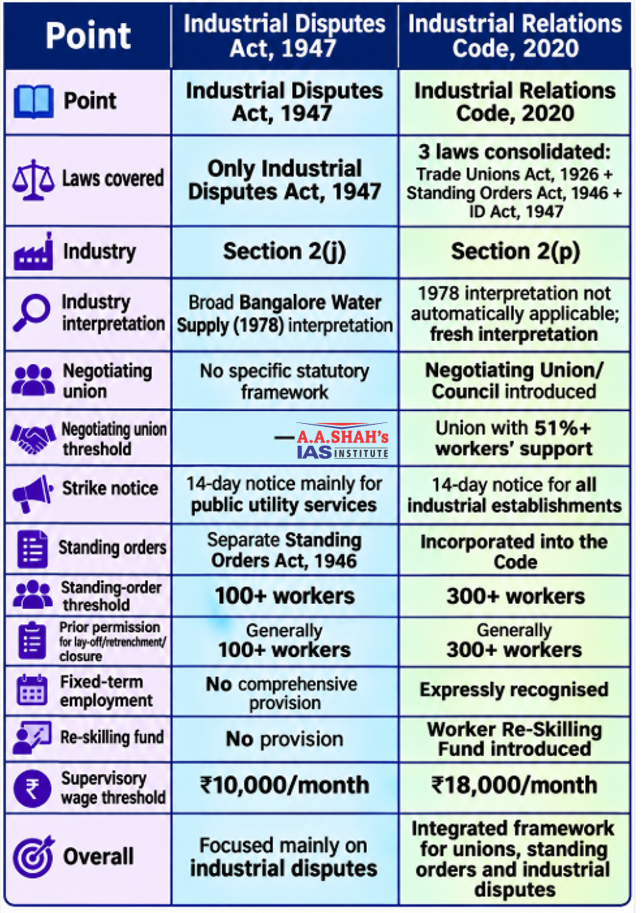
- The IRC defines “industry” under Section 2(p).
- The old Industrial Disputes Act defined it under Section 2(j).
- The Court’s majority said that Section 2(p) of the IRC must be interpreted independently.
- In the words of CJI Surya Kant, the future interpretation of “industry” under the IRC is not “burdened” by the 1978 interpretation.
- This does NOT mean the 1978 judgment has been cancelled altogether.
- For disputes that arose under the old Industrial Disputes Act, 1947, the Bangalore Water Supply judgment continues to govern pending proceedings.
Division within the 9-judge Bench
- Majority: CJI Surya Kant, Justices Satish Chandra Sharma, Alok Aradhe, Vipul M. Pancholi, P.S. Narasimha and Joymalya Bagchi.
➡️ They held that the new IRC’s definition should not simply inherit the 1978 interpretation.
- Separate view: Justice B.V. Nagarathna, joined by Justices Dipankar Datta and Ujjal Bhuyan, considered the reference against the 1978 judgment unwarranted.
➡️ They favoured retaining the inclusive interpretation because it provides stronger protection for workers.