Droughts can drive antibiotic resistance in soil bacteria
S&T – HEALTH
14 JUNE 2026
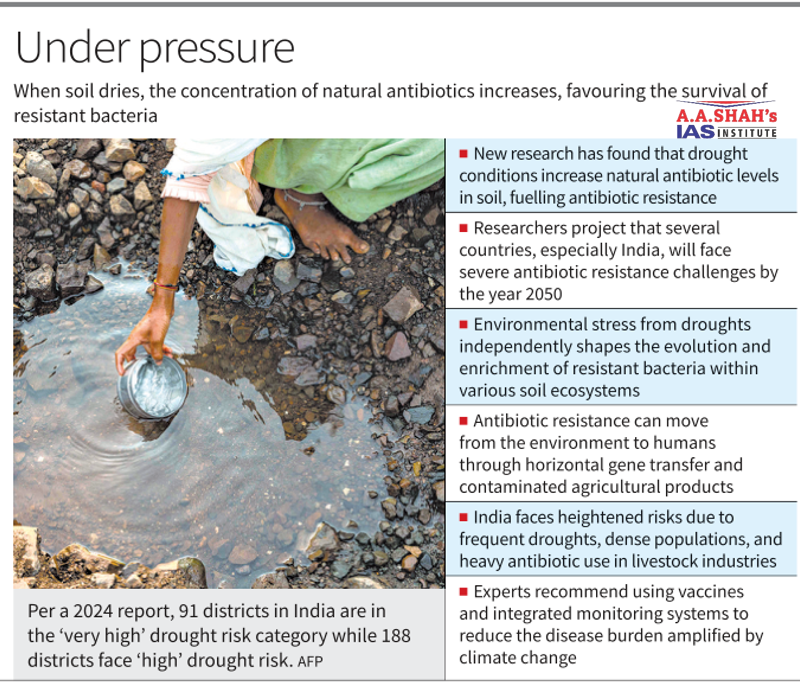
- Researchers from California Institute of Technology have found that drought conditions can increase antibiotic resistance (ABR) in soil.
- Their study, published in Nature Microbiology, warns that by 2050, drought-prone countries, including India, could face significantly higher levels of antibiotic resistance.
- When soil dries due to drought:
- Natural antibiotics become more concentrated.
- Sensitive bacteria die off.
- Antibiotic-resistant bacteria survive and multiply.
- Resistance genes become more prevalent in soil ecosystems.
Thus, drought itself can act as a selection pressure for antibiotic resistance, even without direct antibiotic pollution.
Why is This Significant?
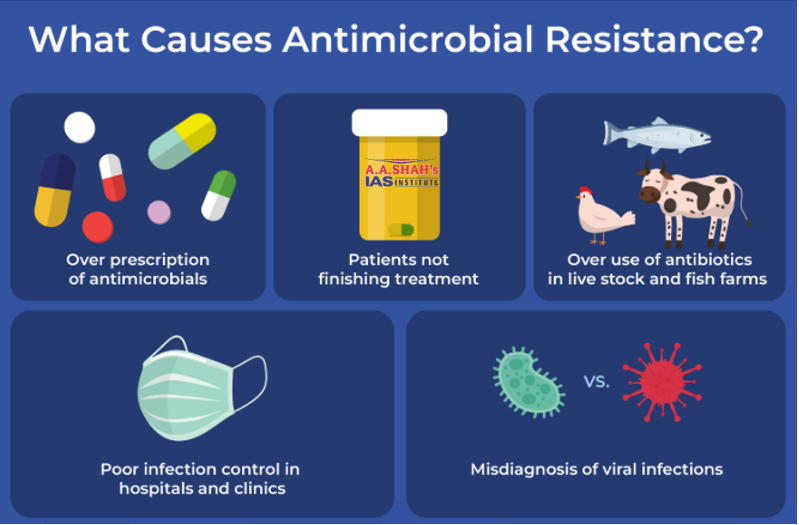
- Earlier studies largely linked antibiotic resistance to:
- Overuse of antibiotics in humans
- Livestock farming
- Agricultural misuse
- Industrial and hospital waste
- This study shows that environmental stress caused by climate change can independently promote antibiotic resistance.
Link Between Environment and Human Health
- Researchers analysed hospital data from 116 countries and found drier regions reported higher levels of antibiotic-resistant infections.
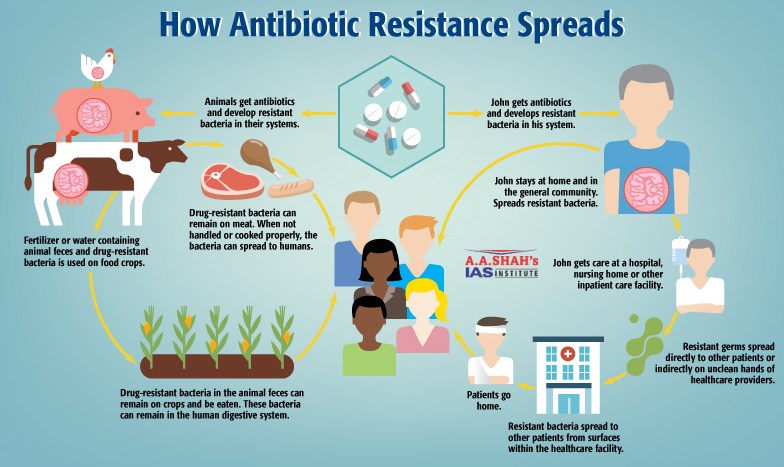
- Antibiotic resistance can move from the environment to humans through:
1. Horizontal Gene Transfer
Transfer of resistance genes from environmental microbes to disease-causing pathogens.
2. Contaminated Soil and Water
Humans may be exposed through agriculture, water use, and food systems.
3. Airborne Transmission
Resistant microbes can spread via dust and aerosols.
- Droughts can also favour the spread of certain pathogens.
Example
Typhoid fever may become more prevalent because drought conditions can facilitate the survival and transmission of enteric pathogens such as Salmonella Typhi.
Suggested Solutions
1. Long-Term Monitoring
Establish monitoring stations in drought-prone regions to track:
- Drought intensity
- Soil microbial communities
- Antibiotic resistance genes
2. Strengthen Agricultural Surveillance
Use institutions such as Krishi Vigyan Kendra to monitor:
- Antibiotic residues in soil
- Poultry farms
- Dairy farms
- Resistant microbes in agriculture
3. Vaccination
Vaccination can:
- Reduce infectious diseases
- Lower antibiotic consumption
- Slow development of resistance
This aligns with the One Health approach, which recognises the interconnectedness of human, animal, and environmental health.
4. Integrated Research
Researchers recommend combining:
- Soil microbiome studies
- Airborne dust monitoring
- Human health surveillance
- Climate and drought records
- Epidemiological data
to better understand the spread of antibiotic resistance.