Interoperable Criminal Justice System (ICJS)’s digital push
GOVERNANCE – POLICY
1 JULY 2026
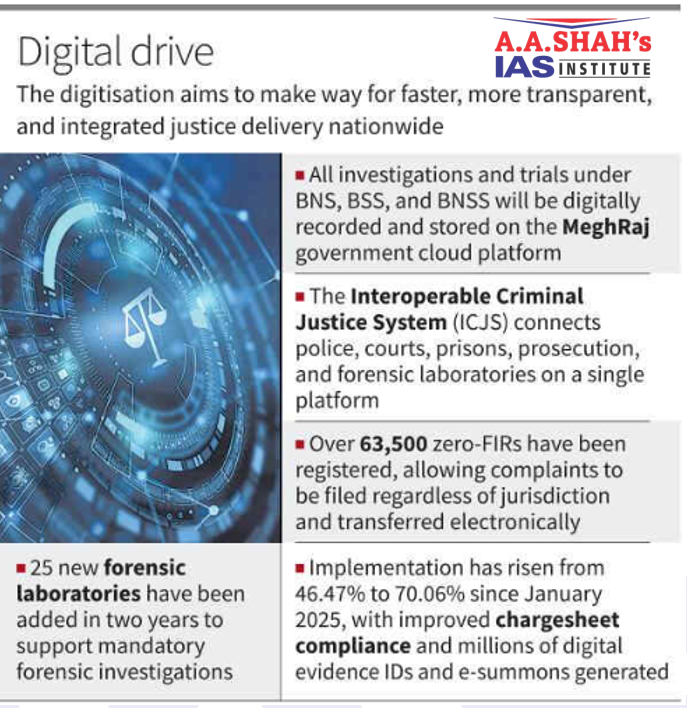
- From January 1, 2027, procedures related to all investigations and trials under the new criminal laws will be recorded digitally, a senior Home Ministry official said.
- The official said the nationwide rollout of the Interoperable Criminal Justice System (ICJS) – which integrates police, courts, prisons, forensics, and prosecution on a single platform – is expected to be completed soon, with emphasis on end-to-end digital workflow.
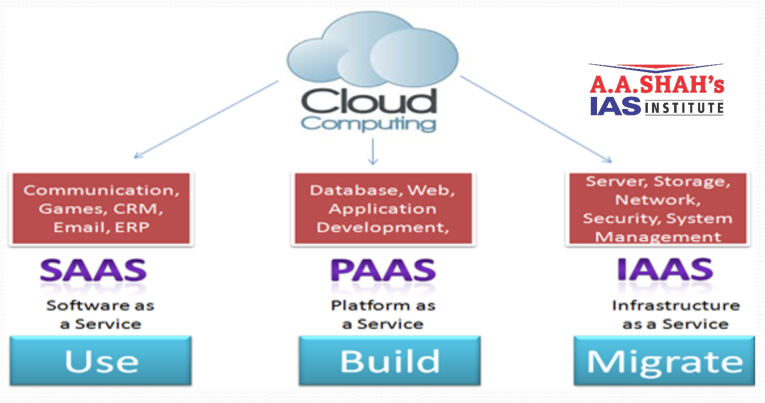
- The data will be stored in the government-owned cloud platform MeghRaj.
- However, data maintained by the National Crime Records Bureau (NCRB) showed that the first information report (FIR) consumption by courts, the process through which cases are electronically transmitted to and received by court systems, was at 46%, less than half of the cases registered.
- The three new criminal laws, Bharatiya Nyaya Sanhita (BNS), Bharatiya Sakshya Sanhita (BSS), and Bharatiya Nagarik Suraksha Sanhita (BNSS), replaced the Indian Penal Code (1860), Indian Evidence Act (1872), and the Code of Criminal Procedure (1898), respectively.
- These came into effect on July 1, 2024, and in the past two years, 74.66 lakh FIRs have been filed under BNS. Since these laws require upgraded infrastructure and forensic capabilities, States and Union Territories have been given five years to implement all the pillars of criminal justice system.
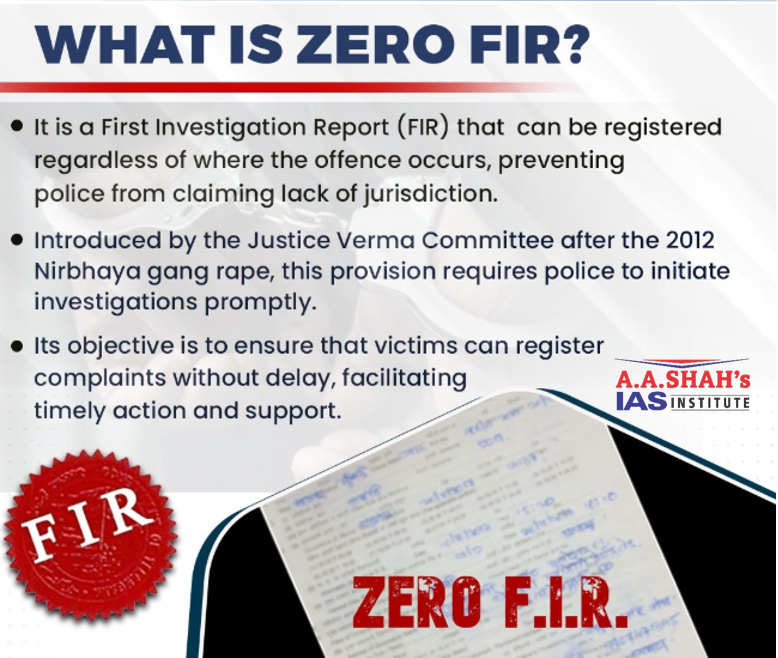
- As many as 63,572 zero-FIRs, those which can be filed irrespective of jurisdiction, have been registered under the BNSS.
- Though the provision existed earlier, the BNSS gave it a statutory backing. The official said that around 13,000 zero-FIRs were filed in different districts of the same State and fell under the category of “intra-State transfers”.
- The Crime and Criminal Tracking and Network Systems, the platform which is used to file FIRs across 16,000 police stations in the country, has an option to register cases in 23 languages and the Bhashini App can translate the zero-FIR to the language used in the jurisdiction concerned, the official said.
- “A police person cannot turn away a complainant from filing a zero-FIR. Once registered, the case is transferred to the police station concerned and they can decide further upon inquiry, if they want to close the case or pursue the investigation,” said the official.
- As the new laws make forensic examination of crime scenes mandatory in cases punishable by seven years or more, as many as 25 new forensic laboratories (FSL) were added in the past two years, taking the total number of laboratories from 129 in 2023 to 154 in 2025.
- The Ministry official said that improving Internet connectivity, especially in remote and northeastern parts of the country, standardising processes across States and U.T.s, ensuring full interoperability among all criminal justice platforms and training of personnel were some of the challenges ahead.