India seeks clarity as ‘tipping points’ rock Bonn climate talks
ENVIRONMENT – CLIMATE CHANGE
1 JULY 2026
- At the Bonn climate talks in Germany on June 8-18, alongside the usual laundry list of contested themes such as climate finance, tipping points became an unexpected source of debate and controversy.
- According to the Earth Negotiations Bulletin, India urged care and clarity in using terms like “tipping points”, which it said would present challenges around defining the idea and cautioned against mis-communicating or oversimplifying the science.
- However, the European Union muddied the waters by raising concerns about “coordinated misinformation” and “obstruction”.
- A climate tipping point is a threshold in the earth’s climate system beyond which a part of it jumps into a new state.
- Once such a tipping point has been crossed, changes can happen faster or harder to reverse on human timescales, even if the original cause of the change is removed.
- However, it is difficult to project tipping points in the climate because of complexities in the climate system and uncertainties in the input data.
Arctic melting as tipping point
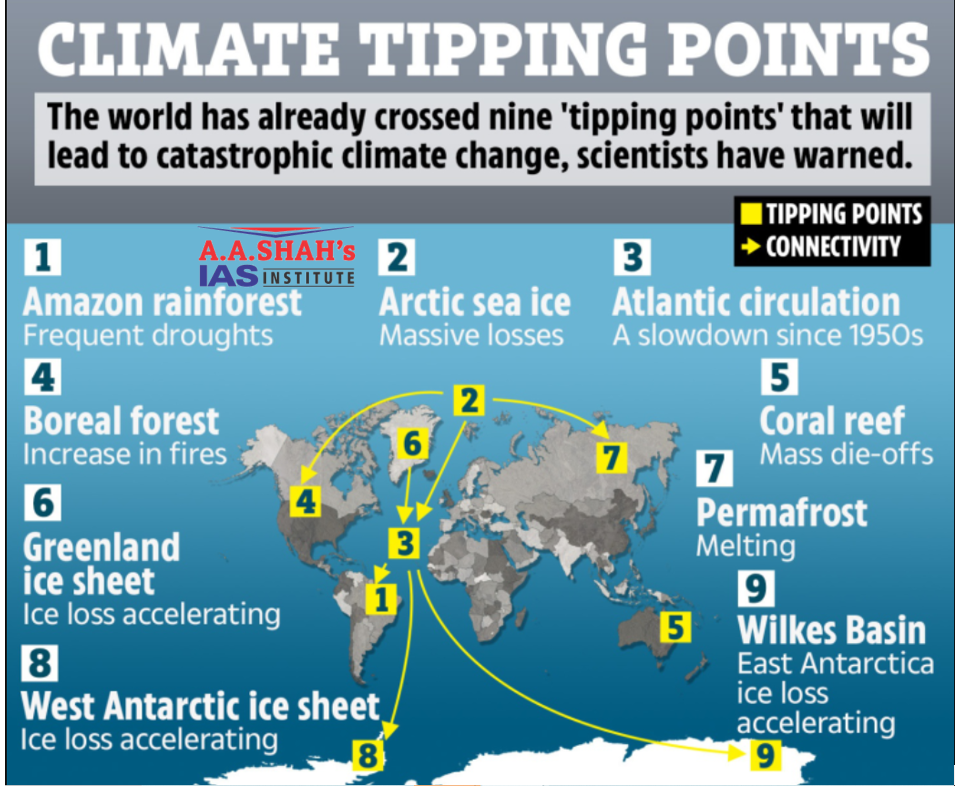
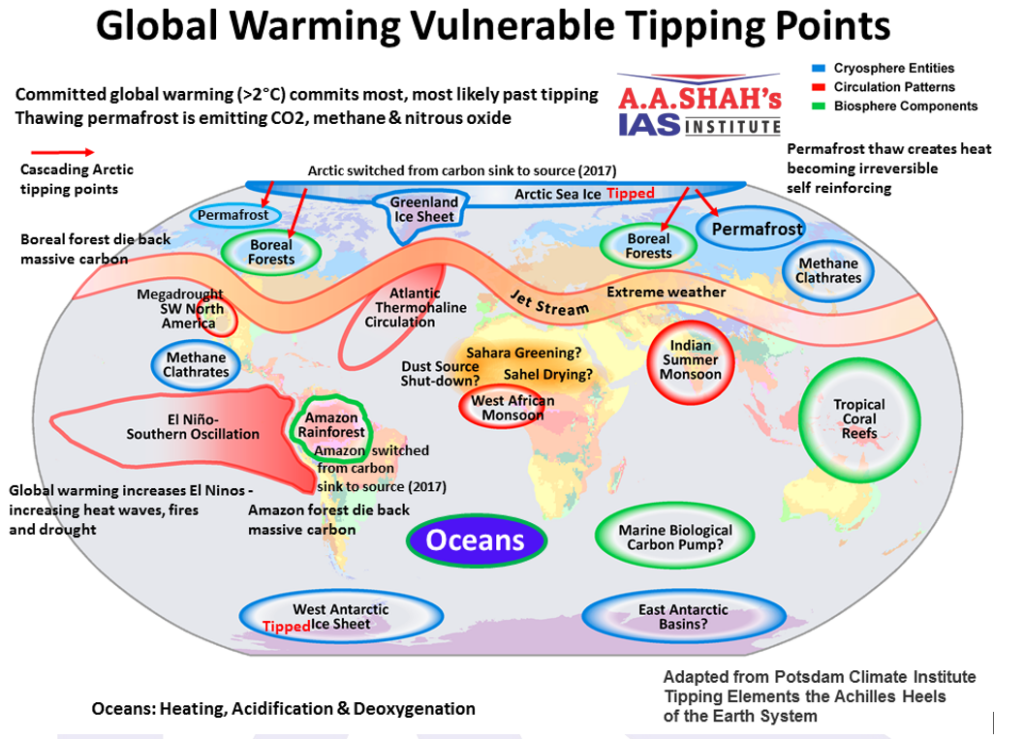
- For example, say warming in the Arctic melts enough sea ice to expose large areas of dark ocean. These waters could absorb more heat, causing more warming and even more melting. With enough heat, this cycle may be able to continue on its own, rendering recovery very difficult.
Other tipping points
- Aside from warming in Arctic, potential climate tipping points include a ‘dieback’ of the Amazon rainforest (i.e. the risk of the forest reverting to being a savannah), the collapse of an ocean current called the Atlantic meridional overturning circulation (AMOC), the mass-bleaching of coral reefs, changes in the monsoons over India and West Africa, and the disintegration of the Greenland ice sheet.
Positive Tipping Points
- While human societies will be better off not threatening any of the climate tipping points, there are also positive social tipping points in the climate space — such as the adoption of renewable energy. Once these technologies win a critical adoption level, some experts have argued, they will be on track to large-scale adoption.